I spent three years trying to be good at self-care. I bought the journals with the gold foil covers. I downloaded meditation apps and maintained streaks for weeks. I woke up at 5 AM for exactly six mornings until my body staged a quiet rebellion in the form of a headache that lasted two days. I had a full skincare shelf, a gratitude practice I did with religious consistency, and a growing suspicion that I was doing all of it wrong. The harder I tried, the worse I felt. And the worse I felt, the more products and practices I bought to fix it. It was a loop I did not recognize until I stepped out of it.
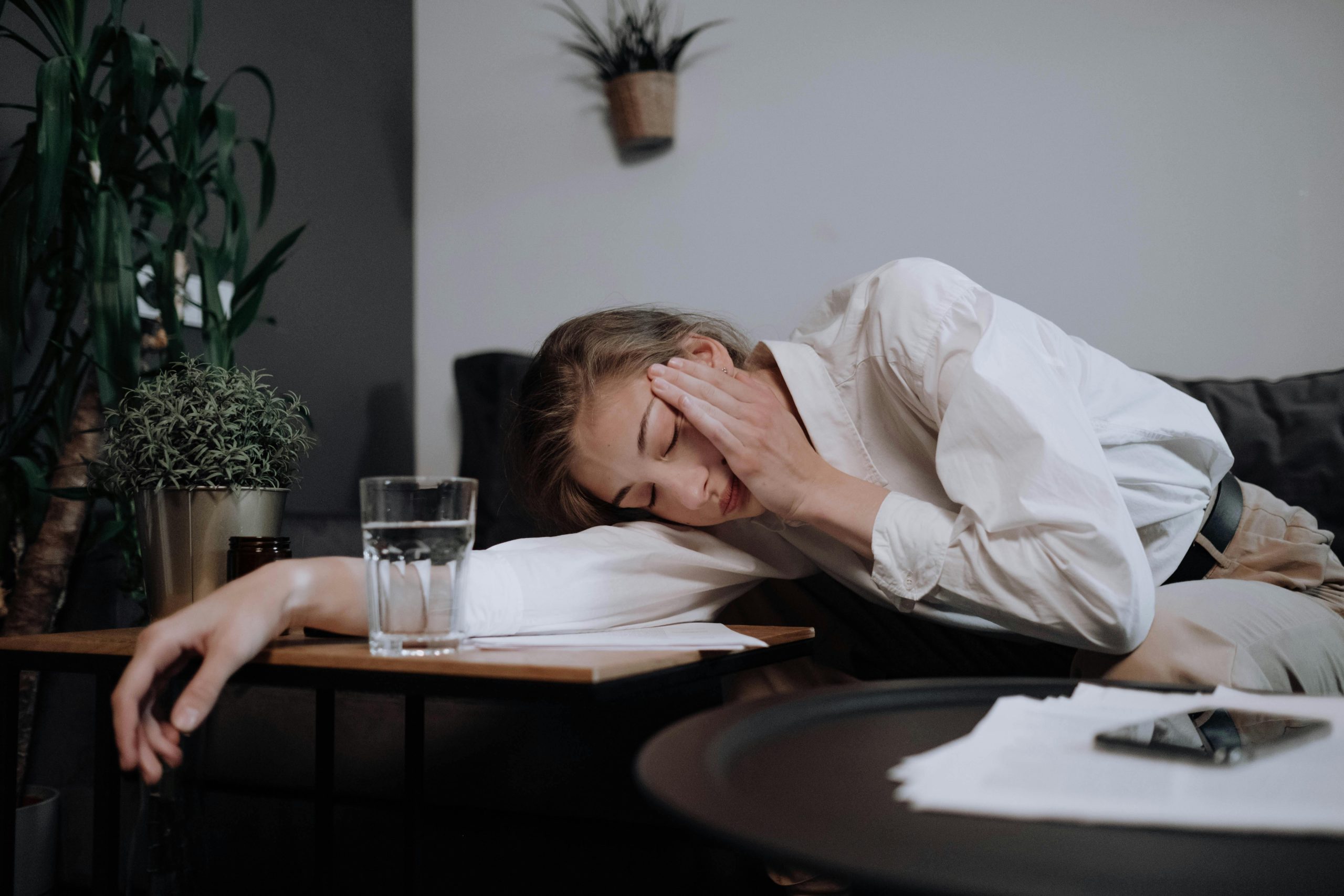
What broke the loop was not a breakthrough. It was a Thursday afternoon in the middle of a terrible week. The kids were sick, the laundry was reproducing in ways that defied logic, and I had not had a real conversation with another adult in three days. I had also skipped my beauty routine for the fourth day in a row because I was too tired to stand upright. On paper I was failing at self-care. But somewhere in that exhausted week, I stopped caring about doing it right. I stopped tracking. I stopped comparing. I just did whatever required the least amount of energy to survive the hour. And that was when I started to actually feel better.
The beginning of the end of trying
My old approach to self-care was competitive. Not with other people, but with an imaginary version of myself who had it all figured out. That version did yoga at dawn, journaled about her feelings with elegant calligraphy, and applied serum in upward motions that somehow contributed to world peace. I could not compete with a person who did not exist. So I kept losing. Every skipped meditation session was a failure. Every night I fell asleep without doing my full routine was evidence that I was not trying hard enough. The whole framework assumed that self-care was something you could win, like a sport. But it is not a sport, and there is no prize for being the best at it except exhaustion.
I read an article around that time. Not one of the prescriptive ones with titles like “10 Ways to Transform Your Morning Now.” More like a personal essay from someone who admitted that her self-care routine was a mess and she was okay with it. I did not want to admit I needed permission to stop trying so hard. But reading it was the first time I considered that maybe the problem was not me. Maybe the problem was the pressure to be good at something that was supposed to feel natural.
So I ran a small experiment. For one week I would do whatever I felt like doing, with zero rules about what counted and what did not. If I wanted to wash my face with water and go to bed, that would count. If I wanted to sit on the floor and eat crackers while scrolling my phone, that would also count. The only rule was that I could not judge myself for my choices. It was hard at first because my brain kept trying to add rules. “This is not real self-care,” it whispered. But I ignored the whisper, and after a few days the whisper got quieter.
What happened when I stopped trying
The first thing that changed was the walking. I used to not count a walk unless it was at least thirty minutes, in proper walking shoes, with a tracked route and a podcast ready. Those rules meant I walked maybe once a week if I was lucky, because who has thirty uninterrupted minutes plus the energy to get properly dressed for it? Once I stopped counting, I started walking more. Ten minutes while waiting for my kid to finish an activity. Fifteen minutes around the block because I needed to get out of the house, not for exercise but for sanity. I walked in sandals. I walked without tracking. I walked without any goal at all, which is the only reason I kept doing it. The walking became a habit not because I was disciplined, but because I made it so easy that saying no to it was harder than saying yes.
The same thing happened with journaling. I owned three journals with beautiful covers and writing paper so smooth it felt like a sin to write something boring in it. I bought them hoping the aesthetic would inspire the habit. It did not. What finally worked was a spiral notebook I took from my daughter’s school supply stash, the kind with the cheap spiral binding that catches on your sleeve. I wrote in it almost every morning, not because it was beautiful, but because it was ugly enough that I did not feel pressure to write beautifully in it. I wrote run-on sentences. I wrote lists. I wrote complaints about how little sleep I got. None of it was profound. But it was mine, and it was regular, and it was the first form of journaling that ever lasted more than two weeks.
I am not saying the aesthetic does not matter. It matters if it removes friction. But for me, the fancy tools added friction instead of removing it. They made me feel like I had to perform self-care rather than just live it. The ugly notebook and the unplanned walks worked because they were too unremarkable to fail at.
Skincare became shorter and less interesting
My skincare routine now is shorter than it has been in six years. It is also less interesting. I use a cleanser that costs less than my lunch, a moisturizer from a drugstore brand I found through trial and error, and sunscreen that I buy in bulk. That is it. The serums are in a drawer. The masks expired. The jade roller is somewhere under the bathroom sink, and I have not mourned its absence even once.
1. Cleanser. I use it at night and sometimes in the morning if my face feels greasy. Not every time. Just when it makes sense.
2. Moisturizer. Same brand, same jar, same hand motion. I do not look in the mirror while I do it. I just rub and move on with my life.
3. Sunscreen. Non-negotiable. I apply it while my coffee is brewing because that is the only gap in my morning I have reliably identified.
The shorter routine stuck because it does not require willpower. Willpower is a finite resource, and I use mine on things like not yelling at my children and remembering to pay the electricity bill. I do not want to spend it on a fourth skincare step that might make me 7 percent more radiant. I get that some people enjoy the ritual of a longer routine, and that is valid. But I do not. I tolerated it because I thought I was supposed to. Now I just do what works, and my skin looks fine. Better than fine, honestly. Less irritated. Less stressed. Probably because I am less stressed.
What I learned from setting bad boundaries
Before I stopped trying to be good at self-care, my boundaries were dramatic or nonexistent. I would say yes to everything for months, then explode and cancel everything. There was no in-between. The dramatic approach did not work because it was reactive, not intentional. I was setting boundaries to escape a situation, not to protect my energy in the first place.
The shift happened gradually. I started with one small boundary: I stopped checking work messages after 8 PM. That was it. No dramatic announcement. No email auto-responder. Just a personal agreement with myself. The first week was hard because I kept picking up my phone out of habit. But after a few weeks, the 8 PM cutoff became automatic. Without me noticing, the absence of evening work stress made me more present at night. I read more books. I slept better, which made my mornings less painful even though I was still not a 5 AM person.
From that small win I added another boundary: I stopped accepting invitations I did not want to attend. Not the important ones. Not the ones that mattered to people I love. The optional ones. The ones I only said yes to because I felt obligated or guilty. I started saying “I cannot make that work” without following it with an excuse. The discomfort lasted maybe three times. After that, it felt normal. I realized most people do not care about your reason. They just want an answer. And “no” is a complete answer.
I still struggle with boundaries. I say yes to things I should not. I reply to messages at odd hours because I feel bad leaving someone on read. But the pattern has shifted. I know what a good boundary feels like now, and I can tell the difference between a boundary that protects me and a boundary that just makes me look impressive on paper. The quiet ones, the ones nobody claps for, those are the ones that matter most.
The morning routine that tricked me into consistency
I do not have a morning routine in the way the internet defines it. I do not wake up early. I do not meditate or stretch or drink celery juice. What I have is a sequence of actions that happens most mornings, not because I planned it, but because it emerged from what I actually do when left to my own devices.
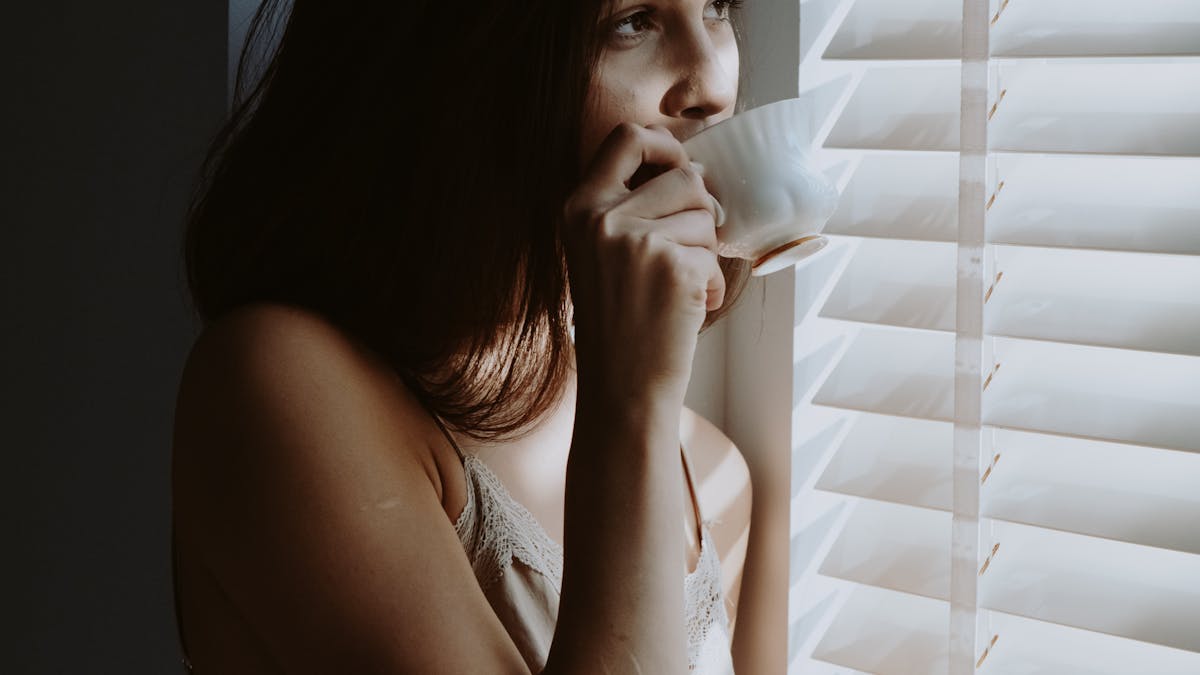
I wake up when the kids wake up, which varies. I drink water from the tap. I make coffee and drink it while standing in the kitchen, looking at nothing in particular. That is the closest thing I have to mindfulness, and it costs zero dollars. I wash my face and put on sunscreen. I write in the ugly spiral notebook for a few minutes while the coffee cools. That is the whole routine. It takes maybe fifteen minutes and it is not impressive to describe. But it is mine, and I do it almost every day because there is nothing aspirational in it to rebel against.
I think that is the secret, if there is one. Make it boring enough to survive. The glamorous routines sold on social media are designed to be consumed, not sustained. They are entertainment disguised as instruction. The real routine, the one you actually keep, probably looks unremarkable on camera. That is not a flaw. It is proof that it works for you instead of looking good for strangers. I later broke the same logic down to its smallest unit, what five minutes of self-care can actually do, and it still held.
Letting go of the guilt
The guilt was the hardest to release. There is a voice inside that says taking time for yourself is selfish, that you should be doing something productive, that rest must be earned through sufficient suffering. That voice is loudest when you are most tired, which is also when you need rest the most. It is a cruel design. The internet has a name for the softer version of this: cozymaxxing is the trend version of doing less on purpose.
What helped was not fighting the voice but acknowledging it. “I hear you,” I would say. “And I am going to take the walk anyway.” The voice did not disappear. But it stopped having veto power. I took walks without feeling guilty about being away, even if only for fifteen minutes. I bought myself small things without needing to justify them with productivity. I sat on the couch and scrolled without punishing myself with shame afterward. None of this sounds revolutionary when I write it down. But living it felt like retraining a muscle that had been trained in the opposite direction for decades.
I still have days where I do nothing for myself. Days where self-care is a shower and a sandwich and falling asleep before everyone else. I used to count those as failures. Now I count them as survival, which is also a form of care. Care does not have to be beautiful. It does not have to be consistent. It does not have to look like anything from an Instagram post. It just has to be yours, and you get to decide what counts.
I am still not good at self-care by the old standards. But I stopped caring about those standards, and that is what made the difference. I do less now. Plan less. Buy less. And somehow, I feel more cared for than I ever did when I was trying so hard. The irony is not lost on me.
How Ananta can help
Ananta is our self-care and journal app for Android: a short daily place to log your mood and sleep, read one affirmation, and keep a small routine going through a busy week. If the advice above sounds right but you know a paper journal will not survive past Tuesday, that is the gap Ananta is built for. It is on the landing page and on Google Play, and you can see all of our apps on the Apps & Products page.