Category: Mom Life

  • I Quit Being the Family’s Unpaid Project Manager

    I Quit Being the Family’s Unpaid Project Manager

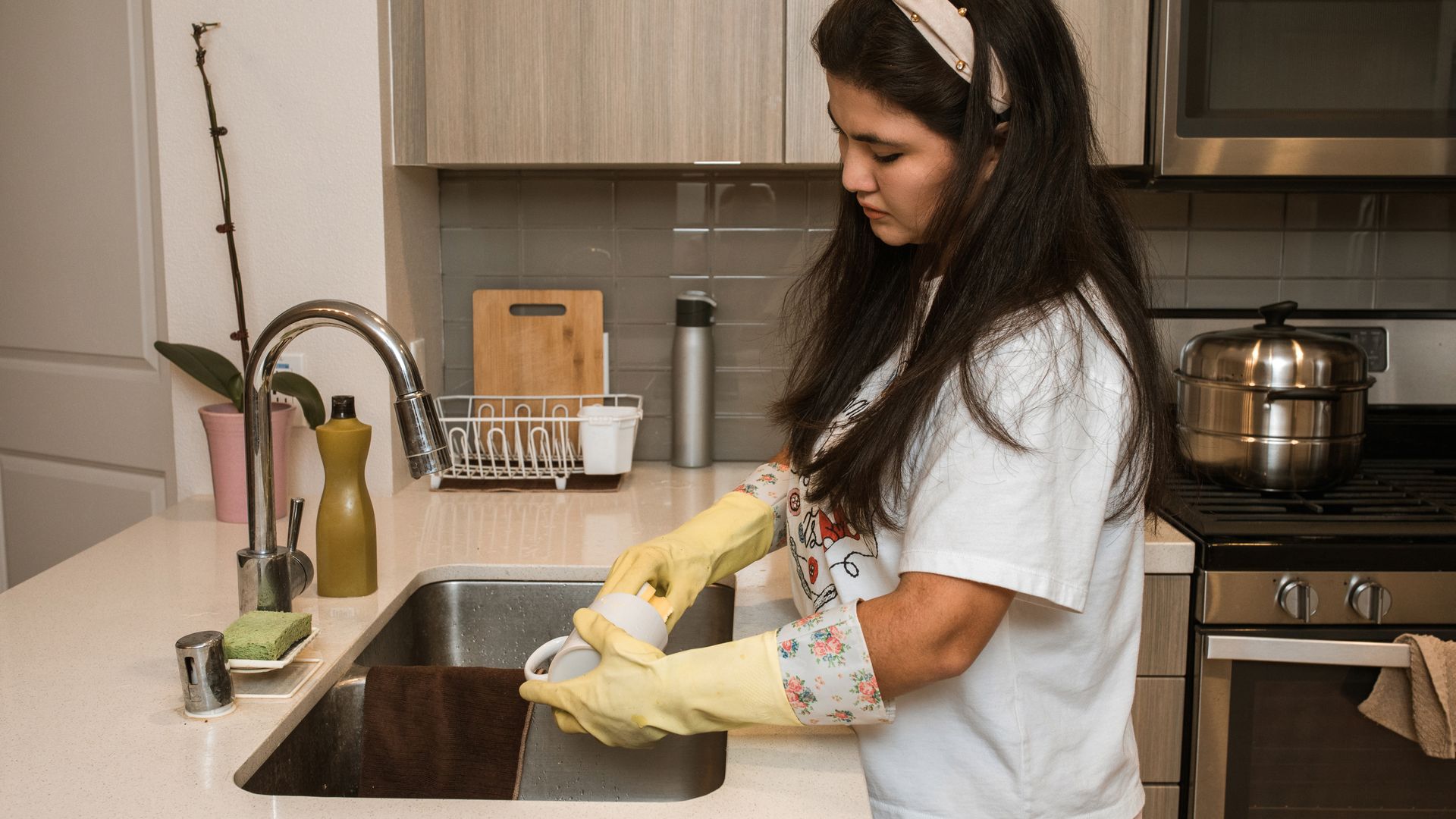
    Mental load in motherhood is the invisible planning, remembering, and anticipating work that keeps a family running. The moment I knew something had to change was unremarkable. A Wednesday evening. I was standing in the kitchen, stirring pasta sauce with one hand, scrolling through the school email about dress-up day with the other, mentally calculating whether we had enough milk for tomorrow’s breakfast, and also wondering if anyone had remembered to put the bins out. My husband walked in, looked at the stove, and said, “Smells good. Need any help?”

    I wanted to say yes. But the help I needed was not someone stirring the sauce. The help I needed was someone who already knew the school had sent a dress-up day email, who had already checked the milk situation, who had already looked at the bin calendar, and who had already added all of it to an invisible master list that I was the only person maintaining. Stirring the sauce was the easy part. The sauce was never the problem.

    If you are a mother reading this, you probably already know exactly what I am talking about. If you are not, let me try to explain what mental load actually feels like. It is not the physical chores. It is not the laundry or the dishes or the school run. It is the constant, low-hum awareness that you are the person who remembers everything, plans everything, anticipates everything, and notices everything. It is the brain that never stops scrolling through an invisible to-do list, even when the rest of the body is sitting down.

    Experts often describe mental load in motherhood as invisible cognitive labor: the planning, tracking, and remembering that happens long before a chore is visible. If you want a clinical explanation, the Cleveland Clinic breaks down mental load in a way that makes this hidden work easier to name.

    mental load in motherhood

    Mental load in motherhood is the list nobody sees

    Here is a partial inventory of what my brain was tracking on that Wednesday evening: the dress-up day theme (superheroes, and we did not own a superhero costume), the milk supply (low), the bin schedule (recycling, had I taken it out?), the fact that my daughter had mentioned her shoes felt tight three days ago and I had not scheduled a shoe-shopping trip, the birthday party next Saturday that needed a gift, the RSVP I had not sent, the pediatrician form sitting in my inbox, the fact that we were running low on laundry detergent, the fact that the washing machine had finished an hour ago and the clothes were still sitting there, the work deadline I had pushed to Friday, and the three texts from friends I had not replied to in over a week.

    None of this was written down. None of it was urgent in the five-alarm sense. But all of it was taking up space in my head, running quietly in the background like a dozen browser tabs that never close. And nobody else could see them. Nobody else even knew they were open.

    Mental load is not about who does more dishes. It is about who notices that the dish soap is running low, who remembers to buy more, who tracks which brand is on sale this week, and who knows that the new eco-brand gave someone in the family a rash last time. The actual washing of dishes is almost an afterthought. The cognitive work comes first, and it never, ever stops.

    Why mental load in motherhood made me the default everything

    I did not sign up for this role. Nobody handed me a job description titled “Family Project Manager: Unpaid, Unseen, Unending.” It happened gradually, the way it happens in most households. I was home more in the early baby months, so I learned the pediatrician’s phone number. I was the one who noticed we were out of nappies, so I started tracking inventory. I was the one filling out the daycare forms, so I became the keeper of all family administrative knowledge. One small responsibility stacked on another until I was, without any conscious decision, the operating system of the entire household.

    My husband is a good man. He does his share of visible work. He cooks. He does bath time. He vacuums on weekends without being asked. But here is the thing: he does these things when I tell him they need doing, or when they are too obvious to miss. He has never once woken up at 3 AM wondering if we scheduled the next dental checkup. He has never felt a low-level anxiety about whether the school permission slip deadline is tomorrow or next week. He does not carry the mental spreadsheet. And for years, I did not know how to explain that the spreadsheet was the actual work.

    Research calls this “cognitive labor” or “invisible labor.” It is the anticipating, planning, monitoring, and remembering that keeps a family running. And study after study shows that women carry a wildly disproportionate share of it, even in households where physical chores are split evenly. You can split the dishes fifty-fifty and still have one partner doing ninety percent of the thinking. The dishes get clean either way. But only one brain is slowly frying itself keeping track of everything else.

    The conversation I was afraid to have

    I put off talking about this for months. Partly because I did not have the language for it yet. Partly because I was worried it would sound like scorekeeping or complaining. “I do more invisible work than you” is not a sentence that lands well at dinner. But mostly I stayed quiet because I had internalized a belief that managing the household was simply my job. I was the mom. This was the gig. Stop whining and stir the sauce.

    That belief is common and it is corrosive. It turns invisible labor into a personal failure: if I am exhausted by the mental load, I must be bad at managing it. If I cannot keep all the tabs open without burning out, I must be weak or disorganized. The problem, framed this way, is always me. Never the system. Never the fact that one person cannot and should not be the sole memory bank for an entire family.

    When I finally talked to my husband about it, I did not start with blame. I started with an invitation. I told him: imagine you are managing a small company with multiple departments, except you have no admin staff, no project management software, and you are also expected to cook dinner for the whole team every night while maintaining a pleasant emotional atmosphere. That is what my brain feels like. I am not asking you to do more. I am asking you to carry some of the knowing. Not just the doing. The knowing.

    He sat with it for a minute. Then he said something that took me off guard: “I did not realize there was a whole second layer. I thought helping with the visible stuff was enough.” He was not defensive. He was genuinely surprised. And I realized that for years I had been running a parallel operating system that I had never shown him, and then resenting him for not knowing about it. That was not entirely his fault. It was not entirely mine either. It was the silent architecture of how our household had been built.

    What I actually changed

    Talking helped, but talking alone does not redistribute mental load. Here is what we did that actually made a difference:

    Instead of my husband “helping” with the kids’ schedules by driving to activities when I asked, he now owns the entire children’s calendar domain. He gets the school emails. He knows the dress-up days. He tracks the permission slips. I do not think about any of it. This was the single most freeing change. I learned this approach after realizing that our Sunday reset ritual had already shown us how much smoother things ran when we both knew the week’s landscape, not just me.

    We now keep a shared family calendar and a shared grocery list, but more importantly, we keep a shared “head space” note where either of us can dump things we are mentally tracking. “Need to book car service.” “Mum’s birthday is in three weeks.” “The dog is due for shots.” Getting these out of my head and into a shared space means I am not the only one who sees them. It also means I am not the only one who can act on them.

    When my kids or my husband ask me a question I do not need to be the expert on, I say “I do not know, can you check?” Not aggressively. Not as a punishment. Just honestly. I am not the family search engine. I am not the walking inventory of every item in this house. The more I refused to be the default answer key, the more everyone else learned to look things up themselves.

    This was the hardest one. I used to believe that if something fell through the cracks, it was exclusively my fault. Now I accept that some things will fall, and that is not a moral failing. The world does not end if we run out of the “right” snacks or if a permission slip gets turned in a day late. I had to let go of the Pinterest-perfect mother ideal to make room for a version of me that was actually sustainable.

    What happened when I let go

    Here is what surprised me most: my family did not fall apart. They stepped up. Not immediately, and not perfectly, but they stepped up. My husband started noticing things. Not because I trained him like a project management intern, but because when I stopped doing all the noticing, the gaps became visible to him too. He learned the school email rhythm. He learned which brand of milk the kids actually drink. He learned that bins go out on Wednesday night, not Thursday morning. He learned because he had to, and because I finally gave him the space to.

    I also noticed something about myself: I had more bandwidth for the things that actually mattered to me. My creative work. My friendships. My ability to sit on the couch and watch something without my brain running a parallel inventory of everything we were low on. I had been living inside a low-grade hum of anxiety for so long that I had stopped recognizing it as anxiety. It just felt like normal. It was not normal. It was exhaustion wearing a organized-person costume.

    There are still days when the mental load tilts back toward me. Old patterns are stubborn. But the difference now is that I notice it sooner, and I name it, and I ask for the load to shift. I am not the family’s project manager anymore. I am a partner in a household that is slowly learning to share the thinking, not just the doing.

    If any of this sounds familiar, let me say something I wish someone had said to me years ago: you are not failing. You are not disorganized. You are not bad at managing life. You are doing an invisible job that was never meant to be done by one person alone. The sauce will be fine. The bins will get taken out eventually. But your brain deserves rest as much as your body does. Maybe more.

  • I Took Myself Out for Coffee Alone and Nobody Died

    I Took Myself Out for Coffee Alone and Nobody Died

    The first time I decided to leave the house without my kids, I made a list. A literal list. Emergency contacts, snack locations, nap time windows, the exact spot where the extra diapers lived, and a bullet point that just said “don’t forget she hates the blue sippy cup.” I handed it to my husband like it was a classified intelligence document. Then I stood at the door for five minutes. Then I came back inside to add one more note about the white noise machine.

    That list is still stuck to our fridge three years later. My daughter can read now. She asked me last week what “emergency protocols for meltdowns” means. I told her it’s a love letter.

    I didn’t actually leave that day. The list was my way of proving the house would collapse without me. See? Too many variables. Too many things only I know. Better stay. Better not risk it. And honestly, I believed that. The idea that my kids needed me in the building at all times felt less like anxiety and more like fact. That’s the voice of mom guilt, and it’s surprisingly convincing.

    The mom guilt math that kept me home

    Here’s the calculation that ran through my head every time I considered doing something alone: Cost of babysitter + cost of coffee + cost of guilt. The guilt always tipped the scale. I’d picture my kids crying. I’d picture my husband overwhelmed. I’d picture myself sitting at a cafe, unable to enjoy a single sip because my phone was face-up on the table, waiting for the emergency text.

    What kind of mother leaves her kids just to drink coffee?

    I asked myself that for two years. Two full years. And the answer I always arrived at was: not a good one. That was the story I told myself. It was effective and it was wrong.

    What shifted wasn’t some dramatic revelation. Nobody sat me down and told me I deserved a break. I just hit a wall. One Saturday morning, after the third consecutive night of broken sleep, I looked at my husband and said, “I’m leaving for an hour. I don’t know where. Text only if someone is bleeding.” And I walked out before I could talk myself out of it.

    The coffee that changed something

    I ended up at a small cafe about ten minutes from home. Close enough to sprint back if needed. Close enough that I could check “being reachable” off my anxiety list. I ordered a flat white and a pastry I didn’t need and I sat at a corner table facing the wall because I didn’t want to see families with kids. That felt too raw.

    The first ten minutes were weird. My hand kept reaching for my phone. My ears were tuned to phantom crying sounds. I checked the time six times. I was physically in a cafe but mentally still at home, running through the nap schedule and wondering if my husband had remembered that our youngest likes her blanket folded a specific way. (He didn’t. She survived.)

    Then something small happened. The coffee was actually hot. Not microwaved-three-times hot. Fresh hot. The pastry had layers. I noticed the music playing — some jazz thing I’d never choose at home because my kids would complain. I drank my coffee with both hands wrapped around the cup, the way I used to before I had kids, back when holding a warm cup was just holding a warm cup and not a luxury.

    Nobody interrupted me for 47 minutes. Nobody needed water. Nobody needed a snack. Nobody needed me to look at a drawing. Nobody needed anything from me, and I had genuinely forgotten what that felt like.

    What I didn’t expect

    I expected to feel guilty the entire time. I didn’t. The guilt showed up for about the first five minutes, mumbled something, and then got bored and left. What took its place was something I hadn’t felt in a long time — the simple pleasure of being alone. Not lonely. Alone. There’s a difference, and motherhood taught me exactly what that difference is. Research on parental burnout backs this up: chronic guilt doesn’t make you a better parent — it just makes you a depleted one.

    I also didn’t expect to come home to a functioning household. My husband had handled things differently than I would have. The kids ate lunch at 11:15 instead of 12. Our oldest was wearing mismatched socks. There were crackers on the floor. But everyone was alive. Everyone was calm. My husband had even managed to clean up the living room. I walked in and nothing was on fire, which felt like a personal victory.

    That’s the thing nobody tells you about mom guilt. It convinces you that only you can keep the ship afloat. That your specific way of doing things is the only way. But here’s what I saw that day: the ship floats without me. Maybe not as neatly. Maybe with more crackers on the floor. But it floats. And that was both liberating and slightly insulting.

    Why “me-time” is a bad name for it

    I hate the phrase “me-time.” It sounds like a marketing term for bath bombs and face masks. It sounds indulgent, optional, something you earn after you’ve completed all your real responsibilities. It’s the dessert of parenting — nice to have, but not essential.

    That’s wrong. The hour I spent at that cafe wasn’t pampering. It was maintenance. I wasn’t treating myself, I was refilling something that had been running on empty for so long I’d forgotten it needed fuel at all. There’s a huge gap between “treating yourself” and “functioning as a human being.” Moms get told the first one is nice but the second one is mandatory. We just don’t act like it.

    I stopped trying to be the mom who does everything perfectly a while ago, and that helped. But letting go of Pinterest-mom standards is only half the equation. The other half is actually doing something with the space that opens up. You can’t just stop performing. You have to start being.

    What I do now (and what I still can’t do)

    I go out alone once a week now. Sometimes it’s coffee. Sometimes it’s just sitting in a park for 20 minutes. Once it was buying groceries by myself at 9 PM, which might be the most peaceful grocery trip I’ve ever taken. I walked down every aisle slowly. I read labels. I didn’t rush. I’m aware this sounds sad. It’s not. It was glorious.

    I also started walking every day by myself. Not for exercise. Just to be outside without anyone asking me questions. That 20-minute walk has become non-negotiable in a way that surprised me. It’s the one thing in my day that doesn’t bend to someone else’s needs.

    But I’ll be honest: I still struggle with longer breaks. A weekend away? Haven’t done it. An evening out with friends that goes past 9 PM? Rare. There’s still a voice in my head that starts whispering around the two-hour mark. It’s quieter now, but it hasn’t shut up completely. I don’t know if it ever will.

    And I still have days where I skip my alone time because someone is sick, or there’s too much laundry, or I just don’t have the energy to advocate for myself. Those days happen. I used to beat myself up about them. Now I just try again tomorrow.

    The thing I wish someone had told me sooner

    Taking a break doesn’t mean you love your kids less. It doesn’t mean you’re selfish or ungrateful or bad at this. It means you’re a person who happens to be a mother, not a mother who used to be a person. There’s a difference.

    I wasted a lot of time thinking that being a good mom meant being physically present for every moment. That’s not true. Being a good mom also means being okay. It means not running on fumes. It means modeling for your kids that adults have needs too. My daughter watched me leave that day and come back calmer. She saw the before and after. And eventually, she started saying things like “Mama, you should go get coffee” when I seemed stressed. Kids notice. They notice more than we think.

    The coffee shop is still there. I still sit at the corner table. I still sometimes check my phone too many times. But I go. And every time I go, I prove to myself what I proved that first Saturday: the world doesn’t end when I step out of it for an hour. Everyone survives. Including me.

  • Teaching My Kids About Anger Started With Admitting My Own

    Teaching My Kids About Anger Started With Admitting My Own

    I used to think teaching my kids about emotions meant having calm, gentle conversations at appropriate moments. I would explain feelings the way a narrator explains a nature documentary, objective and composed. Then one Tuesday, my four-year-old threw a wooden block at her sister’s head, and I yelled louder than I have ever yelled, and suddenly the calm narrator was nowhere to be found.

    After everyone had stopped crying, my daughter looked at me with red eyes and asked the question that undid me: “Mama, why are you so angry?”

    I almost said what I always say. Something about how she should not throw blocks. Something about safety. But I was too tired to deflect, so I told her the truth: “I got scared. And sometimes when Mama gets scared, it comes out as angry.”

    She stared at me for a moment. Then she said, “I was scared too.”

    That was the first real conversation about emotions I ever had with my child, and it did not look anything like the parenting books said it would.

    What I Was Getting Wrong

    Before that day, I treated emotional education like a curriculum. Here is sadness. Here is what we do with sadness. Here is anger. Here is what we do with anger. I explained feelings the way I explain why we wear coats in winter — from a distance, with authority, never letting on that I was still figuring it out myself.

    But children do not learn emotional intelligence from explanations. They learn it from watching the adults around them navigate their own feelings in real time. And what my kids were watching, for a long time, was an adult who pretended to have it together until she did not, and then exploded.

    I was not teaching them about anger. I was teaching them that anger is something you hide until you cannot hold it anymore.

    What I Do Now

    I narrate my own feelings out loud, including the messy ones. “Mama is feeling really frustrated right now because the internet is not working and I need to finish something. I am going to take three deep breaths and try again.” This felt ridiculous the first dozen times. But now my four-year-old sometimes tells me, “Mama, maybe you need a deep breath?” Which is both humbling and useful.

    I stopped trying to fix their feelings. When my daughter is upset, my instinct is to solve it. Distract her. Make it better. But I have learned that sometimes the most helpful thing is just to name what I see and let it be. “You seem really disappointed that we cannot go to the park. That makes sense. I would be disappointed too.” No fix. No rescue. Just company.

    I apologize when I get it wrong. After I yell, which still. (Much like when I wrote about the guilt, this experiment gave me data I could not ignore.) happens, I sit down with whoever I yelled at and say exactly what I did and why I am sorry. Not “I am sorry, but you should not have done that.” Just “I am sorry I yelled. That was not okay. I was feeling overwhelmed and I handled it badly.” Modeling repair is more important than modeling perfection, because perfection is not an option any of us have.

    What I Am Still Learning

    Some days the emotional labor of parenting feels impossible. Helping small humans navigate feelings I am still learning to handle at forty years old. Watching them struggle with the same things I struggle with and knowing I cannot fix it for them, can only sit beside them in it.

    But I have noticed something. The more honest I am about my own feelings, the more my kids talk about theirs. The fewer “I do not know”s I get when I ask how they are doing. The more they say things like “I feel wiggly inside” or “my heart feels heavy.”

    I am not raising emotionally fluent children by being a perfect emotional role model. I am raising them by letting them see the real one. The one who gets angry and scared and sad and says so. The one who messes up and apologizes. The one who is still, at forty, learning how to take a deep breath instead of yelling.

    Turns out that is enough. Not perfect. But real. And real is what they actually need.

  • What Nobody Told Me About the First Year of Having Two Kids

    What Nobody Told Me About the First Year of Having Two Kids

    Everyone warned me that going from one kid to two was hard. What nobody told me was why. It was not the extra laundry or the double bedtime routine or the logistical puzzle of getting two small humans out the door with matching shoes. Those things were hard, sure. But they were not the thing that almost broke me.

    The thing that almost broke me was the guilt of divided attention. Loving someone new while someone else, who used to have all of me, suddenly had to share.

    I remember the first week home from the hospital. My oldest, who was three at the time, stood in the doorway of the nursery watching me nurse the baby. She did not say anything. She just stood there with her hands at her sides, and I could see in her face that she was trying to figure out where she fit in this new arrangement. I wanted to go to her. I could not. The baby needed me, and I was the only one who could feed her, and so my oldest just stood there and waited until she eventually wandered away.

    That moment broke my heart. And it kept breaking, in small ways, for months.

    The Invisible Load Nobody Mentions

    The sleep deprivation was worse the second time, not because the baby slept less, but because there was no napping when the baby napped. The three-year-old was awake. The three-year-old needed lunch. The three-year-old wanted to know why I was holding the baby again instead of building blocks with her.

    I was physically present for both of them and emotionally insufficient for either. That is the sentence I could not say out loud for the first six months. It felt too ugly. Too honest. But it was true. I was stretched so thin I felt translucent, like you could see right through me to the mess behind.

    What Actually Helped

    People gave me advice. Most of it was useless. “Sleep when the baby sleeps” — sure, and I will also do laundry when the laundry does laundry. But a few things genuinely made a difference, and I wish someone had told me these instead of the platitudes.

    Ten minutes alone with each kid, separately. It sounds obvious. It was not obvious to me. I spent the first few months trying to do everything together — family time, all of us, all the time — and everyone ended up competing for airspace. When I started taking ten intentional minutes with just my oldest while the baby napped, or just the baby while my oldest was distracted, the whole household exhaled. Those ten minutes, repeated daily,. (I wrote about trying a the guilt once, and it reinforced what I was learning about giving my mind some breathing room.) did more for our family dynamic than any amount of “together time.”

    Lowering the bar until it was on the floor. Paper plates. Frozen pizza. Screen time that exceeded every recommendation. The house was a disaster and I stopped apologizing for it. Survival mode is not a failure of parenting. It is just a season. You do not have to decorate for it.

    Asking for help in specific ways. Not “can you help more,” which means nothing. “Can you take both kids for one hour on Saturday morning so I can sit in a room by myself and not be needed.” Specific. Actionable. Not up for interpretation. The people who love you want to help, but they need to know what help actually looks like.

    When It Started to Feel Better

    Around eight months, something shifted. The baby started sleeping longer stretches. The oldest stopped hovering in doorways and started asking to hold her sister’s hand. And I realized, slowly, that our family did not break. It stretched — painfully, sometimes — but it held.

    Now they are two and five. They fight over toys and share snacks and sometimes I find them in a corner of the living room, heads together over a picture book, and I remember that doorway moment from the first week. The fear I felt then, that I had ruined my oldest’s life by giving her a sibling, was never true. What I gave her was a person who will know her longer than I will. Someone who shares her history. Someone to call when I am gone.

    But I wish someone had told me, in those first brutal months, that the guilt was part of it. Not a sign I was doing it wrong. Just part of it.

  • What I Learned When I Stopped Managing My Kids and Started Noticing Them

    What I Learned When I Stopped Managing My Kids and Started Noticing Them

    For the longest time, I confused managing with mothering. I thought that being a good mom meant keeping the schedule running smoothly , school drop-off, snack time, activity, bath, bed, repeat. I tracked milestones. I planned enrichment. I coordinated pediatrician appointments and playdates and somehow convinced myself that the smooth execution of these logistics was the same thing as being present with my children.

    It was not. It is not. And it took a small, ordinary moment to make me see the difference.

    My daughter was trying to tell me something about her day , something about a friend and a misunderstanding at the sandbox , and I was half-listening while packing her lunch for the next day and mentally running through tomorrow’s schedule. She finished her story, looked at me, and said in a small voice: “Mama, you are not listening.”

    She was right. I was in the room, but I was not really there. And that single sentence , so simple, so devastating , cracked something open in me.

    The Difference Between Managing and Mothering

    Managing is about efficiency. It is about moving children through the day like tasks on a checklist: fed, dressed, transported, cleaned, put to bed. It is necessary , logistics are part of parenting. But when managing becomes the only mode you are in, your children become projects instead of people.

    Mothering , the kind I actually wanted to do , is about connection. It is about noticing the way your child’s voice changes when they are nervous. Remembering that they like their sandwich cut into triangles, not squares, and cutting them that way not because it is efficient but because it matters to them. Sitting on the floor for five extra minutes at bedtime not because the schedule permits it, but because they have not finished telling you about the dream they had last night.

    Managing moves children through the day. Mothering moves through the day with them.

    What I Changed

    I did not throw away our schedule. With two kids and a job, I need structure to survive. But I made three shifts that changed the texture of our days.

    I created small pockets of no-agenda time. Fifteen minutes after school before we start the homework-dinner-bath conveyor belt. No questions about what they learned. No agenda. Just sitting wherever they are and following their lead. Sometimes they talk. Sometimes they do not. Either way, I am there without a clipboard.

    I started noticing out loud. “I see you are building a really tall tower. That looks like it took a lot of patience.” Or “Your voice sounds a little quiet today. Everything okay?” Not interrogating. Just reflecting back what I am seeing, so they know I am actually looking.. I have written about the mom guilt I carry too, and it reinforced what I was learning.

    I stopped narrating our lives for an invisible audience. No more turning every cute moment into a photo. No more mentally captioning their funny quotes for social media. Some moments are just for us. I want them to know that their childhood is not content , it is their real, private, precious life.

    What Shifted

    The logistics did not disappear. I still pack lunches. I still do school drop-off. I still coordinate the endless calendar of a family with young children. But something underneath the logistics shifted. I am less a project manager and more a participant. The to-do list is still there, but it does not get to sit at the table with us anymore.

    My daughter has not commented on the change in so many words. But she tells me more stories now. She lingers longer. And sometimes, when I sit down next to her without any agenda at all,

    The Gift of Slowing Down

    When I look back at photographs from the year before this shift, I was in almost none of them. I was the one taking the pictures, the one managing the schedule, the one standing slightly outside the frame even when I was in the room. I am in more pictures now. Not because I suddenly enjoy being photographed, but because I am actually in the moments instead of managing them from a distance.

    My kids will not remember whether I packed the perfect lunch or ran the tightest schedule. They will remember whether I was there. And I was not always there before. I am now. That is the gift slowing down gave me.

    she leans into me in a way that makes me think she can feel the difference too.

  • I Stopped Trying to Be the Pinterest Mom and Became a Happier One

    I Stopped Trying to Be the Pinterest Mom and Became a Happier One

    There was a period , I want to say it lasted about two years , when I genuinely believed that being a good mother meant throwing elaborate birthday parties with themed cupcakes and hand-lettered signs. It meant seasonal sensory bins and perfectly curated outfits and educational activities that looked beautiful in photographs.

    I was exhausted. All the time. And I was not even succeeding at the thing I was exhausting myself trying to do.

    The breaking point came on a random Wednesday. I had spent the afternoon trying to execute a “simple” craft project I had found online , the kind where the tutorial says it takes fifteen minutes and uses things you already have at home. An hour later, there was glitter in places glitter should never be, my daughter had lost interest twenty minutes in, and I was sitting on the kitchen floor trying not to cry over a half-finished paper-plate animal that nobody, including me, actually cared about.

    That was when I asked myself a question that changed everything: Who am I doing this for?

    The Answer Was Not My Kid

    My daughter did not care about the Pinterest-perfect craft. She would have been just as happy , happier, actually , if I had given her a cardboard box and some markers and sat on the floor next to her while she created whatever she wanted.

    She did not need the themed party with the custom backdrop. She needed me to not be stressed and snapping at everyone for the three days leading up to her birthday.

    She did not need the elaborate bento-box lunch shaped like animals. She needed a mother who was present enough at the dinner table to actually hear the story about what happened at recess.

    I was performing motherhood for an audience that did not exist , or if it did exist, it was made up of other tired mothers scrolling Instagram at 10 PM, comparing their real lives to everyone else’s highlight reels, just like I was.

    What I Let Go Of

    Themed birthdays. Now we do cake, balloons from the grocery store, and a few close friends in the backyard. My daughter runs around laughing for two hours and remembers it as the best day ever , because for a four-year-old, cake and balloons and friends in the backyard IS the best day ever.

    Instagram-worthy crafts. Art time now means a pile of paper, some washable markers, and zero instructions. She draws. I sit nearby and sometimes draw too, badly. There is no final product to photograph. There is just time together.

    The perfectly packed lunch. Sandwiches cut into triangles. Apple slices. A cheese stick. Done. It takes five minutes and she eats it , or does not , and either way, I did not spend forty minutes arranging food into shapes that will be ignored by a picky preschooler.

    The guilt of “not doing enough.” This one is ongoing. But I am learning to recognize the difference between what my child actually needs and what the internet tells me a good mother provides. They are not the same list.. It reminds me of when I realized I needed to stop managing and start noticing my kids, and it reinforced what I was learning.

    What I Gained

    Time. Energy. Sanity. Presence.

    When I stopped treating motherhood like a performance, I started actually enjoying it. Not every moment , let us be real, there are still plenty of moments that are just about surviving until bedtime. But more moments than before. Moments where I am not trying to document or optimize or perfect. Just being there.

    And here is what I did not expect: my daughter noticed. She did not say it in words, but I saw it in the way she started lingering at the dinner table instead of rushing away. In the way she started bringing her picture books to wherever I was sitting instead of waiting for a scheduled “activity.” In the way she seemed more settled, more secure, as if she could sense that her mother was finally, actually here.

    If you are exhausted from trying to be the mom the internet says you should be, I see you. Give yourself permission to be the mom your actual child actually needs. It is almost certainly simpler , and better , than you think.

  • The Mom Guilt I Never Talk About (But Know I Should)

    The Mom Guilt I Never Talk About (But Know I Should)

    I was sitting on the bathroom floor at 3 PM on a Wednesday, eating a granola bar that had been in my purse for at least two weeks, while my three-year-old banged on the door asking for a snack she would not eat. I had not showered. I had snapped at my partner that morning for leaving a single dish in the sink. And the voice in my head , the one that never seems to take a day off , was telling me I was failing at the most important job I had ever been given.

    Mom guilt. It is not just a phrase. It is a weight that sits on your chest while you are trying to breathe through another chaotic day.

    And here is the thing: we do not talk about it enough. Not really. We make jokes about wine o’clock and messy buns, but underneath the humor is something raw and real that deserves more than a punchline.

    The Guilt I Carry

    I feel guilty when I work. I feel guilty when I do not work. I feel guilty when I am present with my kids but my mind is elsewhere. I feel guilty when I am fully focused on work and not thinking about my kids at all.

    I feel guilty when I lose my temper , which happens more often than I would like to admit. I feel guilty ten minutes later when I am hugging them and apologizing, wondering if I have already done damage that cannot be undone.

    I feel guilty comparing myself to other mothers. The one at school pickup who always looks put together. The one on social media whose house is somehow always clean. The one who seems to genuinely enjoy playing on the floor for hours while I count down the minutes until nap time.

    And perhaps the guilt I carry most heavily: the guilt of sometimes wanting to be somewhere else. Not forever. Just for an afternoon. A day. Long enough to remember who I was before I became “Mama.”

    Why We Stay Silent

    Part of the problem is that admitting these feelings feels dangerous. What if someone thinks I do not love my children? What if they judge me? What if saying it out loud makes it more real?

    But I have learned something important. Silence does not protect us. It isolates us. Every time I have been brave enough to tell another mom , a real friend, over coffee, with no filters , that I am struggling, the response has never been judgment. It has always been relief.

    “Me too.”

    “I thought I was the only one.”

    “Thank you for saying that.”

    Because here is the truth nobody tells you about motherhood: everyone feels this way sometimes. The difference is just who admits it and who buries it under a perfectly curated Instagram grid.

    What I Am Trying to Do Instead

    I am not writing this because I have figured it out. I am writing this because I am in the middle of it, and I suspect you might be too.

    But here are a few things I am practicing, slowly and imperfectly:

    Naming the guilt instead of swallowing it. When the voice starts telling me I am a bad mom because I let them watch an extra episode so I could finish a work email, I pause and say it out loud: “I am feeling guilty right now.” Just naming it takes some of its power away.

    Reminding myself that guilt does not equal truth. Feeling like a bad mom is not the same thing as being a bad mom. Guilt is an emotion, not an accurate assessment of my parenting.. I have talked about quitting the Pinterest mom competition, and it reinforced what I was learning.

    Finding one person I do not have to perform for. A friend who will not flinch when I admit that some days I count the minutes until bedtime. Someone who will laugh with me about the absurdity of it all instead of giving me a worried look.

    Letting good enough be good enough. The dishes can wait. The perfectly planned activity can be replaced by coloring books and a movie. My kids will not remember whether the living room was spotless. They will remember whether I was there , really there , even if only for twenty minutes at a time.

    To the Mom Reading This

    If you are carrying guilt today , about working, about not working, about losing your temper, about not being enough , I want you to know something.

    You are not failing. You are doing something impossibly hard without a manual, without enough support, and often without enough sleep. The guilt you feel is not proof that you are getting it wrong. It is proof that you care so deeply it hurts.

    And that , caring that much , is the opposite of failure.