Category: Self-Care

  • The 4-7-8 Breathing Trick I Made Fun Of (Until It Actually Worked)

    The 4-7-8 Breathing Trick I Made Fun Of (Until It Actually Worked)

    I first heard about the 4-7-8 breathing technique from a wellness influencer on Instagram. She was sitting cross-legged on a yoga mat, talking about “nervous system regulation” while soft piano music played in the background. I scrolled past it immediately. Breathing is automatic, I thought. My body has been doing it since the moment I was born without any help from a guided technique. Why would I need to learn how to do something I already do twenty thousand times a day?

    That was roughly two years ago. I have since eaten my words, along with a generous slice of humble pie. (Kind of like the time I thought journaling was not for me and then found a method I actually use.)

    The Day I Could Not Calm Down

    It was a Tuesday afternoon. Nothing catastrophic had happened. A deadline got moved up, a client email was sharper than necessary, and my toddler had decided that nap time was a suggestion rather than a rule. Individually, none of these things were a big deal. Stacked together, my shoulders were up near my ears and my heart was doing that fluttery thing that makes you feel like you are running late for a flight you did not book.

    I was not having a panic attack. I was not in crisis. I was just stuck in that uncomfortable zone where your body thinks there is an emergency and your brain knows there is not, and the two of them cannot agree on which signal to follow.

    A friend who was on the phone with me said, almost as an afterthought, “Try breathing in for four counts, holding for seven, and breathing out for eight. I know it sounds dumb. Just try it.”

    I tried it. I felt ridiculous. And then, about three rounds in, something unexpected happened. My shoulders dropped. Not because I told them to. They just went down on their own, like a cat settling into a sunny spot.

    What the 4-7-8 Breathing Technique Actually Does to Your Body

    The 4-7-8 technique is not new. It was developed by Dr. Andrew Weil, who adapted it from pranayama, an ancient yoga breathing practice. You can read more about it on Dr. Weil’s official page on breathing exercises. The mechanics of this breathing technique are simple: inhale quietly through your nose for four seconds, hold that breath for seven seconds, exhale completely through your mouth for eight seconds, making a whoosh sound. Repeat up to four times.

    The 4-7-8 breathing technique works because the long exhale is the secret sauce. When you breathe out slowly, you activate your parasympathetic nervous system, the branch of your autonomic nervous system that handles rest and recovery. Think of it as your body’s built-in brake pedal. The extended exhale signals to your brain that the threat has passed, even if the threat was just a passive-aggressive email.

    Your heart rate slows down. Your blood pressure dips slightly. The cascade of stress hormones that had been gearing up for a fight that was never going to happen starts to dissipate. None of this requires belief or faith. It is a physiological reflex. You breathe slowly, your body calms down. That is it.

    The Part I Got Wrong

    For a long time, I thought calming techniques were for people who were bad at handling stress. The subtext in my head was: if you need to breathe your way through a normal Tuesday, you are fragile. You are not built for the real world.

    What I eventually understood is that stress is not a personality flaw. It is a physical state. Your body enters it whether you want it to or not. The question is not whether you are strong enough to push through without help. The question is whether you have a reliable way to tell your body that the danger has passed so you can get back to thinking clearly.

    The 4-7-8 breathing technique is not a replacement for solving the actual problems in your life. It will not reply to the email for you or convince your toddler to nap. But it does something almost as useful: it returns you to a state where you can deal with those things without your nervous system screaming in the background.

    Where I Use It Now (and Where I Do Not Bother)

    I am not going to tell you I do this every morning like a disciplined wellness person. I do not. But I have found a few specific moments where four rounds of 4-7-8 genuinely change the trajectory of my day.

    Right before a difficult conversation. If I know I am about to have a hard call or a tense discussion with my partner, two minutes of slow breathing beforehand makes me less reactive. I still say what I need to say. I just do not say it with a shaking voice.

    During the afternoon energy dip. When 1 PM hits and my brain turns to static, I sometimes do a round before reaching for another coffee. (I wrote about why that 1 PM crash happens in the first place, and it is not just lunch.) It does not replace the coffee. But it takes the edge off the jittery tired feeling.

    Lying in bed when my brain will not shut up. This is where the technique was originally meant to be used, as a natural sleep aid. I do not use it every night. But on nights when I am mentally replaying conversations from three years ago, it helps me fall asleep faster than scrolling through my phone ever did.

    I do not use it at the grocery store. I do not use it in the middle of a meeting. I do not use it when my kid is actively doing something unsafe and requires immediate action. Breathing techniques are tools, not a personality transplant. You do not become a different person. You just get better at borrowing your nervous system some calm when it genuinely needs it.

    The Bottom Line

    I still think the Instagram wellness aesthetic is a bit much. Soft piano, perfect lighting, someone whispering about their journey. But the thing underneath the aesthetic, the actual mechanism of using your breath to talk to your nervous system, that part is real.

    It costs nothing. It requires no equipment. Nobody has to know you are doing it. And if someone had told me two years ago that counting my breaths would become one of the most genuinely useful tools in my stress management toolkit, I would have laughed at them.

    I am not laughing anymore.

  • I Finally Found Out Why I Always Feel Sleepy at 1 PM (and It’s Not Just Lunch)

    I Finally Found Out Why I Always Feel Sleepy at 1 PM (and It’s Not Just Lunch)

    Every day, somewhere between 12:45 and 1:15 PM, the afternoon slump hits. My eyelids start feeling like they have tiny weights sewn into them. My brain, which was firing on all cylinders ten minutes earlier, suddenly starts buffering like a video on bad hotel Wi-Fi. And my body just wants to curl up under my desk and nap like a cat in a sunbeam.

    For years I blamed lunch. “It’s the rice,” I told myself. “Too many carbs.” And yes, what you eat matters. But when I finally got curious and started digging into what was actually going on, I realized the afternoon slump is both more interesting and a lot less about personal weakness than I had assumed.

    The Afternoon Slump Is Not Laziness. It’s Biology.

    Here is something nobody bothered to tell me: your body has a built-in energy dip programmed right into the middle of your day. It is called the circadian dip, and it is as natural as feeling tired at midnight. (The Sleep Foundation explains how circadian rhythms govern these daily energy cycles.)

    Our internal body clock, the same one that nudges us awake in the morning and winds us down at night, has two low-energy points in every 24-hour cycle. One hits around 2 to 4 AM, which explains why even night owls eventually crash. The other arrives between roughly 1 and 4 PM. During that midday window, your core body temperature drops by a fraction of a degree, and your brain releases a tiny pulse of melatonin, the same hormone that helps you fall asleep after dark.

    So when you are fighting to keep your eyes open during a 2 PM meeting, you are not weak. You are not undisciplined. You are a mammal doing what mammal bodies do.

    Scientists call this the “post-lunch dip,” but that name is misleading because the dip happens whether you eat lunch or not. Food makes it more noticeable since a carb-heavy meal pulls blood toward your digestive system and triggers an insulin response, which can amplify the drowsiness. But the underlying energy trough is your body clock doing its thing, not your sandwich staging a coup.

    What I Tried (and What Actually Helped)

    Once I stopped treating my 1 PM crash as a moral failing, I started experimenting. Some things did nothing. A few things genuinely shifted my afternoons. Here is what worked:

    1. I stopped eating lunch at my desk.

    For months I was shoveling food into my mouth while staring at a spreadsheet, and it turns out that was making everything worse. Not because of the food itself, but because my brain was getting zero transition between work mode and break mode. Now I eat somewhere else. The kitchen table, the balcony, the couch. Anywhere that is not the same 60 centimeters of desk I have been staring at since 8 AM. This sounds laughably basic, but that small physical shift tells my brain something important: we paused. We can resume.

    2. I added a five-minute walk right after eating.

    I used to roll my eyes at this advice. Then I tried it. A short walk helps your muscles pull glucose from your bloodstream more efficiently, which blunts the blood sugar spike that often follows a meal. Natural light, even on an overcast day, also sends a direct wakefulness signal to your brain. (I wrote more about this after I started walking every day without treating it as exercise.) I do not do anything ambitious. Just a loop around the block. Sometimes I do not even change out of my house slippers. The point is not exercise. The point is telling your system, “We are still awake, thank you very much.”

    3. I checked my water intake, and it was embarrassing.

    By 1 PM on a typical day, I had consumed exactly one large cup of coffee and approximately zero sips of actual water. Mild dehydration is one of the sneakiest contributors to fatigue, and most of us walk around slightly dehydrated without ever realizing it. Now I keep a bottle on my desk and aim to finish half of it before lunch. Some days I remember. Some days I do not. On the days I do, my afternoon brain feels noticeably less foggy.

    4. I stopped fighting the dip and started working with it.

    This shift changed more than anything else on this list. Instead of attacking my afternoon energy trough with more caffeine, more willpower, and more silent self-criticism, I started treating 1 to 2 PM as my light work zone. Tasks that need actual brainpower, like writing or planning or making decisions, I save for morning and late afternoon. (Related: I once tried to force myself into morning-person habits and learned to work with my natural rhythm instead.) The post-lunch slot belongs to email, admin, organizing files. The kind of work my brain can do on low-power mode.

    Giving myself permission to slow down during that window (a lot like what happened when I did a 48-hour digital detox), instead of treating it like a daily character test I kept failing, made me more productive overall. I was no longer burning energy thrashing against my own biology.

    So No, It’s Not Just the Rice

    The next time your eyelids start drooping at 1 PM, remember this: your body is not broken. It is running an ancient operating system that includes a scheduled rest period right in the center of the day. Entire cultures that practice midday rest understood this long before we turned lunch into a fifteen-minute desk race.

    You can tweak what you eat. You can move your body a little. You can drink some actual water instead of just coffee. Those things genuinely help. But the single most useful thing I did was stop treating my afternoon energy dip like a personal flaw that needed to be conquered.

    Some days I still want to nap face-down on my keyboard. The difference is, I no longer think that makes me lazy. It just makes me a human being with a human body clock, same as everyone else.

  • My Self-Care Routine Is Small and Boring — and That’s Exactly Why It Works

    My Self-Care Routine Is Small and Boring — and That’s Exactly Why It Works

    For most of my adult life, I thought self-care was something I had to earn. Like a treat for finishing everything on my list first. The problem was, my list never ended. And so self-care kept getting pushed to some imaginary Friday that never came.

    I’d scroll past women on Instagram doing their elaborate morning routines: lemon water, meditation cushions, gratitude journals with perfect handwriting, ten-step skincare. Fifteen minutes of content compressed into reels that made it look effortless. It wasn’t effortless for me. Every time I tried to copy one of those routines, I’d last maybe three days before collapsing back into bed fifteen minutes before my first meeting.

    So I stopped trying to be aspirational about self-care. I got embarrassingly practical instead. I built a simple self-care routine that actually works — not because it is optimized or photogenic, but because it fits into the cracks of my actual day. And that’s when things started to shift.

    I stopped trying to have a “morning routine”

    There was a period where I consumed every morning routine video on YouTube. The 5 AM club. The miracle morning. The billionaire morning routine that was supposed to change my life. I tried them. I failed them. I felt worse about myself after each failure, which is ironically the opposite of what self-care is supposed to do.

    What I have now is embarrassingly simple. I get up. I drink a glass of water because I read somewhere that dehydration makes you groggy, and I am already groggy enough. I stand by the kitchen window for maybe three minutes with my coffee. I don’t meditate. I don’t journal. I don’t do yoga flows or cold plunges. I just stand there, warm mug in hand, looking at the sky. Sometimes the sky is gray. Sometimes there’s a bird. That’s it. That’s the routine.

    The surprising thing: those three minutes actually shift something. Not because they’re magical, but because they’re mine. Nobody needs anything from me in those three minutes. Nobody is asking me questions. My phone is somewhere else. It’s the only part of my day where I don’t produce or consume or respond. I just exist. That sounds extremely cheesy, I know. But I’ve come to believe that for women who carry a lot of invisible labor, simply existing without output is a form of resistance.

    Skincare that’s actually about care, not about skin

    I wrote before about how I stopped buying skincare products and started actually caring for my skin. That realization kept growing. I noticed that what I valued wasn’t the result, clearer skin, smaller pores, whatever; it was the ritual. The sixty seconds at night where I wash my face and nobody can ask me for anything because my hands are wet and my eyes are closed.

    My skincare now is three steps: cleanser, moisturizer, done. No serums. No actives I can’t pronounce. No ten-step protocol that makes me feel like I’m prepping for surgery. Just warm water, something that smells slightly like oats, and two minutes of touching my own face gently. I think that last part matters more than the products. When was the last time you touched your own face with kindness?

    I used to roll my eyes at people who called skincare “grounding.” Now I kind of get it. It’s not about the skincare. It’s about the pause. The bathroom door closed. The noise of the day finally off. Nobody needing me for two whole minutes. For someone who spends most of her waking hours attending to other people’s needs, those two minutes feel almost illicit. Like I’m getting away with something.

    The journaling method that doesn’t ask me to be deep

    I’ve written about my journaling approach before, but here’s the part I didn’t say: I still have days where I write nothing. Sometimes a week goes by and my notebook stays closed. Old me would have treated that as failure. Current me understands that journaling works precisely because it doesn’t punish me for skipping it.

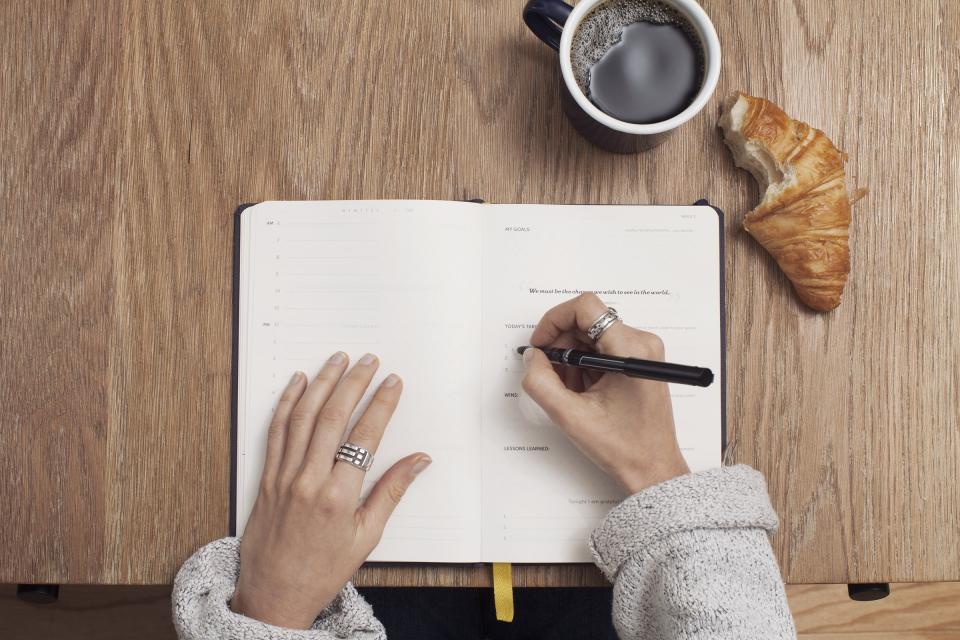
    My journal is not aesthetic. It’s a cheap spiral notebook I bought at a supermarket. The entries are messy. Sometimes it’s just three bullet points: “Tired. Had toast. Forgot to reply to Sarah.” That’s it. There is no deep reflection. There is no gratitude list. There is just a record of being alive that day. And somehow, looking back at those mundane entries feels more meaningful than any curated journal could. Because it’s real. It’s my actual life, not the version I’d present to an audience.

    I think we’ve overcomplicated journaling. We’ve turned it into another thing we’re supposed to optimize. Morning pages, shadow work prompts, five-minute gratitude sprints. All of that is fine if it helps you. But if it makes you feel like you’re failing at journaling — which is absurd, you can’t fail at writing your own thoughts — then it’s not serving you.

    Digital detox in small doses (because 48 hours is unrealistic most weeks)

    I did a proper 48-hour digital detox once and wrote about how it reminded me what boredom felt like. It was great. It was also completely unsustainable. I am a working mom with responsibilities that require me to be reachable. I cannot disappear into the woods for a weekend every month.

    What I can do is much smaller. Phone goes to another room during meals. No scrolling in bed — that one took months to actually stick. The charger lives in the living room now, not on my nightstand. On Saturday mornings I don’t check anything until I’ve had breakfast. Not email, not messages, not the news. The world continues spinning. Nobody has ever died because I replied to their message at 10 AM instead of 7 AM.

    These tiny boundaries with my phone feel almost laughable to describe. But the cumulative effect is real. I sleep better when I don’t scroll before bed. I’m more present at breakfast when my phone isn’t face-up on the table. And I notice , actually notice , how often I reach for my phone out of pure reflex. The reaching itself has become a signal. What am I avoiding? What feeling am I trying to escape? Usually it’s boredom. Or anxiety. Or the uncomfortable reality that there is nothing urgent to do and I don’t know how to sit with that.

    Walking for my head, not for my body

    I started walking every day last year, not to lose weight or hit a step goal, but because my thoughts had gotten too loud and I didn’t know what else to do. I still walk. Not every single day, let me be honest, but most days. Twenty minutes. No podcast, no music, no phone calls. Just walking.

    The walking itself isn’t the point. The point is that I’m not doing anything else. I’m not productive during the walk. I’m not multitasking. I’m not optimizing. I’m just moving my legs and looking at trees and letting my thoughts unspool. Half the time my brain is looping a song lyric I can’t get rid of. The other half I’m mentally drafting emails I’ll never send. Neither is particularly enlightened. Both feel surprisingly healing.

    There’s something about forward motion that helps my brain process backward things. I don’t know the science. I don’t need to. I just know that when I’m stuck on a problem or a feeling, walking tends to loosen whatever’s jammed. Even if I come home with no solutions, I come home a little less clenched. That counts.

    Self-care as permission, not punishment

    The biggest shift for me wasn’t adding habits. It was changing how I talked to myself about adding habits. I spent years framing self-care as something I needed because I was broken. “I should meditate because I’m so anxious.” “I should walk because I’m out of shape.” “I should journal because my thoughts are a mess.” Every “should” was a tiny indictment. Every self-care practice was a reminder of my inadequacy.

    That framing never worked. It just made self-care feel like another thing on the to-do list, another way I was falling short. The turning point came when I started thinking about it differently: not as fixing myself, but as being with myself. The three-minute coffee. The face washing. The walk around the block. None of these fix anything. They don’t cure anxiety or make me more productive or give me glowing skin. They just put me in the same room as myself for a few minutes a day. And that, I’ve discovered, is more valuable than any cure.

    I also had to get comfortable with the discomfort of not being needed. This sounds strange, but stay with me. For a long time, my sense of worth was tangled up with how much people relied on me. Taking time for myself felt like abandoning a post. What if someone needed me during those twenty minutes I was walking? What if an urgent message came while my phone was in the other room? The guilt was real. It still shows up sometimes.

    What helped: learning to say no without explaining myself. Not just to other people , to the voice in my head that insists I must always be available. I started treating my small self-care habits not as indulgences but as non-negotiables. The same way I wouldn’t skip brushing my teeth, I try not to skip my three minutes of morning silence. I don’t always succeed. But having the standard matters more than hitting it perfectly.

    What a simple self-care routine that actually works looks like

    My self-care is not impressive. Nobody would film a reel about it. It’s three minutes of standing by a window, two minutes of washing my face, twenty minutes of walking, and a notebook where I sometimes write “had toast.” It is aggressively boring. It doesn’t require special equipment or early wake-up times or a personality transplant. It costs almost nothing. It fits into the cracks of my day rather than demanding space I don’t have.

    And it works. Not because it’s clever or optimized, but because it’s doable. Because I don’t feel guilty when I miss a day. Because nobody can tell me I’m doing it wrong , there’s no wrong way to stand by a window. Because the bar is so low I can’t fail, and not-failing builds momentum, and momentum builds something that starts to feel a lot like actually caring about myself.

    If you’re reading this and your self-care routine is also small and boring and ungrammable , keep it. Guard it. Don’t let anyone convince you it’s not enough. The most sustainable self-care might just be the kind that doesn’t look like self-care at all.

  • I Believed Exercise During My Period Was Bad for Me (Turns Out I Had It Completely Wrong)

    I Believed Exercise During My Period Was Bad for Me (Turns Out I Had It Completely Wrong)

    The first time someone told me I should go for a run while I was on my period, I laughed. Was this person serious? I could barely drag myself off the couch, wrapped in a blanket with a heating pad pressed against my stomach, and they wanted me to jog? The idea sounded not just unpleasant but genuinely unsafe. For years I believed the same thing most women around me seemed to believe too: that exercising on your period was something you just did not do. Your body was going through something, and the responsible thing was to rest. Your body was going through something, and the responsible thing was to rest. It felt like common sense.

    Except common sense and science do not always agree. When I actually started looking into the research, I realized almost everything I believed about exercise and periods was either exaggerated, outdated, or flat-out wrong. What surprised me most was not just that exercise was safe during menstruation, but that it might actually be one of the best things you can do for yourself during those days. Here are the myths I had to unlearn. According to a large-scale study by Harvard, there is no physiological reason to avoid exercise during any phase of your cycle unless a doctor has told you otherwise.

    Myth 1: Exercising on Your Period Is Dangerous or Unsafe

    This is the big one, the myth that sits underneath all the others. A lot of women genuinely believe that menstruation is a time for complete physical rest. The truth is there is no medical reason to avoid exercise during your period unless you have a specific condition like severe anemia or endometriosis that your doctor has flagged. For most women, continuing to move is not just safe but actively beneficial. The American College of Obstetricians and Gynecologists recommends regular exercise throughout the entire menstrual cycle. A Harvard Apple Women’s Health Study found that exercise habits naturally fluctuate across cycle phases, but there is no evidence that exercising during the menstrual phase itself causes harm.

    Myth 2: Exercise Makes Period Cramps Worse

    I used to think the pelvic area was having a tough enough time already and the last thing it needed was me bouncing around. Turns out the opposite is true. Moderate exercise triggers the release of endorphins, your body’s natural painkillers. These endorphins do not just lift your mood; they directly counteract prostaglandins, the compounds responsible for those uterine contractions that cause cramping. Think of endorphins as your body’s built-in ibuprofen, except you generate them yourself by moving. A 2019 meta-analysis published in the Journal of Education and Health Promotion reviewed multiple studies and concluded that regular aerobic exercise significantly reduces menstrual pain intensity. The science is consistent on this one.

    Myth 3: You Should Only Do Gentle Stretching or Yoga

    Listen, if gentle yoga feels right for you on day one, do gentle yoga. I am not here to tell anyone to deadlift through their cramps. But the idea that you must limit yourself to low-intensity movement is not based on any physiological rule. Strength training, running, cycling, swimming — these are all fine if you feel up to them. In fact, some women report that their best workouts happen during menstruation. A 2025 study published in the Strength and Conditioning Journal found that there is no consistent evidence supporting the idea that women should periodize their training around their cycle. The researchers concluded that individual perception and how you actually feel on a given day matter far more than any blanket prescription about what phase of your cycle you are in.

    Myth 4: Exercising Increases Your Menstrual Flow

    This fear makes intuitive sense. More movement equals more blood moving around the body, right? But menstrual flow is not controlled by your overall circulation like that. It is the shedding of the uterine lining, a process governed by hormonal signals, not by how much you are moving your legs. Exercise does not increase the total volume of menstrual bleeding. Some women may notice a temporary sensation of increased flow right after a workout, but this is usually just gravity helping what was already in the uterus exit more quickly. The total amount does not change. If anything, regular exercise over time is associated with lighter, more regular periods because of its beneficial effects on hormone regulation and body composition.

    Myth 5: Working Out on Your Period Messes Up Your Hormones

    During menstruation, both estrogen and progesterone are at their lowest points in the cycle. This does have some effect on things like energy levels and even ligament laxity, which is why some women feel slightly more prone to joint discomfort during their period. But exercising does not disrupt your cycle or throw your hormones out of balance. If anything, regular moderate exercise supports a healthier menstrual cycle over time by helping regulate insulin sensitivity, managing inflammation, and maintaining a healthy body weight, all of which contribute to hormonal balance. The only time exercise becomes a hormonal concern is at the extreme end — very intense training combined with caloric deficit, which can cause amenorrhea in some athletes. That is a completely different scenario from going for a thirty-minute jog or a strength session during your period.

    Myth 6: Exercising on Your Period Will Make You Feel Worse

    This one is personal. I have had days where the thought of putting on workout clothes felt like someone asking me to climb a mountain. But here is what I noticed after I started experimenting: every single time I actually tried exercising on my period, even just a twenty-minute walk, I felt noticeably better afterward. Not transformed into a different person. Just less bloated, less irritable, and less trapped inside my own discomfort. There is a feedback loop here that is easy to underestimate. You feel bad, so you skip exercise. Skipping exercise makes you feel worse the next day. Breaking that loop even once changes how you experience the rest of your period. It is not about hitting personal records. It is about reminding your body that it is still capable of feeling good.

    So What Should You Actually Do?

    The honest answer is: whatever feels manageable. Some women feel terrible on day one and great on day three. Some feel the opposite. There is no universal schedule. The only rule that actually holds up is to listen to your body as it is today, not as you think it should be. If you have energy, use it. If you are exhausted, rest without guilt. The goal is not to prove anything. The goal is to stay connected to your body instead of checking out for a week every month.

    I still have days where my heating pad wins and the workout does not happen. The difference now is I do not believe I am doing my body a favor by staying still. I know the difference between needing rest and just assuming rest is the only option. That shift changed my entire relationship with my cycle. If you have been sitting on the sidelines during your period for years because someone told you exercise was dangerous or pointless, maybe give yourself permission to test that assumption. You might be surprised by what your body can actually do.

    I have also learned that walking every day, not for exercise but for my mind, turned out to be the thing that got me through the hardest period days without feeling like I was forcing anything. And when I finally stopped trying to be a morning person, I realized that forcing myself into rigid workout schedules was half the problem — my body already knew what it needed, I just was not listening.

  • I Tried Cozymaxxing — The TikTok Comfort Trend That Told Me to Stop Hustling

    I Tried Cozymaxxing — The TikTok Comfort Trend That Told Me to Stop Hustling

    I first heard the word “cozymaxxing” on TikTok at 11pm on a Tuesday, while I was answering work emails from bed. The irony was not lost on me.

    A creator was showing off her room — not a magazine-worthy living space, just a regular apartment corner she had turned into something soft and warm. There was a chunky knit blanket, a paper lantern casting that golden-orange glow you only get from non-overhead lighting, a mug of something steaming, and a small stack of books that looked like they had actually been read. The caption said something like: “cozymaxxing my space because the outside world is too much.” I watched it twice. Then I got up and turned off my big light.

    What Cozymaxxing Actually Is

    Cozymaxxing is the practice of intentionally making your environment as comfortable as possible, using sensory-rich, self-soothing elements that signal safety to your nervous system. It started on TikTok and YouTube in early 2025 and has since been covered by Martha Stewart, Forbes, and Good Housekeeping, not because it is complicated, but because it is the opposite. The core idea is simple: layer several comfort-focused rituals and objects until your space feels like a sanctuary, not a productivity station.

    The name itself is a mashup of “cozy” and “maxxing,” a suffix borrowed from internet subcultures that means optimizing or maximizing something. But unlike looksmaxxing or studymaxxing, cozymaxxing does not ask you to grind harder. It asks you to stop.

    Martha Stewart’s team describes it as “the practice of engaging in multiple self-soothing activities that center around your senses and embody the true essence of comfort.” There is no wrong way to do it, as long as what you are doing brings you calm.

    Not Hygge — Cozymaxxing Is Maximalist

    If you have heard of hygge, the Danish concept of creating warm, simplified atmospheres, cozymaxxing might sound familiar. But they are not the same thing. Hygge leans minimalist: declutter, simplify, keep things clean and intentional. Cozymaxxing goes the other direction. Think of it as hygge on steroids. You are not subtracting to find calm; you are adding blankets, candles, textures, soft things, warm drinks, ambient sounds, low lighting, layering comfort until it wraps around you like a weighted blanket.

    Marketing firm Boxwood put it well: cozymaxxing “has a more maximalist bent that embraces collecting and layering rather than decluttering and simplifying.” For those of us whose homes will never look like a Scandinavian design catalog, this is genuinely freeing.

    Why Cozymaxxing Is Having a Moment Right Now

    There are several reasons this trend caught fire. People are burned out. Therapists and psychologists note that after years of economic uncertainty, pandemic aftershocks, and the always-online culture, many people are searching for small pockets of peace rather than grand life overhauls. Ken Fierheller, a registered psychotherapist at One Life Counseling, told Healthline that “people are burnt out and looking for ways to create little pockets of peace in their lives.”

    There is also a quiet rebellion against hustle culture happening here. In a world where people are told to maximize their productivity, their skincare routine, their workout schedule, their side hustle, cozymaxxing says: maximize your comfort instead. Ritika Suk Birah, a counseling psychologist, points out that “people are increasingly rejecting the glorification of busyness and hustle culture, opting instead for self-care and balance.”

    I have written before about how I finally stopped burning out, and I recognize this shift. The most countercultural thing you can do right now might be to rest deeply, on purpose.

    The Science Behind Soft Lighting and Chunky Blankets

    This is the part I did not expect: cozymaxxing actually has some research behind it. Studies show that creating a comforting sensory environment can lower cortisol levels, improve heart rate variability, and help activate the parasympathetic nervous system, the part of your body responsible for rest, digestion, and recovery. Soft, warm lighting in particular signals to your brain that it is time to wind down, which is why overhead fluorescent bulbs feel so aggressively wrong after 8pm.

    Multiple researchers have pointed out that sensory self-soothing is not just a nice-to-have; it is a legitimate stress management tool. Engaging your senses through touch (soft fabrics), smell (candles or essential oils), sight (warm lighting), and even taste (a warm drink), anchors your attention in the present moment. It is essentially a low-effort form of grounding, the same technique therapists teach for managing anxiety.

    One review noted that regular engagement in comfort rituals is associated with lower resting cortisol and improved sleep quality. You do not need a spa membership. You need a soft blanket and permission to use it.

    My Own Attempt at Cozymaxxing (Spoiler: It Was Awkward at First)

    The first night I tried cozymaxxing, I felt a little silly. I lit a candle my sister gave me two Christmases ago. I made tea instead of opening my laptop again. I turned off the big light and switched on a small lamp with a warm bulb. I put my phone in another room, and this part was genuinely uncomfortable for the first five minutes.

    Then something happened. My shoulders dropped. I noticed my jaw had been clenched. I sat there doing nothing productive for maybe twenty minutes, and when I went to bed, I fell asleep faster than I had in weeks.

    I kept doing it. Not every night; I am not that disciplined. But enough times that I started looking forward to my little cozymaxxing routine. It became a signal: the day is over, you are allowed to stop now. For someone who has spent years feeling guilty about rest, that signal was worth more than any productivity hack I have ever tried.

    How to Try Cozymaxxing Without Buying Anything New

    You do not need to buy a reading nook or aesthetic candles. Cozymaxxing works with whatever you already have. The core principles are simple:

    Lighting matters more than anything. Turn off overhead lights. Use lamps, fairy lights, or even just a candle. Warm-toned bulbs make a surprising difference. Texture comes next — grab the softest blanket you own, put on socks, sink into a cushion. Engage your senses: a warm drink, a familiar scent, some ambient music or silence. The point is not to curate a Pinterest board. The point is to tell your nervous system that right now, in this moment, you are safe.

    Some people cozymaxx their entire apartment. Others cozymaxx a single chair in the corner. Both approaches count. I started with just my bedside setup, and even that small corner of intentional comfort changed how my evenings felt.

    The walks I take every morning help me start the day grounded, but cozymaxxing helps me end it the same way. The two habits, oddly enough, work as a pair: one for morning regulation, one for evening unwinding.

    Is Cozymaxxing a Trend or a Real Shift?

    I think cozymaxxing sticks around because it does not ask for much. It is not a 30-day challenge or an expensive wellness program. It is just the recognition that your environment shapes your nervous system, and that making small, intentional changes to that environment is a legitimate form of self-care.

    Will it cure burnout? No. Will it fix your sleep, your anxiety, or your overwhelm in one evening? Also no. But it might remind you what it feels like to be comfortable in your own space, and for a lot of us who have forgotten how to rest, that reminder matters more than we think.

  • I Tried Yoga for Burnout — It Didn’t Fix Me, But It Did Something Better

    I Tried Yoga for Burnout — It Didn’t Fix Me, But It Did Something Better

    I tried yoga for burnout because I had run out of other options. Three months into what I now call my “great unraveling,” I found myself lying on a yoga mat in a dimly lit studio, crying quietly during savasana. I had started yoga because I was burned out. Not the casual, “I need a vacation” kind of tired. The kind where your brain fog gets so thick you forget why you walked into a room, where Sunday evenings feel like a countdown to doom, and where you snap at people you love over things that do not matter.

    woman practicing yoga for burnout recovery doing child's pose on a mat in dim studio

    I expected yoga to fix me. Spoiler: it did not. What it did was stranger and, honestly, more useful.

    I Thought Burnout Meant I Needed to Try Harder

    For most of my adult life, I operated on the assumption that feeling overwhelmed meant I was not working hard enough. So when burnout hit, I did what any overachiever does: I added more things to my schedule. More productivity hacks. Earlier mornings. A stricter to-do list. None of it worked, because burnout is not a motivation problem. It is a nervous system problem.

    Burnout happens when your body has been running on stress hormones for so long that it forgets how to turn off the alarm. Cortisol stays elevated. Sleep stops being restorative. Your brain treats a full inbox the same way it would treat a predator in the bushes. You are not lazy; you are physiologically exhausted.

    Multiple meta-analyses and pilot studies have confirmed what anyone who has tried yoga for burnout already suspects: yoga practice can measurably reduce stress, anxiety, and depressive symptoms. A growing body of research shows that yoga lowers cortisol levels and activates the parasympathetic nervous system, the part of your body responsible for rest, digestion, and actually feeling human again.

    The First Month Was Just Showing Up

    My first few sessions were humiliating. I could barely hold downward dog without shaking. My mind would drift to work emails during child’s pose. I kept waiting for the part where yoga would make me feel calm and glowing, like the women in yoga ads who seem to have their entire lives figured out. Instead I felt restless, stiff, and a little embarrassed.

    But I kept going back. Not because I loved it. Because it was the only 45 minutes of my day where nobody could ask me for anything, and that alone made yoga for burnout worth continuing. That alone, just being unreachable for three-quarters of an hour — was doing more for my burnout than any amount of planning or list-making ever had.

    Then something shifted. Around week five, I noticed I was breathing differently during the day. Not just on the mat, but during meetings, in traffic, when my kid was having a meltdown. My body had started remembering how to breathe from my diaphragm instead of my upper chest. I had not realized I had spent years breathing like someone being chased.

    What the Research Actually Says About Yoga for Burnout

    The literature on yoga for burnout does not claim yoga is a magic cure. What it does show is that yoga addresses burnout through multiple pathways at once: physical, emotional, and neurological. A review from the Kundalini Research Institute found that regular yoga and meditation practice reduced emotional exhaustion, one of the core symptoms of burnout, in healthcare workers and corporate employees alike.

    Breathing techniques, specifically, known as pranayama in yoga — appear to be one of the most effective tools for calming an overactive stress response. Slow, controlled breathing signals to your brain that you are safe. When you practice this repeatedly, your nervous system starts to recalibrate. You stop living in fight-or-flight mode as your default setting.

    This is not just a feeling. Studies show that yoga practice is associated with lower resting cortisol, improved heart rate variability, and reduced activity in the amygdala, the part of your brain responsible for fear and threat detection. In other words, yoga for burnout was physically changing how my brain responded to stress.

    Stronger Than I Expected, in a Different Way

    I thought yoga would make me flexible. It did, eventually, but that was never the point. What it actually did was teach me what it feels like to be in my body without trying to fix it or push it or optimize it. As someone who had spent years treating my body like a machine that needed to perform, this was genuinely uncomfortable at first. Stillness felt like failure.

    Over time, I started noticing things. My shoulders, which I had been carrying somewhere near my ears for approximately a decade, started dropping. I slept more deeply on nights I practiced, even if only for fifteen minutes. I became less reactive — not because I was trying to be Zen, but because my baseline stress level had actually gone down.

    I also stopped expecting yoga to solve my problems. It does not fix toxic workplaces or unmanageable workloads or the structural reasons women burn out at higher rates than men. What it does is give your nervous system a fighting chance. It creates small, reliable moments of regulation in a life that otherwise runs on chaos.

    The Yoga for Burnout Practices That Actually Helped (and the Ones That Did Not)

    Not all yoga is created equal when it comes to burnout recovery. Fast-paced vinyasa classes, the kind where you are jumping from pose to pose in a heated room, sometimes made me feel more wired, not less. Restorative yoga — the slow, supported, barely-moving kind — was the one that actually calmed my system down.

    Yin yoga, where you hold poses for several minutes, was helpful too. It taught me to sit with discomfort without immediately trying to escape it. That skill transferred off the mat more than I expected. Sometimes the answer to burnout is not doing less; it is learning to tolerate the uncomfortable feelings without spiraling.

    Breathing practices became my most-used tool. I started doing three minutes of alternate nostril breathing before bed. It felt silly at first, like something from a wellness influencer’s morning routine. But it worked. Within a week, I was falling asleep faster and staying asleep longer.

    Still Burned Out, Just Less Destroyed by It

    I want to be honest: I am not fully recovered. Burnout is not something you fix with a few months of yoga and some deep breathing. It is a long process of unlearning the habits and beliefs that got you there in the first place. My experiment with yoga for burnout did not cure me. It made me resilient enough to start addressing it from a place of regulation instead of survival.

    Some days I still feel fried. I still go for walks in the morning when my thoughts get too loud, and I still scribble in my journal on evenings when everything feels like too much. I still struggle with saying no and protecting my time. Yoga is not a replacement for those things. It is what makes those things possible.

    The difference is that I can now feel the burnout coming before it consumes me. My body sends signals: tight shoulders, shallow breathing, a low-grade irritation that sits just under the surface, and I actually notice them now. That might not sound like much. But when you have spent years ignoring your own limits until they forced you to stop, learning to listen is a kind of radical act.

    A Small Practice That Made a Big Difference

    If you are burned out and considering yoga for burnout, here is what I wish someone had told me: you do not need a 90-minute class. You do not need expensive leggings or a studio membership. You need maybe ten minutes, a quiet corner, and permission to be terrible at it.

    Start with child’s pose. Just two minutes, breathing slowly through your nose. That is it. If you want more, add a few gentle stretches. Cat-cow for your spine. Legs up the wall at the end of the day. Nothing fancy. Nothing that requires you to be good at it.

    Yoga did not fix my burnout. But it gave me back something I had lost: the ability to feel what was happening inside my own body. That turned out to be the first step toward everything else.

  • I Learned to Say No Without Explaining Myself (and the World Didn’t End)

    I Learned to Say No Without Explaining Myself (and the World Didn’t End)

    I learned to say no the hard way—by saying yes too many times. There was a time in my life when my calendar looked like someone else had filled it in, because someone else had. I was the go-to person for last-minute favors, the friend who always said “don’t worry, I’ll handle it,” the colleague who stayed late because I couldn’t bear the thought of disappointing anyone. It took me way too long to realize that being everyone’s safety net meant I had no safety net of my own.

    I don’t remember the exact moment it clicked. There wasn’t a dramatic breakdown or a single event that made me change. It was more like a slow erosion, saying yes to things I didn’t want to do, week after week, until I looked at my life and genuinely couldn’t tell which parts of it were mine.

    The Yes Trap

    For most of my twenties and early thirties, I operated on a simple belief: saying yes made me a good person. If someone needed help moving on a Saturday, I showed up. If a friend wanted to vent at 11 PM, I stayed on the phone. If work needed someone to cover an extra shift or take on a project nobody else wanted, my hand went up before I finished processing the question.

    I told myself this was kindness. Generosity. Being a good friend. And some of it was, genuinely. But a lot of it was fear. Fear of being seen as difficult. Fear of losing people if I stopped being useful. Fear that if I said no even once, the whole fragile structure of my relationships would collapse.

    Here’s what nobody tells you about being the person who always says yes: people stop asking if you actually want to do things. They just assume you do. Or worse, they stop considering whether their request is reasonable at all, because you’ve trained them to expect a yes every single time.

    The First No Felt Like a Crime

    I still remember the first time I said no to something small. A coworker asked if I could stay late to help with a project that wasn’t mine. I had plans. Nothing important, just dinner at home and an early bedtime. Old me would have canceled without a second thought. But that day, for some reason, I said “I can’t tonight.”

    I spent the next three hours feeling physically sick. I replayed the conversation in my head. I drafted apology texts I didn’t send. I convinced myself she was angry, that I’d damaged our working relationship, that this one no would somehow define my entire career.

    She replied “no worries, have a good night!” and the world kept spinning.

    That was the first crack in the wall. Not a dramatic breakthrough—just a tiny data point that contradicted everything my anxiety had told me. Maybe saying no wasn’t the catastrophe I imagined it would be.

    Explaining Myself to Death

    After that first no, I experimented with saying no more often. But there was a problem: I couldn’t just say no. Every no came with a paragraph of explanation. “I’m so sorry, I would love to help but I’m really tired today because I didn’t sleep well and I have a big day tomorrow and maybe next time?” It was exhausting. The explanations took more energy than whatever I was saying no to.

    I realized something uncomfortable: I was still treating my own time and energy as things I had to justify spending on myself. Like my own rest required a permission slip signed by someone else. The explanations were me asking for permission to exist without being useful to others.

    So I tried something harder: saying no without explaining. Just “I can’t make it” or “that doesn’t work for me.” No reasons, no apology parade, no promises about next time. Just… no.

    The first few times felt awful. I was sure people would demand explanations, get offended, push back. But mostly, they just accepted it and moved on. People, I learned, are far less interested in your reasons than you think they are. Your no doesn’t occupy their mental space the way it occupies yours.

    What Actually Changed When I Learned to Say No and Set Boundaries

    1. The people who mattered stayed. This was the big fear, right? That setting boundaries would drive people away. Some people did get annoyed when I stopped being available 24/7. But those people, I began to notice, were the ones who had been taking more than they gave for years. The real friends adapted. Some even started setting their own boundaries, which was unexpected and kind of beautiful.

    2. I had energy for things I actually wanted to do. When I stopped spending my weekends on other people’s errands and my evenings on other people’s crises, I had space. Not just time—mental space. I started walking in the mornings, which sounds like a cliché but genuinely changed how I felt about getting out of bed. I had room to write in my journal without feeling like I was stealing time from someone who needed me more.

    3. My relationships got better, not worse. When I stopped resenting people for asking too much of me, which was partially my fault for never saying no, I could actually enjoy being with them. I showed up to things because I wanted to, not because I felt trapped. That changes the energy of every interaction. People can tell when you’re there out of obligation.

    The Self-Care That Nobody Posts About

    Instagram self-care looks like face masks and bubble baths. Real self-care, the kind that actually changes your life, is boring. It’s saying no to a friend’s party because you’re exhausted. It’s muting group chats that drain you. It’s going for a walk alone instead of taking a call you don’t have the capacity for. It’s choosing your own peace over someone else’s convenience.

    And here’s the part that took me years to internalize: none of this makes you selfish. I used to think taking care of myself meant I was taking something away from others. But I was wrong about the math. When I’m running on empty, the version of me that shows up for people is resentful, distracted, and half-present. When I’m rested and centered, the help I give is real help, not reluctant obligation wrapped in a smile.

    Self-care isn’t withdrawing from the world. It’s making sure you have something real to offer when you engage with it.

    What I Still Struggle With

    I want to be honest: I’m not some boundary-setting guru now. I still catch myself over-explaining sometimes. I still feel a pang of guilt when I turn down an invitation for no reason other than “I don’t want to go.” Some weeks I slide back into old patterns without noticing until I’m exhausted again.

    The difference is I notice faster now. I catch the resentment building and ask myself: did I actually want to say yes, or was I just afraid of saying no? Most of the time, I already know the answer.

    Boundaries are not a one-time installation. They’re more like a garden—you have to tend them, pull the weeds, check for new growth. Some seasons are easier than others. Some relationships require softer boundaries, some need firmer ones. The skill isn’t building perfect walls; it’s learning to adjust them as you go. (Research on healthy boundaries backs this up — it’s a skill, not a personality trait.)

    A Small Practice That Helped

    One thing that made a real difference: I started asking myself “if nobody would be disappointed, what would I actually choose right now?” It sounds simple, but it was shockingly hard to answer at first. I had spent so many years filtering every decision through other people’s expectations that I’d genuinely lost touch with my own preferences.

    The answers surprised me. I didn’t actually want to go to brunch every Sunday. I didn’t actually enjoy being the person everyone called during a crisis at 2 AM. I preferred quiet mornings to busy ones, small gatherings to big parties, and honest conversations to surface-level catch-ups.

    Learning what you actually want — not what you think you should want, is its own kind of self-care. Maybe the most important kind.

  • My Stomach Keeps Protesting at Midnight (and It’s Not Just Hunger)

    My Stomach Keeps Protesting at Midnight (and It’s Not Just Hunger)

    I used to think my midnight stomach grumbles were simple. I ate dinner too early. I was hungry again. Grab a snack, problem solved.

    Then I started paying attention.

    The “hunger” didn’t feel like regular hunger. It was a weird, gnawing, burn-y kind of discomfort. Sometimes it came with a sour taste at the back of my throat. Other times my stomach made noises so dramatic it sounded like it was holding a press conference. At 2 AM. On a Tuesday.

    Eventually I connected the dots. This wasn’t about food. My gut was trying to tell me something, and I’d been ignoring it for years.

    The real reason your stomach acts up at night

    Here’s what I learned after falling down a research rabbit hole (and talking to an actual doctor — my aunt, who put up with my 11 PM panicked texts).

    When you lie down after eating, gravity stops doing its job. Normally, gravity helps keep stomach acid where it belongs — in your stomach. But when you’re horizontal, that acid can creep up into your esophagus. This is gastroesophageal reflux, or GERD if it happens regularly. Your esophagus doesn’t have the protective lining your stomach has, so that acid burns.

    And here’s the part that blew my mind: your brain sometimes misreads that burning sensation as hunger. The irritation in your esophagus gets translated as “empty stomach, need food.” So you eat. Which triggers more acid production. Which makes things worse. It’s a loop that feeds itself.

    It’s not always acid reflux

    Turns out there are several reasons your stomach might stage a midnight protest:

    • Late-night large meals. Your digestive system slows way down at night. A heavy dinner at 9 PM is still sitting there when you go to bed at 11. That’s a recipe for discomfort.
    • Stress. Your gut and brain are wired together through the vagus nerve. If you’re anxious, your digestion gets weird. Cortisol levels that spike from stress can send your stomach into chaos, especially at night when you’re not distracted by the day’s tasks.
    • Trigger foods. Spicy food, citrus, tomatoes, garlic, onions, chocolate, coffee, alcohol. All of these relax the valve between your stomach and esophagus. I ate a giant plate of sambal-heavy noodles at 9 PM once and my stomach did not speak to me for two days.
    • Eating too fast. If you inhale your dinner in 10 minutes, you swallow a ton of air. That air expands in your stomach and pushes acid upward. Plus your stomach hasn’t had time to signal your brain that it’s full.
    • Dehydration. Not drinking enough water during the day can mess with your stomach lining and slow digestion. Chugging a liter right before bed won’t fix it either — that just sloshes around in your stomach.

    What actually helped me

    I’m not going to pretend I flipped some switch and now sleep like a baby every night. But a few changes made a genuine difference:

    • I moved dinner earlier. Even a 30-minute shift helped. Eating at 7 instead of 8:30 gave my stomach time to process before I went horizontal. The sweet spot is 2 to 3 hours between your last meal and bedtime.
    • I propped up my pillow. Nothing fancy. I added an extra pillow so my head and shoulders are slightly elevated. This uses whatever gravity is left to keep acid down. It sounds too simple to work, but it does.
    • I paid attention to what I ate for dinner. I didn’t cut anything out completely. I just noticed which foods made my stomach angry and kept those for lunch instead. My beloved spicy noodles moved to a 1 PM slot.
    • I chewed my food. Embarrassingly basic, but I realized I was basically swallowing my dinner whole while watching YouTube. Slowing down cut the nighttime discomfort by a noticeable amount.
    • I stopped doom-scrolling before bed. This one was unexpected. Less bedtime anxiety meant less cortisol, and my stomach seemed to appreciate the calmer nervous system. Who knew my gut had opinions about my Twitter habits?

    When it’s more than just discomfort

    I want to be careful here. I’m not a doctor, and some stomach issues need actual medical attention. If your nighttime pain is severe, wakes you up consistently, or comes with symptoms like unexplained weight loss, trouble swallowing, or blood, please see a doctor. The lifestyle changes I mentioned are helpful for occasional midnight stomach grumbles, but they’re not a replacement for medical advice.

    That said, for a lot of people — myself included — the midnight stomach protest is just the body’s way of asking you to treat it a little better. Eat a bit earlier. Chew a bit slower. Stress a bit less. Simple things, but they add up.

    My stomach still complains sometimes. But now when it does, I know it’s probably not asking for crackers. It’s asking me to pay attention.

  • I Started Walking Every Day, Not for Exercise

    I Started Walking Every Day, Not for Exercise

    I did not start walking because I wanted to lose weight or hit a step goal or finally become someone who exercises. I started walking because I was losing my mind a little bit, and I did not know what else to do.

    It was February. The house felt small. My thoughts felt loud. I had been inside too long — days blurred together, the same walls, the same screens, the same loop of worry about things I could not name. One afternoon, I put on shoes without a plan and walked out the door. I did not bring headphones. I did not track the route. I just moved my body in one direction until I felt like turning around.

    That was nine months ago. I have walked almost every day since. Not for steps. Not for fitness. For my head.

    What a Walk Actually Feels Like

    The first ten minutes are terrible. My brain is still in the house, still running through the mental list of things I should be doing. I am half-convinced this is a waste of time. And then, somewhere around the fifteen-minute mark, something shifts. My thoughts slow down. They stop ricocheting and start drifting. I notice the color of someone’s front door. A dog in a window. The way light hits a particular tree at 4 PM. Small things. Real things. Things that exist outside my own head.

    By the time I turn around, I have usually had at least one thought I could not have had sitting at my desk. An idea for something I was stuck on. A new angle on a problem I had been circling. Or sometimes nothing at all — just quiet, which is its own kind of medicine.

    I did not set out to make walking a self-care practice. It just became one, the way the best things do: not because someone told me to, but because I felt better after doing it and wanted to feel that way again.

    Why This Stuck When Everything Else Failed

    I have tried exercise routines before. Gym memberships. Yoga challenges. Running plans. They all started with motivation and ended with guilt. Too much friction. Too many steps between deciding to do it and actually doing it. Drive to the gym. Change clothes. Figure out the equipment. Feel stupid. Go home.

    Walking has none of that. The barrier is shoes. That is it.. (I wrote about trying a digital detox once, and it reinforced what I was learning about giving my mind some breathing room.) I do not need to be good at it. I do not need to feel strong or coordinated or capable. I just need to put one foot in front of the other and keep going until my brain quiets down.

    Sometimes I walk for twenty minutes. Sometimes an hour. Sometimes I walk fast because I am angry about something. Sometimes I walk slow because I am sad. The walk meets me wherever I am. It does not demand a mood or a mindset. It just takes what I bring and, eventually, makes it feel a little lighter.

    The Unexpected Side Effects

    I sleep better. Not dramatically, but noticeably. On days I walk, I fall asleep faster and wake up less during the night. My body feels less stiff in the morning. I have more patience with my kids in the late afternoon, which is usually when my patience is thinnest.

    But the biggest thing: I know my neighborhood now. I know which house has the friendly cat, which corner gets the best light at golden hour, which street has the giant oak tree that looks different every season. These are small, useless pieces of knowledge. They will not make me more productive or successful. But they make me feel like I live somewhere instead of just existing inside a building.

    If you have been telling yourself you should exercise more, maybe stop telling yourself that. Maybe just put on shoes and walk out the door. Not for steps. Not for calories. Just to see what

    What Walking Is Not

    Walking is not a workout, at least not the way I do it. It is not optimized or tracked or shared. Nobody claps when I finish. There is no leaderboard. And that is exactly why it works. In a life where almost everything is measured and compared and posted, walking is the one thing that belongs entirely to me. It asks nothing and gives back, quietly, whatever I need that day.

    Sometimes what I need is to be alone with my own thoughts for twenty minutes. Sometimes what I need is to notice that the neighbor planted tulips. Both count. Both are why I keep putting on my shoes.

    happens when you give your thoughts some room to breathe.

  • The Journaling Method I Actually Stick To (After Trying Everything)

    The Journaling Method I Actually Stick To (After Trying Everything)

    I have started and abandoned more journals than I can count. The beautiful leather-bound ones with blank pages that intimidated me into silence. The guided journals with prompts that felt like homework. The bullet journals that required a degree in graphic design to execute. The five-minute journals that I used for seven minutes one morning and never touched again.

    For years, I believed journaling was something I should do , something all the grounded, emotionally intelligent women I admired seemed to do effortlessly. But every system I tried felt either too demanding, too vague, or too structured in ways that did not fit my brain. I would buy a new notebook, fill three pages with good intentions, and then let it gather dust on my nightstand until the guilt made me hide it in a drawer.

    Then I stopped trying to do journaling “right” and invented a method so simple, so low-pressure, that I have now done it almost every day for eight months , longer than any other habit in my adult life besides brushing my teeth.

    The Three-Sentence Journal

    Here is the entire method. Every evening, before I go to sleep, I write exactly three sentences:

    Sentence 1: Something that happened today. Nothing special. Not curated. Just a single specific detail. “The light through the kitchen window at 4 PM was so warm it made the whole room feel like honey.” Or “I yelled at my daughter this morning and spent the rest of the day trying to make up for it.” Real things. Actual moments.

    Sentence 2: Something I am feeling. Not “good” or “fine.” Specific. “I feel stretched thin, like a sheet pulled over a bed that is two sizes too big.” Or “I feel pleased with myself for finishing that project, which is a feeling I do not let myself have very often.” The second sentence is harder than the first, but it is the one that does the real work.

    Sentence 3: One thing I want to remember. This could be anything. A thing my daughter said. A realization I had. A small victory. A moment of unexpected beauty. “I want to remember how she held my face in her hands and said ‘I love your eyes, Mama.’”

    That is it. Three sentences. No prompts. No trackers. No “what am I grateful for” unless gratitude is genuinely what I feel. Some nights the whole thing takes ninety seconds. Some nights I write more because I want to. But the minimum is three sentences, and three sentences always count as done.

    Why This Works When Everything Else Failed

    It is too small to fail. No one is too busy for three sentences. No one is too tired for three sentences. The bar is so low that resistance barely has time to form before I am already finished.

    It does not demand a narrative. Traditional journaling assumes you have a story to tell. Most nights I do not. But I always have one thing that happened, one thing I feel, and one thing worth remembering. Fragments count. Fragments are the whole point.

    It builds self-awareness without the pressure. The second sentence , naming a feeling , is the quiet engine of this practice. Over months, I have noticed patterns. I feel “stretched thin” more often in weeks when I skip lunch. I feel “settled” on days when I spend at least ten minutes outside. I did not set out to collect this data. It just accumulated, gently, through the simple act of checking in with myself once a day.

    It creates a record I actually want to reread. I never reread my old journals when they were pages of stream-of-consciousness processing. They felt like fever dreams on paper. But three sentences a day creates something different , a mosaic of small, real moments that is genuinely moving to look back on.. Like when I stopped forcing myself to be a morning person, and it reinforced what I was learning.

    Try It Tonight

    You do not need a special notebook. A notes app on your phone works. The back of a receipt works. Just write three sentences before you fall asleep tonight. One thing that happened. One thing you feel. One thing you want to remember.

    Do not overthink it. Do not try to make it good. The point is not to produce something worth reading. The point is to build a tiny bridge back to yourself at the end of every day.

    Eight months in, I can tell you: that bridge is worth building.