Title: The Truth About Seed Oils: Inflammation, Omega-6, and Your Health
You’ve probably seen the debate online: some people swear by seed oils, while others treat them like poison. But if you strip away the internet noise, what does the science actually say about the oils in your pantry?
What Exactly Are Seed Oils?
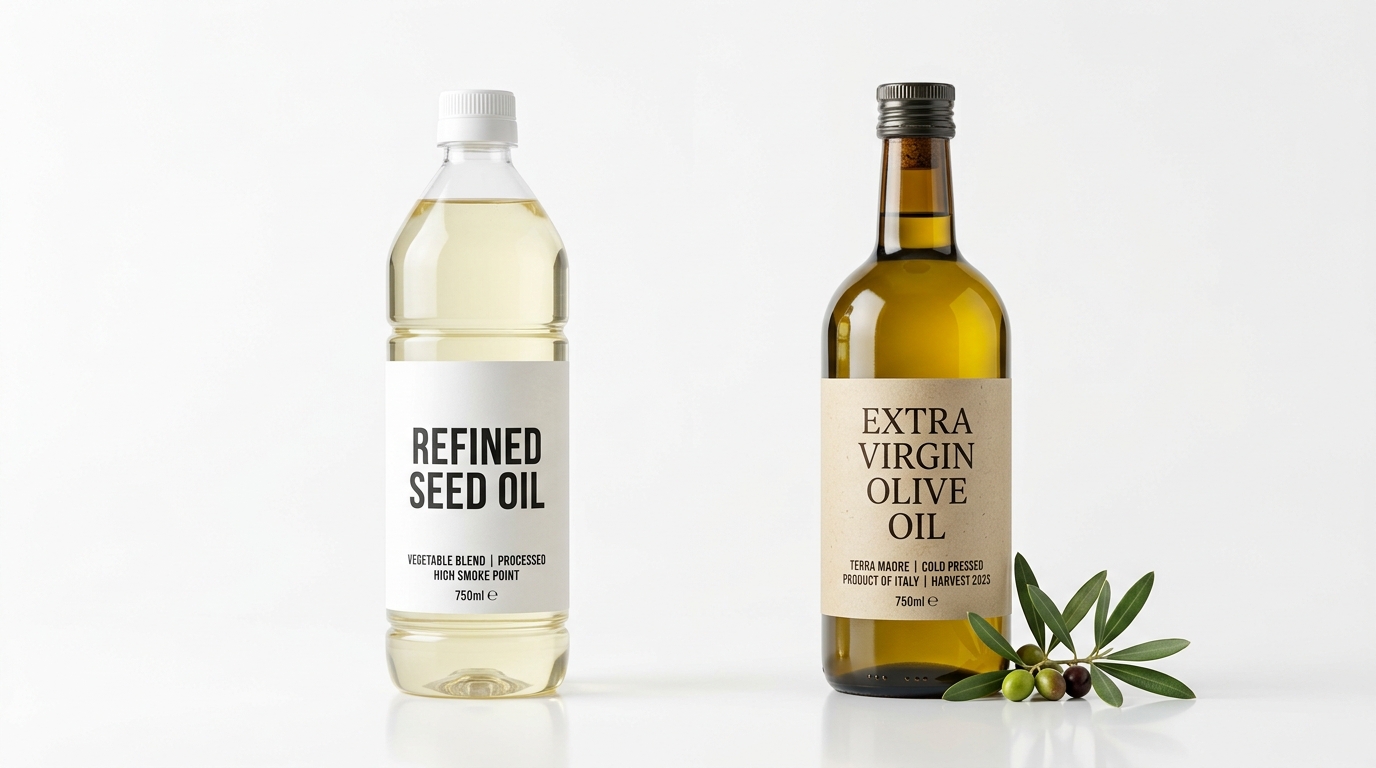
Seed oils—like soybean, corn, sunflower, and canola oil—are refined vegetable oils. They are found in almost everything processed: from your favorite chips to the “healthy” salad dressing at the store.
The core issue isn’t the oil itself, but the balance of fatty acids.
The Omega-6 vs. Omega-3 Tug-of-War
Our bodies need both Omega-6 and Omega-3 fatty acids. Omega-3s (found in fatty fish and walnuts) are generally anti-inflammatory. Omega-6s (found in seed oils) are essential too, but in excess, they can promote inflammation.
The problem is our modern diet. We’ve shifted from a balanced ratio to one that is overwhelmingly skewed toward Omega-6. When your body is flooded with Omega-6 and lacks Omega-3, it can create a pro-inflammatory environment. This chronic, low-grade inflammation is linked to everything from joint pain to insulin resistance.
The Processing Problem
It’s not just the fatty acids; it’s how these oils are made. Seed oils are highly refined using high heat and chemical solvents like hexane. This process can cause the oils to oxidize.
Oxidized oils contain free radicals, which can damage your cells and contribute to oxidative stress. When you cook with these oils at high temperatures, the problem only gets worse, as they break down further into harmful compounds.
Simple Swaps for a Healthier Kitchen
You don’t need to throw everything away overnight, but making a few swaps can significantly lower your inflammation levels:
– For High Heat: Switch to Avocado Oil or Ghee. They have high smoke points and are much more stable.
– For Cold Uses: Use Extra Virgin Olive Oil. It’s rich in monounsaturated fats and antioxidants.
– For Flavor: Use Grass-fed Butter or Coconut Oil.
The Bottom Line
Seed oils aren’t “toxic” in the sense that one meal will ruin you, but consuming them in high amounts every day keeps your body in a state of inflammation. By shifting back to natural, stable fats, you give your body the tools it needs to heal and function properly.
Leave a Reply