Category: Productivity

  • I Planned My Day in 30-Minute Blocks. My Toddler Had Other Plans.

    I Planned My Day in 30-Minute Blocks. My Toddler Had Other Plans.

    I downloaded three productivity apps in one afternoon. Color-coded my Google Calendar in pastels. Set up notification reminders at fifteen-minute intervals. Watched four YouTube videos about time blocking from people whose desks looked like hotel lobbies. I was going to become someone who has her life together, the kind of mom who runs a business, keeps a clean house, and somehow still bakes sourdough on Sundays. I lasted about four hours before my toddler unlocked a level of chaos I had not scheduled for.

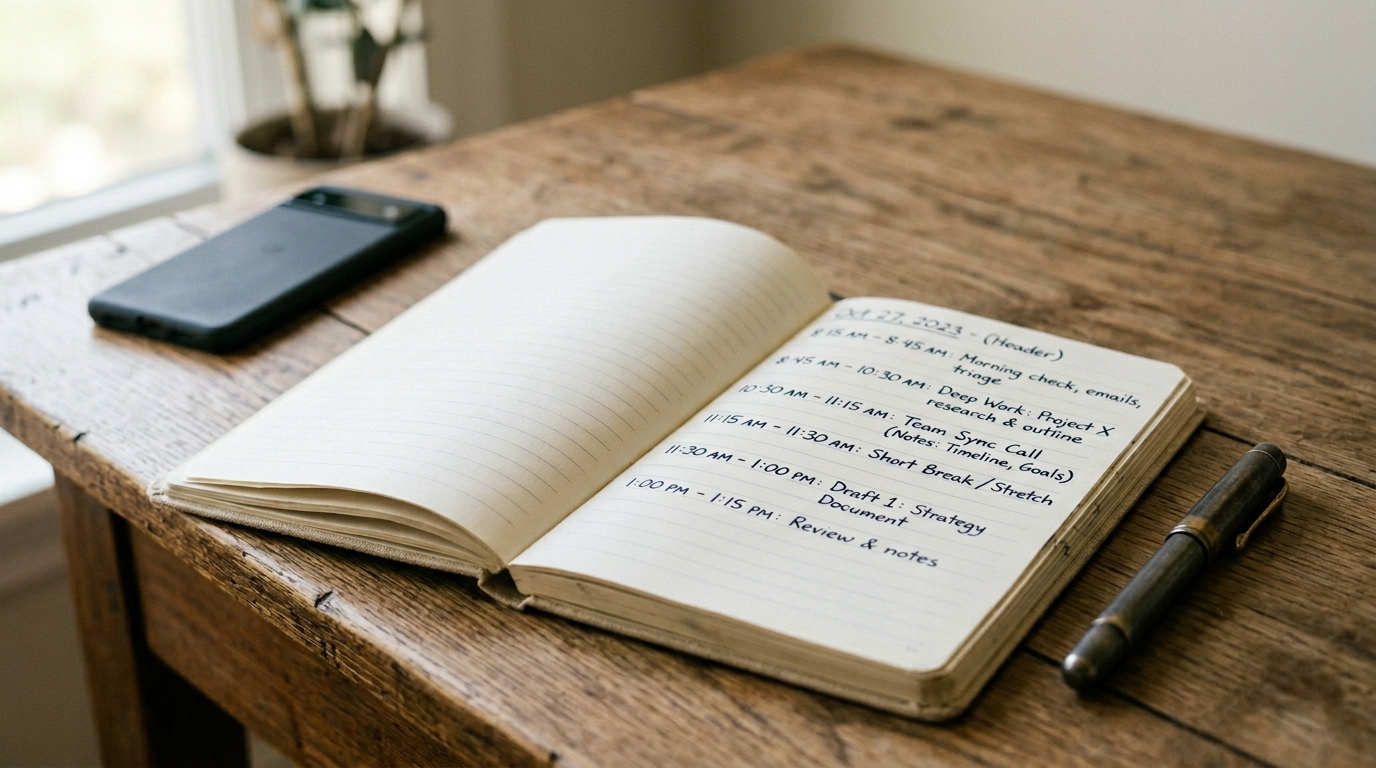
    It was a Tuesday. I had everything mapped out: 9:00 to 9:30, deep work. 9:30 to 10:00, emails. 10:00 to 10:30, content writing. Each block had a color, a purpose, and a satisfying little chime to signal the transition. I felt like a CEO. At 9:12, my two-year-old walked into the room holding a half-empty bottle of cooking oil she had somehow retrieved from a cabinet I thought was child-locked. The oil was on the couch. The oil was on the floor. The oil was somehow on the ceiling. The time block did not survive.

    This is the part where productivity gurus tell you to wake up at 4 AM before your kids do. I tried that once. I was so tired by 2 PM I cried over a misplaced spatula. Not sustainable. Not human. Not for me.

    The fantasy vs. the living room floor

    Time blocking makes perfect sense on paper. You assign specific tasks to specific time slots, you protect those slots, and at the end of the day you have done things. It works beautifully when you control your environment. An office. A quiet room. No small humans with urgent opinions about snacks.

    But when you work from home with children, especially young ones, your environment is not yours. You are not the CEO of your own schedule. You are, at best, a middle manager who gets overruled by a tiny dictator every forty minutes. The preschooler needs a wipe. The baby woke up early from nap. Someone is crying and nobody knows why, including the person crying.

    I kept trying to force the system anyway. I would set up my blocks every Sunday evening, hopeful and delusional. By Tuesday morning, the calendar looked like a crime scene. Missed blocks everywhere. Half-finished tasks bleeding into the next day. I started feeling like I was failing at something that was supposed to help me succeed.

    It took me months to understand something obvious: the problem was not me. The problem was the system. Time blocking assumes linear time. Parenting is not linear. Parenting is a series of interruptions held together by snacks and hope.

    What I do now (and why it actually works)

    I did not abandon time blocking entirely. I just stopped treating it like religion and started treating it like a suggestion. Here is the version that survived my toddler:

    1. I switched from time blocks to “time zones.” Instead of thirty-minute precision slots, I now have three zones in my day: morning zone (creative work, if the universe allows), afternoon zone (lighter tasks, emails, admin), and evening zone (planning, or more realistically, collapsing). Each zone has one priority task. Just one. If I finish that one thing, the zone is a win. Everything else is bonus. I learned this approach after realizing that a two-hour block with one task did more for me than any color-coded schedule ever did.

    2. I stopped equating productivity with output. This was the hardest mental shift. Some days I write 800 words. Some days I write nothing but manage to schedule a pediatrician appointment, order groceries, and prevent someone from drawing on the walls. Both days are productive. They just do not look the same on paper.

    3. I built a meal prep system that does not need me to be Martha Stewart. I wrote about this before, but the short version: I prep ingredients, not meals. Chopped vegetables in containers. Marinated chicken in the fridge. Rice in the cooker. When dinner time comes, I assemble, I do not cook from scratch. It takes fifteen minutes instead of an hour, and it does not require a Sunday afternoon of batch cooking that makes me resent my own kitchen.

    These three changes did more for my sanity than any app, planner, or motivational podcast. And they hold up on the days when nothing goes according to plan, which is most days.

    A real day (not the Instagram version)

    Here is what last Wednesday actually looked like:

    6:30 AM: Woken up by a small person demanding “yellow cereal.” We do not have yellow cereal. We have never had yellow cereal. This is discussed at length.

    8:00 AM: Morning zone begins. I sit down with coffee. I write for twenty-two minutes before the baby monitor lights up. Nap over early. I save the document mid-sentence.

    9:30 AM: Snack negotiation. Then another snack negotiation because the first snack was rejected on grounds I still do not understand.

    11:00 AM: I get forty uninterrupted minutes while the toddler watches an episode of something with talking animals. I do not feel guilty about the screen time. The alternative is me losing my mind, which helps no one.

    1:00 PM: Afternoon zone. Emails. A phone call I have been avoiding. I reply to three messages while sitting on the bathroom floor because the toddler is in the bath and supervision is non-negotiable.

    3:30 PM: I attempt to fold laundry. I do not finish folding laundry. The laundry is still there as I type this.

    5:00 PM: Dinner assembly using pre-chopped vegetables from two days ago. Rice from the cooker. Some chicken I marinated that morning. It comes together in under twenty minutes. Nobody complains. This counts as a victory.

    8:30 PM: Kids are asleep. I stare at the wall for ten minutes, then write for an hour. The evening zone is real and it is sacred.

    This day produced maybe three hours of actual work. But it also kept two children alive, fed, and mostly happy. The old me would have called this day a failure. The current me calls it Wednesday.

    The productivity advice nobody gives moms

    Most productivity content is written by people with uninterrupted mornings and a door that closes. That advice falls apart the moment someone needs you to open a fruit pouch or find a missing shoe. I wasted a lot of energy feeling inadequate before I realized the advice was not built for my life.

    Your capacity is not fixed. It changes day to day, sometimes hour to hour. On days after bad sleep, yours or the baby’s, your brain works at half-speed. Expecting the same output every day is setting yourself up for guilt. Some days you flow. Some days you survive. Both are fine.

    Context switching is the real energy killer. This is why time blocking appealed to me in the first place, I wanted to protect deep focus. But when you are a mom working from home, context switching is the default mode. You go from writing a proposal to changing a diaper to answering a client email to breaking up a sibling argument, all in the span of twenty minutes. The cognitive cost of this is real, and you cannot optimize it away. What you can do is lower your expectations of what “focused” looks like on any given day, and stop comparing your scattered Tuesday to someone else’s silent office Friday.

    Rest is part of the work. I used to think resting meant I was lazy or undisciplined. Now I know that staring at the wall for ten minutes after the kids go to bed is not avoidance, it is recovery. My brain needs transition time between roles: mom, then worker, then human. You cannot sprint through all three without burning out. I learned that lesson the hard way.

    What I will keep and what I have let go

    I still use a to-do list, but it has three items maximum per day. Not fifteen. Not a “stretch list” for when I am feeling ambitious. Three things. If I finish them, the day is done. If I do not, they roll forward. No shame attached.

    I still protect my morning zone when I can, but I do not pretend it will always work. Some mornings the universe, or the toddler, has other ideas. On those days, I accept the chaos, find a pocket of quiet later, and try again.

    I stopped tracking every minute of my day. I did that experiment once and it was illuminating but exhausting. Now I track one thing: did I do the priority task? Yes or no. That is it. The rest is noise.

    The gift of letting go of perfect time blocking is space. Mental space. Emotional space. Space to notice that your kid is doing something funny with a cardboard box, or that the light through the window is pretty at 4 PM. These are not productivity metrics. They are life. And I was missing them while staring at my color-coded calendar.

    I still have the calendar app on my phone. I open it sometimes with genuine fondness, the way you might look at an old photo of yourself from a phase you have outgrown. The blocks are still there, faded pastels, reminders I never deleted. They do not rule my day anymore. They are just suggestions now. Preferences, not rules.

    And somehow, without the pressure of getting it right, I get more done. Not because I am more efficient, but because I am less paralyzed by the gap between the plan and the reality. The plan bends now. It used to break.

  • I Stopped Multitasking for a Month and It Felt Like Time Travel

    I Stopped Multitasking for a Month and It Felt Like Time Travel

    Here is a confession that is embarrassing to type: before this experiment, I genuinely thought I was good at multitasking. I was the person with seventeen browser tabs, a half-written email, a phone call on speaker, and a simmering pot on the stove, convinced I was getting more done than anyone else in the house. Spoiler: I was not.

    A friend sent me a study about task-switching — the kind where scientists measure what actually happens in your brain when you try to do two things at once. The short version: you do not do two things at once. You switch rapidly between them, and each switch costs you a little bit of focus that you never get back. The researchers called these “switch costs.” I called them Tuesday.

    So I decided to try something that felt radical. For one month, I would do one thing at a time. One thing. Not two. Not three. Just the thing in front of me, until either I finished or I chose to stop. No email while on a call. No scrolling while eating. No half-listening to my daughter while mentally drafting a shopping list.

    Week One: Withdrawal

    The first week was physically uncomfortable. I kept catching myself reaching for my phone mid-task without any conscious intention. My hand just went there, like a dog returning to a spot it had peed on. The urge to add a second activity to any moment of singular focus was so strong I started keeping a tally. By Wednesday, I had caught myself attempting to multitask forty-three times. In three days.

    Cooking without a podcast felt wrong. Folding laundry without a show in the background felt like punishment. But I stuck with it, mostly out of stubbornness, and by Friday something strange happened. I finished cooking dinner twelve minutes faster than usual. I had no idea where the extra time came from until I realized I had simply not stopped four times to answer texts or skip a song.

    Week Two: The Time Glitch

    This is the week where the experiment started to feel almost magical. Tasks that usually took me an hour were taking forty minutes. Not because I was working faster. Because I was not constantly stopping and restarting. The switch costs were gone, and without them, my actual output speed was significantly higher than I had ever given myself credit for.

    The strangest part: my days started feeling longer. Not in a bad way. In the way where you look at the clock and realize it is only 2 PM and you have already done the thing you used to still be doing at 4. The reclaimed time was not dramatic — maybe an hour and a half across the day — but an hour and a half of extra margin when you have young children is basically a fortune.

    Week Three: The Listening

    Somewhere around the third week, I noticed I was having better conversations. With my partner. With my kids. Even with the cashier at the grocery store. When I was not running a parallel mental thread during. (Much like when I wrote about tracked every minute, this experiment gave me data I could not ignore.) every interaction — what should we have for dinner, did I reply to that email, is tomorrow the dentist — I was actually hearing what people said. And responding to it, instead of responding to my best guess at what they probably said while I was half-present.

    My daughter, without prompting, said one evening: “Mama, you are listening more.” She was right. I was. And the fact that a four-year-old noticed tells you how bad the half-listening had been before.

    Week Four: The Hard Truth

    By the end of the month, I had to admit something I had been avoiding. Multitasking was never about productivity. It was about anxiety. I kept my brain occupied with multiple inputs because silence — real, empty, unstimulated silence — made me nervous. What would I think about if I just sat there folding laundry with nothing in my ears? What feeling would surface if I cooked dinner without a distraction?

    That was the real discovery. The switch costs were not just cognitive. They were emotional. I was drowning out my own thoughts with a constant stream of secondary inputs, and calling it efficiency.

    Where I Landed

    I am not a single-tasking monk now. I still listen to podcasts when I run. I still sometimes eat lunch while reading. But I am far more aware of when I am adding a second task and why. Most of the time, I do not need it. I just want it, because quiet is uncomfortable and focus is hard.

    But the uncomfortable thing and the hard thing are usually the thing worth doing. And doing one thing at a time, it turns out, is one of those.

  • I Tracked Every Minute of My Week and It Was Humiliating

    I Tracked Every Minute of My Week and It Was Humiliating

    Last month, I did something that made me deeply uncomfortable. I tracked every single minute of my time for an entire week. Not just work hours. Every minute. The fifteen minutes I spent scrolling through old photos on my phone instead of writing. The twenty minutes I spent reorganizing a drawer that did not need reorganizing. The half hour I lost to a comment section argument about something I cannot even remember now.

    I used a simple notebook, nothing fancy. Every time I switched tasks, I wrote down what I was about to do and the time. At the end of the week, I had seven pages of data about where my time actually went. And the data told a story I was not proud of.

    Where the Time Actually Went

    I thought I worked about six hours a day. The truth was closer to three. The rest was what I now call “productivity theater” — activities that felt like work but produced nothing. Organizing files. Rearranging my to-do list. Reading articles that were vaguely related to something I might write eventually. Checking email. Checking it again five minutes later because maybe something new arrived. Checking Instagram because checking email was stressful.

    The worst discovery: I spent an average of forty-seven minutes a day on my phone during what I would have sworn were “focused work hours.” Not long stretches. Just tiny hits, over and over. Pick up phone. Check one thing. Put down. Two minutes later, pick up again. The behavior was so automatic I did not even register it as a choice.

    The Most Painful Page

    On Thursday, I wrote down “worried about not getting enough done — 22 minutes.” I had actually spent twenty-two minutes sitting at my desk, not working, just feeling anxious about not working. That was the entry that made me put the notebook down and stare at the wall for a while.

    Anxiety about productivity was eating more of my time than most actual tasks. I was losing almost half an hour a day to the looping thought that I should be doing more, while doing nothing at all.

    What I Changed

    I did not try to become perfectly productive. That was never going to happen, and chasing it was part of the problem. Instead, I made three very boring, very effective changes.

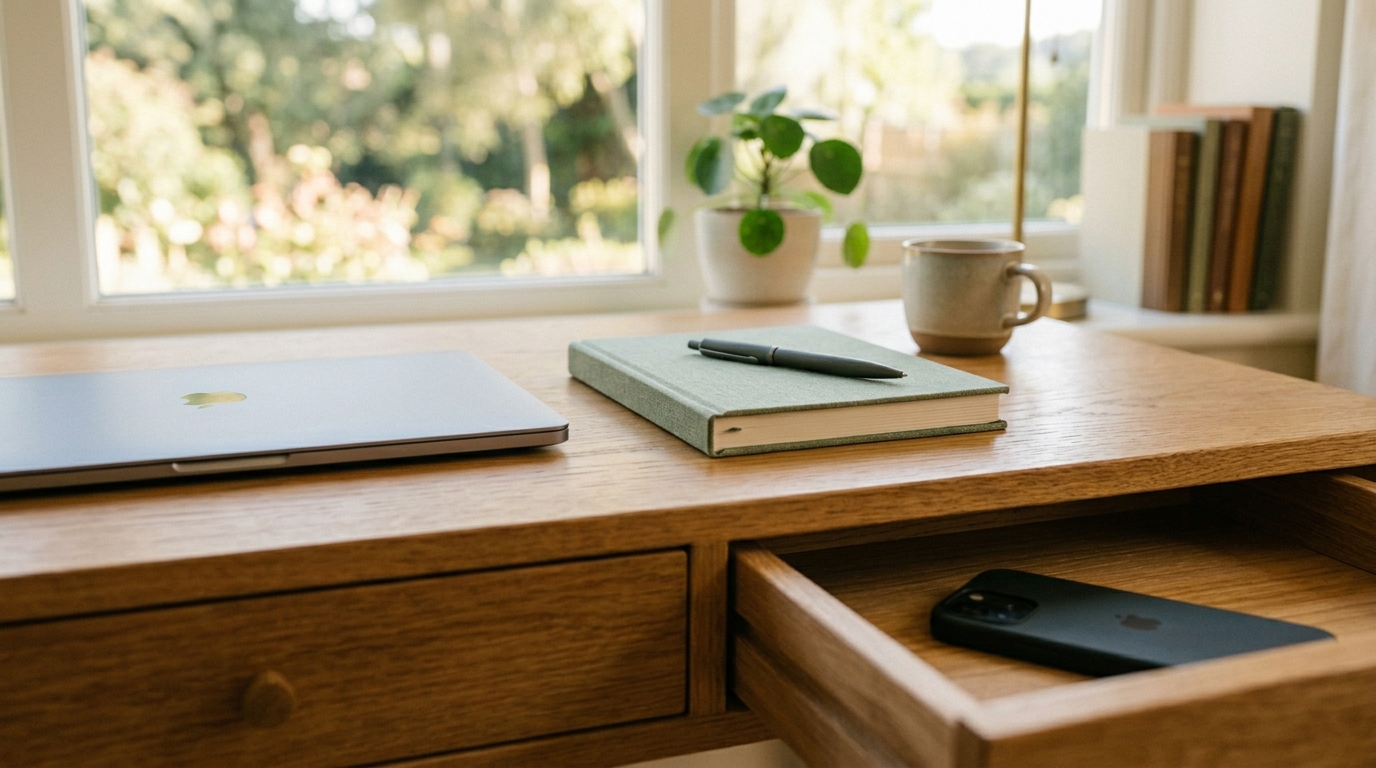
    The phone lives in a drawer during work blocks. Not on my desk. Not in my pocket. In a kitchen drawer. The physical barrier of having to stand up, walk to another room, and open a drawer is enough to stop the automatic reach. Most of my phone. (I wrote about trying a two-hour work block once, and it reinforced what I was learning about giving my mind some breathing room.) use was not intentional. It was just a habit my hand had learned without consulting my brain.

    I started treating worry as a separate activity. If I noticed myself sitting at my desk feeling anxious instead of working, I gave myself permission to do either one — work or worry — but not both at the same time. Worrying while pretending to work is the worst of both worlds. You do not get the work done, and you do not even get the relief that sometimes comes from just letting yourself spiral for a bit.

    I stopped counting “productive” hours and started counting “done” things. Hours worked is a terrible metric. It rewards inefficiency. Finished things is better. Not a long list. Three things. If I finish three meaningful things in a day, the day was a success even if I spent the rest of it staring out the window.

    The Surprising Result

    After a month of these changes, I was working fewer hours and finishing more work. The math did not make sense until I realized I had simply stopped doing the things that looked like work but were not. No more drawer reorganizing disguised as productivity. No more comment section debates. No more forty-seven minutes of phantom phone checking.

    I still waste time. I am human. But now I waste it on purpose — watching a show, reading a book, sitting outside — instead of pretending I am working while my phone eats my attention in two-minute bites.

    If you have ever felt like you are busy all day with nothing to show for it, I recommend the notebook experiment. It is humbling. It is also the most useful thing I have ever done for my relationship with time.

  • The Two-Hour Work Block That Replaced My Entire To-Do List

    The Two-Hour Work Block That Replaced My Entire To-Do List

    For most of my adult life, I believed that productivity was about how many things you crossed off a list. The longer the list, the more accomplished I should feel. The problem was that I never felt accomplished. I felt exhausted. The list never ended , it just regenerated overnight like a hydra, and every morning I woke up to more heads than I had cut off the day before.

    Then I read about a concept that made me angry at first because it seemed too simple to possibly work. It suggested that most people only have about two to three hours of genuinely high-quality mental energy per day. Not eight. Not twelve. Two to three. The rest of the day is , and should be , for lower-stakes tasks, meetings, emails, and living your actual life.

    I decided to test it for two weeks. If it did not work, I could at least say I tried. It worked so well I have never gone back.

    The Two-Hour Block System

    Every morning, I identify exactly one thing that matters most. Not three things. Not a prioritized list. One thing. This is the thing that, if I do nothing else today, will make the day feel meaningful.

    Then I protect two uninterrupted hours to work on that one thing. Phone in another room. No email. No messaging. Just me and the thing.

    After those two hours, I stop. Whether I am “done” or not. The rest of the day is for everything else , responding to messages, attending to household logistics, doing the smaller tasks that keep life moving. But those smaller tasks no longer get to masquerade as productivity. They are maintenance, and maintenance is important, but it is not the same thing as doing the work that actually matters.

    What I Discovered

    I was doing more maintenance than I realized. Before this system, I would spend entire days feeling busy but getting nothing meaningful done. Answering emails felt productive. Organizing files felt productive. But at the end of the day, the thing I actually cared about , writing, in my case , was untouched. The two-hour block forced me to confront how much of my “busy” time was just elaborate avoidance.

    Two focused hours beats eight distracted ones. The math is almost embarrassing. In two hours of deep focus, I produce more than I used to produce in an entire workday fragmented by interruptions, multitasking, and context-switching. The quality is better too, because my brain is actually in one place instead of scattered across seventeen tabs.

    Stopping is as important as starting. This was the hardest lesson. I used to work until I was drained , which meant I started the next day already depleted. Now, I stop after two hours even when I have more to give. That leftover energy is what lets me be present with my family in the evening instead of collapsing on the couch in a fog of mental exhaustion.. After writing about how I finally stopped burning out, and it reinforced what I was learning.

    What If You Do Not Have Two Hours?

    Start with one. Start with forty-five minutes. The principle is the same: a protected, uninterrupted block dedicated to the one thing that matters most. The length matters less than the protection. Even thirty minutes of genuine focus, repeated daily, will move you further than eight hours of scattered attention.

    The hardest part is not the work. The hardest part is resisting the pull of everything else , the notifications, the “quick checks,” the dopamine hits of inbox zero. But once you taste what it feels like to do one thing deeply, without interruption,

    The Unexpected Side Effect

    Something I did not see coming: when I gave my best energy to one thing instead of spreading it across everything, the quality of my work improved in ways that were visible to other people. My editor mentioned that my drafts needed fewer revisions. A reader emailed to say a piece I wrote actually made her change something in her daily routine. These are not metrics I was tracking. But they matter more than any to-do list I have ever completed.

    Focus is not just about getting more done. It is about doing the things that leave a mark.

    the shallow stuff starts to feel like exactly what it is: noise.

  • The Meal Prep Strategy

    The Meal Prep Strategy

    Let me start with a confession: I hate meal prep. Not in a cute “oh it is just not my favorite thing” way. I genuinely resent the entire concept. The Sunday-afternoon assembly line of containers. The chicken breast that tastes like disappointment by Thursday. The way the internet makes it look like anyone who does not have a color-coded refrigerator is failing at life.

    I tried the full meal-prep approach exactly three times. Each time, I spent three hours on a Sunday chopping, cooking, and portioning, only to find myself on Wednesday staring at a sad container of quinoa and roasted vegetables that I would genuinely rather skip eating entirely.

    But here is the thing: I still needed a way to feed my family without spending every evening scrambling through the pantry at 6 PM, hoping dinner would spontaneously appear. So I developed a system that works for people like me , people who hate the process but still want the result.

    The No-Prep Meal Prep System

    I do not prep full meals. I prep components. Think of it like a very small, very lazy restaurant kitchen at home.

    Every Sunday, I prepare three things:

    1. One grain. A big batch of rice, quinoa, or pasta. Just one. It goes in the fridge and becomes the base for at least three different meals during the week. Monday it is under a stir-fry. Wednesday it is a side for roasted chicken. Thursday it is tossed into a quick soup.

    2. One protein. Usually roasted chicken thighs or hard-boiled eggs or a batch of lentils. Again, just one. It takes fifteen minutes of active time and gives me a head start every single evening.

    3. One sauce or dressing. This is the secret weapon. A quick lemon-tahini dressing, a simple tomato sauce, or just a jar of good pesto. When dinner feels boring , which it often does , a great sauce makes it feel intentional instead of survival-mode.

    That is it. Three components. Twenty to thirty minutes total.

    During the week, I combine these with whatever fresh vegetables we have and whatever else sounds good in the moment. The grain and protein are already done. The vegetables take ten minutes to sauté or roast. The sauce ties it together. Dinner is on the table in twenty minutes with very little thinking required.

    Why This Works When Full Meal Prep Failed

    Flexibility. Full meal prep locks you into Monday-chicken, Tuesday-salmon, Wednesday-pasta. But what if Tuesday arrives and you cannot stomach the thought of salmon? With components, you decide what to make based on what you actually want to eat that day.

    Less waste. I used to throw away so many pre-portioned meals that I could not bring myself to eat by Thursday. Now, nothing goes to waste because nothing is fully assembled until I am actually hungry for it.

    It respects my time. I refuse to lose my entire Sunday afternoon to the kitchen. Twenty minutes, and I am done. The rest of the weekend is mine.

    It does not require willpower. The hardest part of cooking dinner is the mental energy of deciding what to make, checking if you have the ingredients, and starting from zero when you are already tired. When the grain and protein are already in the fridge, starting dinner feels like joining a conversation halfway through instead of beginning one from silence.

    What a Week Actually Looks Like

    Sunday: I make a pot of jasmine rice, roast chicken thighs, and whisk together lemon-tahini dressing. Twenty minutes total.

    Monday: Rice + sautéed broccoli + chicken + drizzle of tahini dressing.. Combined with my two-hour work block, and it reinforced what I was learning.

    Tuesday: Chicken shredded into a quick soup with whatever vegetables are in the fridge. Rice on the side.

    Wednesday: Rice + fried eggs + sautéed greens + chili crisp. Dinner in ten minutes.

    Thursday: Leftover chicken + wraps + salad. Assembly only, no cooking.

    Friday: Whatever is left becomes a “grain bowl” , rice, remaining vegetables, the last of the dressing, maybe a fried egg on top. It is actually my favorite meal of the week.

    Is this glamorous? No. Does it keep us fed without losing my mind? Absolutely. And

    The Real Win

    The biggest change was not the time I saved. It was the mental load that disappeared. Before this system, I spent a surprising amount of mental energy every single day just dreading the dinner decision. What are we having? Do we have the ingredients? Is it 6 PM already? That low-grade anxiety is gone now. The grain is in the fridge. The protein is ready. The sauce is waiting. My only job at 6 PM is to combine things in a way that sounds good.

    For a person who hates meal prep, I have become oddly protective of my Sunday component routine. It takes twenty minutes and buys me five nights of sanity. That is a trade I will make every single week.

    for this season of life, that is exactly what I need.

  • How I Finally Stopped Burning Out: 5 Things I Actually Do

    How I Finally Stopped Burning Out: 5 Things I Actually Do

    Three months ago, I hit a wall. Not the metaphorical kind where you just need a good night’s sleep and some positive thinking. The real kind. The kind where you stare at your laptop screen for forty minutes without typing a single word. Where you cancel plans not because you are busy, but because the thought of putting on real pants feels impossible. Where you snap at your partner for breathing too loudly and then burst into tears because you cannot remember the last time you felt genuinely rested.

    Burnout. I had read about it. I had even written about it. But I did not truly understand it until I was living inside it.

    The recovery was slow and messy. It did not involve a single dramatic change or a magical productivity system. What actually worked were five small, unglamorous, surprisingly practical shifts that I am still practicing every single day.

    1. I Stopped Using My Phone as an Alarm Clock

    This one change rippled through my entire morning. Before, I would wake up to my phone alarm, immediately check notifications, scroll through emails in bed, and start my day already flooded with other people’s demands before my feet hit the floor.

    I bought a basic alarm clock for about fifteen dollars. My phone now charges in the living room overnight. The first thirty minutes of my day belong to me , not to Instagram, not to work emails, not to anyone else’s agenda.

    It sounds almost too simple to matter. But when you stop letting the outside world into your brain the moment you open your eyes, something shifts. You start the day as yourself, not as a responder.

    2. I Learned the Difference Between “Urgent” and “Important”

    Most of my burnout came from treating everything like it was on fire. The email that could wait until tomorrow? Urgent. The request from a colleague that was not actually time-sensitive? Urgent. The third load of laundry that could sit in the basket for another day? Somehow, also urgent.

    Now, when a task lands on my plate, I pause and ask one question: Will this matter in a week?

    If the answer is no, it goes to the bottom of the list , or off the list entirely. If the answer is yes, it gets my actual attention. This single question has probably saved me hundreds of hours of unnecessary stress.

    3. I Gave Myself Permission to Half-Finish Things

    This was the hardest one for me. I used to believe that if I started something, I had to finish it , and finish it well , before moving on. A clean kitchen meant every dish washed, every counter wiped, every floor swept. A completed work project meant every detail polished.

    But perfectionism is just procrastination wearing a fancy outfit. And often, half-done is better than not done at all.

    Now I let myself load the dishwasher and leave the pots to soak. I send the email that is 80% good enough instead of spending an extra hour perfecting the last 20%. I close my laptop at a reasonable hour even when there is more I could do , because there will always be more I could do.

    4. I Scheduled Rest Before I Scheduled Work

    Every Sunday evening, I open my calendar for the week ahead. And the first thing I block out is not meetings or deadlines or deep work sessions. It is rest.

    Tuesday afternoon: nothing. Thursday morning: protected. Saturday: completely clear.

    These are non-negotiable. Work has to fit around the rest, not the other way around. And here is what surprised me: when I started protecting my rest this aggressively, my productivity during work hours actually increased. A rested brain works faster and makes better decisions. Who knew?

    5. I Stopped Measuring My Worth by My Output

    This is the big one. The root. The thing everything else sits on top of.

    I spent years believing that my value as a person was directly connected to how much I produced. More articles written = more worthy. Cleaner house = better mother. Fuller calendar = more successful.

    But productivity is not identity. It is a tool. And a tool should serve you , you should not serve the tool.. I now use a two-hour work block system, and it reinforced what I was learning.

    Now, when I catch myself spiraling into output-as-self-worth thinking, I pause and remind myself: I am not valuable because of what I do. I am valuable because I exist. Full stop.

    Some days I genuinely believe that. Some days I am just going through the motions of saying it. But I keep saying it anyway, because I know the alternative , the version of me who burned out , and I do not want to go back there.

    If You Are Tired Right Now

    If you are reading this while running on fumes, I want you to hear something.

    You do not need a better productivity system. You do not need more discipline. You do not need to optimize your morning routine or download another app.

    You need rest. Real, unapologetic, guilt-free rest. The kind where you do absolutely nothing productive and feel zero shame about it.

    Start there. The rest can wait.