Blog

  • The 4 Menstrual Cycle Phases, Explained Simply

    The 4 Menstrual Cycle Phases, Explained Simply

    School biology draws the cycle as a tidy circle divided into labelled segments, and real life rarely cooperates. Cycles drift, stretch and sometimes skip altogether. Understanding what each of the four menstrual cycle phases is doing makes those changes easier to read, and it makes the loose timing less alarming. The count starts on day 1, the first day of bleeding, and runs until the day before the next period begins.

    Key takeaways

    • Day 1 is the first day of real bleeding, so a cycle is counted from bleed to the day before the next bleed.
    • Anything from 21 to 35 days is treated as normal by the NHS, while the US Office on Women’s Health calls 24 to 38 days regular.
    • Ovulation is better pinned to the next period, about 14 days before it starts, than to day 14 of the current cycle.
    • The luteal phase is the steady part at roughly 12 days, while the follicular phase is the one that stretches or shrinks.
    • Patterns across the four menstrual cycle phases are easier to see after two or three logged cycles than on any single day.

    How cycle days are counted

    Day 1 is the first day of proper bleeding, not the light spotting that sometimes comes before it. The cycle ends the day before the next period begins, so a 28-day cycle runs 28 days from bleed to bleed. Every phase boundary is measured against that definition.

    What counts as normal depends on who you ask. The NHS describes periods arriving anywhere from every 21 days to every 35 days, while the US Office on Women’s Health calls 24 to 38 days regular and notes that length often differs from month to month. Both are working definitions from different populations rather than one true range.

    The average of 28 days is a convenient round number, not a rule. In a study of 612,613 ovulatory cycles logged through an app, the mean was 29.3 days, and length varied from person to person. No calendar month matches the four menstrual cycle phases, so logging your own start dates for a few months tells you more than the textbook figure.

    The four menstrual cycle phases, in order

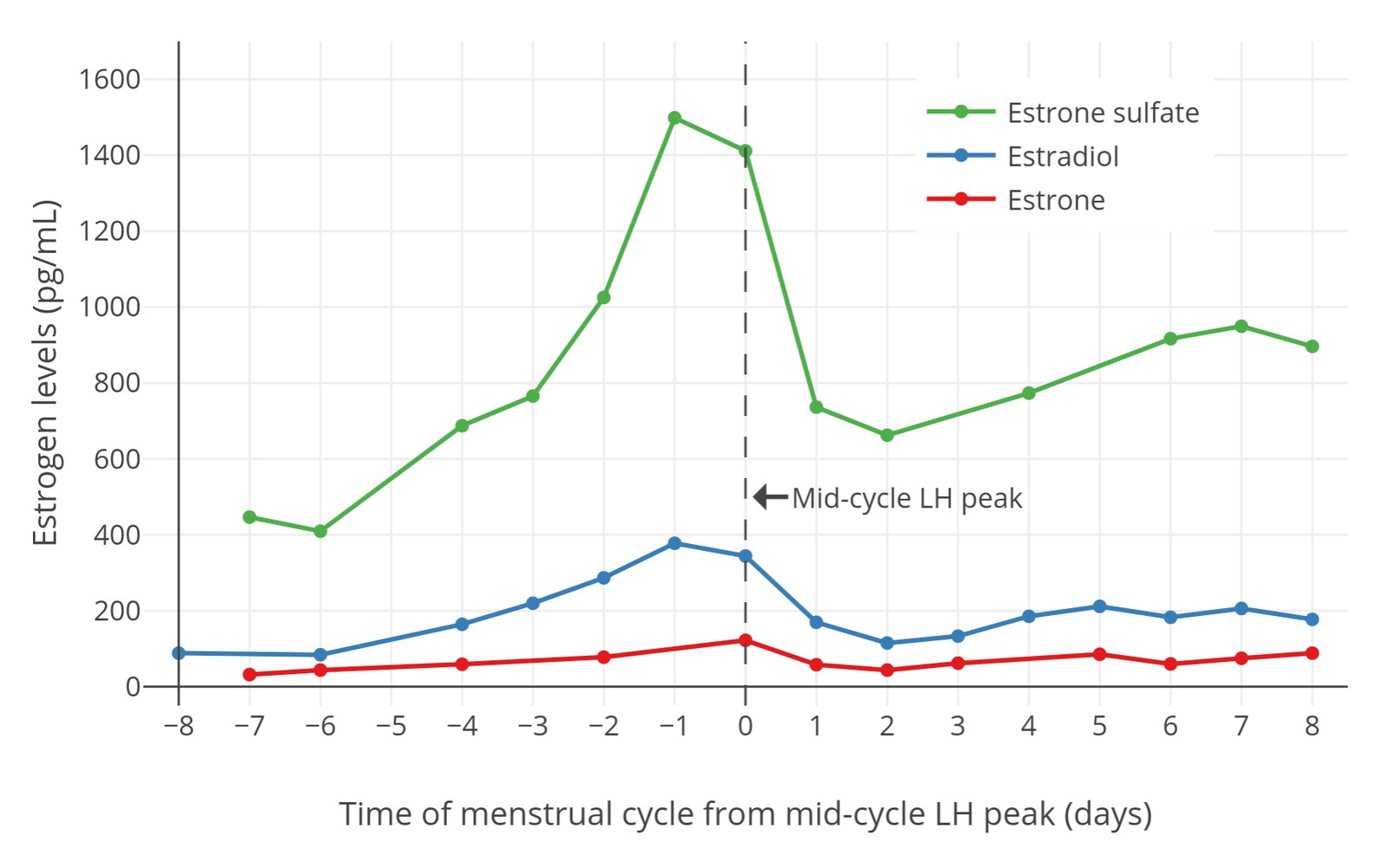
    Two hormones do most of the driving, and each of the four menstrual cycle phases is defined by what estrogen and progesterone are doing. The boundaries between them are soft, which is why two people with the same 28-day cycle can feel completely different at day 20.

    Days 1 to 5: the menses phase

    The cycle begins with bleeding because a pregnancy did not happen, so the lining built for it is no longer needed. Estrogen and progesterone fall to their lowest levels, the lining sheds, and most people bleed for three to five days, though anything from three to seven days is usually nothing to worry about. Bleeding is heaviest on the first two days and lightens after that. If your periods produce large clots or soak through protection quickly, our guide to period blood clots explains where the line sits.

    The follicular phase: rebuilding the lining

    This stretch overlaps with your period and finishes at ovulation, which makes it the longest and least predictable part of the cycle. Estrogen climbs, follicle-stimulating hormone wakes a group of follicles in the ovaries, and by roughly days 10 to 14 one of them has produced a mature egg.

    In the 612,613-cycle study the follicular phase averaged 16.9 days but ranged from 10 to 30. Because the second half of the cycle stays fairly fixed, a late period is usually a late ovulation. Rising estrogen is also why energy tends to come back around this point, the idea behind training with the follicular phase.

    Ovulation: the egg leaves

    Around the midpoint, a surge of luteinizing hormone makes the ovary release its egg, and that is ovulation. In a textbook 28-day cycle it lands near day 14, which is where the famous number comes from. Clinically it is better anchored to the period that follows, since the NHS says ovulation pain typically shows up about 14 days before a period.

    The egg survives roughly 12 to 24 hours, while sperm can live in the uterus for three to five days, so the days before ovulation are the ones that count for conception. The signs are subtle, and tracking them without an app is possible but takes practice.

    The luteal phase: the steady stretch

    After the egg is released, the empty follicle becomes the corpus luteum and starts producing progesterone. That hormone keeps the uterine lining thick and calm in case a fertilised egg implants. If it does not, both hormones drop, the lining comes away, and the next cycle begins. This stage is the most consistent of the four menstrual cycle phases: in the same large study it averaged 12.4 days, with a range of 7 to 17.

    What the phases usually feel like

    Articles about the four menstrual cycle phases often describe them as four moods, running from motivated to miserable. Diary studies support something smaller and more individual. In one prospective study, 22 naturally cycling participants and 18 pill users logged symptoms and gave daily saliva samples for 28 days. Hormone levels did track with energy, agitation and feelings of attractiveness, and progesterone showed the largest effect, but 22 people is a thin sample to generalise from.

    Premenstrual symptoms are common and well documented. The Office on Women’s Health lists cramping, headaches, moodiness, forgetfulness, bloating and breast tenderness, all of which tend to build before bleeding starts and ease once it does. Asthma and irritable bowel symptoms can shift with the cycle too, so a rough week is not automatically hormonal. There is more in our Cycle & Fertility archive if you want to go deeper.

    Keeping your own record beats trusting a chart. Note your bleeding days, energy and mood for two or three cycles and the pattern will surface on its own, including the stretch where you need more rest. If you want to eat around the cycle, our phase-by-phase food guide covers what tends to help at each stage.

    When to see a doctor

    NHS guidance separates what can wait from what should be checked. Bleeding between periods, bleeding after sex, or any bleeding after menopause should be looked at by a doctor, and so should a cycle that has changed and stayed changed. See a GP if you have missed three periods in a row and a pregnancy test is negative. Severe pain or bleeding that makes you miss work or school is treatable, so raise it rather than push through it.

    How Lail can help

    Lail is our own period tracker for Android, built around one idea: your data stays on your phone, with no account and no cloud sync. You can log bleeding, symptoms, mood and weight, then watch your own phases line up over a few months instead of comparing yourself to a diagram. Premium adds a PDF export that is genuinely useful to bring to an appointment. Lail is on Google Play, and the rest of our apps are listed on the products page.

    Is ovulation always on day 14?

    No. Day 14 is the average for a 28-day cycle and nothing more. Ovulation is better estimated as about 14 days before the next period, which is why the date slides when a cycle runs longer or shorter.

    Which phase leaves you most tired?

    The last days of the luteal phase and the first days of bleeding are when energy usually dips, because estrogen and progesterone are both falling. That pattern is common, but the four menstrual cycle phases do not come with fixed moods. If tiredness is severe or comes with heavy bleeding, ask a doctor about checking your iron levels.

    How long should a period last?

    Two to seven days, with about five being typical, according to the NHS. Total blood loss usually falls between 20 and 90 ml, and bleeding is heaviest on the first two days. If your periods have been getting longer or heavier than your normal, that is worth a conversation with a GP.

    Can I use a tracking app to avoid pregnancy?

    Do not rely on it. An analysis of 543,167 cycles found calendar-based tracking flagged at least one fertile day as safe in 67% of cycles, with an estimated pregnancy risk of 22%. If you are trying to avoid pregnancy, use a method with proper evidence behind it.

    This article is educational and does not replace advice from a qualified healthcare professional. If something about your cycle worries you, talk to a doctor.

    Featured image: estradiol, estrone and estrone sulfate levels across the normal human menstrual cycle, by Medgirl131 via Wikimedia Commons, licensed under CC BY-SA 4.0.

    Sources

  • Best App Blocker for Android: What to Look For

    Best App Blocker for Android: What to Look For

    Most people finally do something about their phone after a week that got away from them. Three hours of scrolling where an hour of actual work was supposed to happen is the usual trigger. Picking the best app blocker for Android comes down to a handful of specific questions about permissions, blocking method, and how many taps it takes to talk yourself out of it. Get those wrong, and the tool becomes one more thing you switch off in a weak moment.

    Key takeaways

    • How a blocker blocks matters more than who made it: Android’s own timers, accessibility-based blockers and network filters all behave differently.
    • A tool that can stop an app is usually asking for a permission that also lets it observe a great deal, so read the disclosure before you tap agree.
    • The evidence is modest and specific: a three-week trial cut time on the worst app by about 29 minutes a day.
    • The usual failure mode is disengagement, not laziness. In a 2026 study of 252 people who had switched their nudges off, 46 percent turned them back on when prompted.
    • Android’s built-in app timers reset at midnight, so a blocked app is available again by breakfast.

    What a blocker actually changes

    Blocking does not install discipline. It changes the cost of a decision you were going to make anyway, and every app blocker for Android works on that single lever. A 2021 randomised trial compared a 20-day training app with a plain digital detox routine, in which people planned daily time-outs of at least an hour. Both groups reported less problematic phone use and logged less time on the phone.

    One result from that trial is easy to skim past: how often people picked up the phone, measured objectively rather than by asking, barely moved in either group. Less time on the phone came from shorter sessions rather than fewer of them. If your problem is compulsive checking rather than total hours, a tool that interrupts a session will do more for you than one that emails a weekly report, which is the same reason small digital boundaries outlast dramatic deletions.

    The closest thing to a clean test of reminder-style blocking arrived in 2026. Researchers randomised 70 iPhone users to a three-week trial of an app that threw up a full-screen prompt whenever a session on a self-chosen problem app passed a limit the participant had set. The prompt offered two buttons: quit, or continue. Daily time on that app fell by roughly 29 minutes, and participants rated their smartphone use as less problematic.

    Two caveats keep that finding honest. The sample was small, the trial was short, and it ran on iPhones rather than Android. The same study found no significant improvement in problematic social media use or in self-efficacy, so the app changed behaviour more convincingly than it changed how people felt about the behaviour.

    How Android blockers do the blocking

    Most tools on the Play Store use one of three mechanisms, and the choice shapes everything about daily use.

    Android’s own Digital Wellbeing is the first. App timers close an app and dim its icon when your time runs out, and Focus mode pauses chosen apps entirely, including their notifications, on a schedule or on demand. A “Take a break” button unpauses apps for a set period without dismantling the whole setup.

    The second is the accessibility service, which lets an app see which screen is open and act on it. That is how a blocker can shut a door the moment a specific app launches, and it is also why Google Play treats these apps carefully. Since 3 November 2021, apps targeting Android 12 that use the accessibility API have to complete a permission declaration form and be approved by Play.

    The third approach filters at the network level instead of the screen, usually by running a local VPN service, or by drawing an overlay on top of a blocked app. Network filtering catches browsers and in-app feeds that a per-app timer never sees, which is why some app blockers for Android ask for a VPN slot on your phone.

    What to look for in an app blocker for Android

    Start with the disclosure. Play requires accessibility-based tools to explain, inside the app and before you grant anything, exactly what they will see and why, and that explanation has to stand apart from the privacy policy.

    Then look at the block itself. A hard wall frustrates, while a prompt asking “quit or continue” produced the 29-minute reduction in the 2026 trial. Check whether you can schedule the block and whether the schedule survives a restart, because a tool that only runs when you remember to open it solves nothing.

    The escape route matters more than the settings screen. Count how many taps stand between you and the app you are trying to avoid, because that number is the whole product.

    Finally, check what the app asks of you. Anything that needs an account and uploads your app list is building a profile of your habits, and some work and school accounts do not support app timers at all. Our productivity archive follows the same rule: try the free option first, then pay only for the part that is missing.

    The permission conversation you should not skip

    Google Play classes permissions as dangerous, special or signature, and treats everything an app reads through them as personal and sensitive user data. That raises the bar for whichever app blocker for Android you end up trusting.

    The rules say an app has to respect your decision if you decline, must not push or trick you into consenting, and must offer a reasonable alternative path. For special permissions such as drawing over other apps, it has to send you to the system settings screen for approval rather than flipping the switch itself.

    In practice this hands you a fair test. A blocker that asks for one permission, explains it in a sentence you understand, and works without an account is doing the job honestly. A blocker that wants accessibility access plus notification access plus an overlay, and never says why, is asking for much more than the task requires.

    What Android already does for free

    Set up the built-in tools first. Two app timers and one Focus mode schedule cover most of what people hire an app blocker for Android to do, and nothing new gets access to your screen. The setup steps are in how to reduce screen time on Android.

    The trade-off is softness. Timers reset at midnight, so the block lifts whether or not you earned it, and deleting a timer takes about five seconds. For blocking scrolling during work hours, the built-in route is enough. If you need the block to hold when you are bored, tired and negotiating with yourself, that softness is exactly why people move to something with teeth.

    How Uhh can help

    Uhh is our own Android app for this exact problem. Its store listing describes it as a tool that blocks distracting apps, reduces screen time and builds better focus habits, and that is the entire job it was built for. You will find it on Google Play, alongside the rest of our apps on the products page.

    FAQ

    Do app blockers actually work?

    They work on behaviour more reliably than on feelings. The 2026 trial cut daily time on the most problematic app by about 29 minutes but found no significant change in how problematic people judged their social media use. The 2021 trial showed both a training app and a plain time-out routine reducing phone use.

    Is Android’s own app timer enough?

    For a mild habit, often yes. Timers close the app and dim the icon, Focus mode pauses apps and their notifications, and the whole arrangement resets at midnight. The catch is that anyone motivated enough to install a blocker is usually motivated enough to delete a timer.

    Which permission does an app blocker for Android need?

    It depends on how it blocks. Accessibility-based blockers need the accessibility service and, on Android 12 and later, approval through Google Play’s declaration form. Network-level filters need a VPN slot. Screen timers need neither, because Android provides them.

    Can you bypass a blocker?

    Yes, and every blocker is designed around that fact, so the honest question is what the bypass costs in effort. Tools that make the workaround slow tend to survive longer, because the impulse usually expires before the extra taps are done. A phone-free evening, like a 15-minute evening routine, sometimes holds better than a block you can argue with.

    This article is educational and is not medical or professional advice. If your phone use is affecting your sleep, work or mental health, talk to a qualified professional.

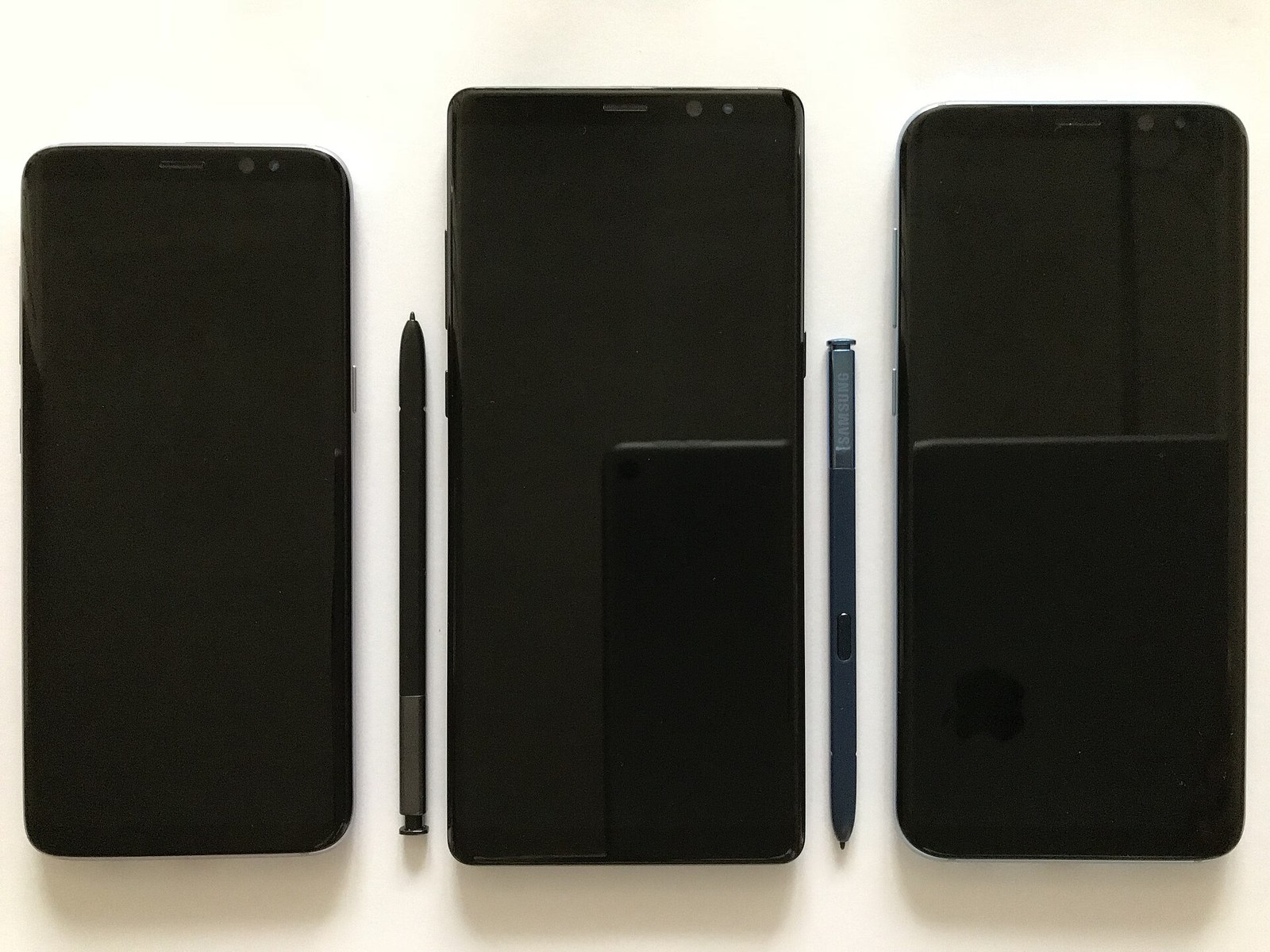
    Featured image: “Smartphone (screen off)” by 彭嘉傑 via Wikimedia Commons, licensed CC BY-SA 4.0. Resized from the original.

    Sources

  • Period Blood Clots: What’s Normal and When to Ask

    Period Blood Clots: What’s Normal and When to Ask

    There is a moment in most cycles when what lands on the pad stops looking like a liquid and starts looking like something solid. Nobody explains it in advance, so it is easy to jump to the worst conclusion. Period blood clots are a normal part of a heavy flow, and the useful questions are how big they get and how often they appear. Knowing that turns a frightening sight into something you can measure.

    Key takeaways

    • Clots form when the flow is fast enough that the uterus cannot dissolve the fibrin mesh inside the blood.
    • Small clots on your heaviest days are common and are not a problem in themselves.
    • Period blood clots the size of a quarter or larger, more than once or twice a day, are one of the standard signs of heavy menstrual bleeding.
    • Heavy bleeding is worth investigating mainly because it can slowly drain your iron stores.
    • What feels like a very heavy period does not always match what gets measured, so track the details rather than the feeling.

    What period blood clots actually are

    Blood from a cut turns into a gel because fibrin forms a mesh through it. Menstrual blood usually does not, since the lining of the uterus is full of enzymes that dissolve that mesh as fast as it forms. When the flow is heavy, the dissolving system cannot keep up and some blood arrives already clotted.

    At the same time, the uterus is working to stop the bleeding. Platelets clump at the exposed vessels, fibrin is deposited, and the muscle of the womb contracts to squeeze those vessels shut. A 2026 review of menstrual haemostasis notes that the flow conditions at the tiny spiral arteries which bleed during a period have never been measured directly, so the balance is still described in models.

    One piece of this has been tested. Women with heavy bleeding do not break down clots faster in their bloodstream, which is why heavy periods are treated as a local problem in the endometrium rather than a clotting disorder.

    What a normal amount of clotting looks like

    The heaviest days are the ones that produce clots. NHS guidance describes a typical period as lasting 2 to 7 days, usually about 5, with the flow heaviest in the first 2 days and a total loss of roughly 20 to 90ml, or about 1 to 5 tablespoons.

    The size thresholds used by clinicians all point the same way. NHS guidance flags clots larger than about 2.5cm, the size of a 10p coin, as one sign of heavy periods. The American College of Obstetricians and Gynecologists describes menstrual flow with blood clots as big as a quarter or larger. Cleveland Clinic lists clots the size of a quarter or bigger more than once or twice as a sign of heavy menstrual bleeding.

    The size of your period blood clots is the detail worth noticing, more than their colour or texture. Smaller clots, appearing once or twice on your heaviest day, do not feature on any of those lists.

    When period blood clots are worth checking

    Period blood clots are a sign to act on when they come with a flow that disrupts your life. Any of these patterns is worth an appointment:

    • Soaking through a pad or tampon every hour for several hours in a row.
    • Needing a pad and a tampon together, or changing a pad every 1 to 2 hours.
    • Bleeding that lasts longer than 7 days, even when the period blood clots themselves are small.
    • Bleeding through to your clothes or bedding, or avoiding plans because of your period.

    Heavy bleeding is not rare. About one third of women seek treatment for it, and Cleveland Clinic puts the share of people who menstruate affected by it between 27% and 54%.

    What matters is the blood loss rather than the clotting itself. Losing more blood than your body replaces can drain your iron stores and lead to iron deficiency anaemia, which shows up as tiredness, shortness of breath and a faster heartbeat. Feeling weak and dizzy during your period is often the first visible sign of that iron dip. Avoiding exercise during your period is itself on the NHS list of signs, so putting your training on hold is a symptom rather than a solution.

    What can cause larger clots

    Most large clots are the visible end of a heavy flow. Fibroids, adenomyosis, endometriosis and polycystic ovary syndrome all appear on the standard lists, along with thyroid problems and, in the first year of use, the copper intrauterine device.

    Inherited bleeding disorders are the cause that gets missed most often. Von Willebrand disease and platelet function disorders can present as nothing more than heavy periods, and a 2026 study of 235 teenage girls treated for iron deficiency anaemia found that 40.9% screened positive for von Willebrand disease after their iron levels were corrected.

    Medicines can do it too, since blood thinners and aspirin increase menstrual bleeding. Heavy periods are also common in the years approaching menopause, when cycles become less predictable.

    A small number of cases have a more serious cause. NHS guidance notes that heavy periods can rarely be a sign of womb cancer, and ACOG lists ectopic pregnancy and miscarriage among the causes.

    Why “it looks like a lot” is not the same as a lot

    How alarming your period blood clots look and how much blood you actually lose do not line up as neatly as you would expect. In a 2025 study, 79 people who described their periods as heavy had their loss measured, and the median was 66ml, with only about a quarter passing the 120ml threshold that defines heavy bleeding. Pad counts told a similar story: the heavy group used a median of 21.5 pads per cycle but still overlapped with those whose measured loss was normal.

    That cuts both ways. Some people who dread their periods are bleeding inside the normal range, while others who think theirs are manageable lose more blood than they realise. A 2026 validation study found a photo-based method matched the laboratory standard closely enough to detect heavy bleeding with 100% sensitivity and 93.5% specificity.

    How to track period blood clots before your appointment

    It helps to bring numbers rather than adjectives. ACOG advises using a calendar or a period-tracking app to record several cycles before your visit, including the dates your period started, how long the bleeding lasted and whether the flow was light, medium or heavy. Cleveland Clinic adds the details that change what happens next: cramping, any bleeding between periods and any large clots you passed.

    Three things are worth logging: the largest clot you passed, measured against a coin, the number of pad or tampon changes on your heaviest day, and how many days the bleeding lasted. If you would rather not hand your cycle history to a company, a private tracker keeps the log on your phone, which is the same information your doctor needs. There is more on cycle symptoms in our Cycle and Fertility archive.

    When to see a doctor

    Book a routine appointment if your periods have been heavy for a while, if they interfere with work, exercise or sleep, if you have severe pain, or if you bleed between periods or after sex. Post-menopausal bleeding always needs checking, and so does bleeding that is heavier than anything you have had before.

    Seek urgent care rather than waiting if you are soaking through pads very quickly, if you feel faint, dizzy or breathless, or if you have severe pain that painkillers are not touching. If you are pregnant or might be, heavy bleeding with period blood clots should be assessed urgently.

    How Lail can help

    Lail is our own period tracker, built for exactly the kind of record a doctor asks for. It logs flow, symptoms, mood and weight, and keeps everything on your phone with no account and no cloud sync. Premium adds a PDF export you can take to an appointment, and the app is free to download with ads. Lail is on the Play Store, and you can see it with the rest of our apps on our products page.

    Frequently asked questions

    Are period blood clots normal?

    Period blood clots are common, especially on your heaviest days, and a small one now and then is not a medical problem. What makes them worth checking is size and repetition rather than their presence. Clots around the size of a quarter, arriving more than once or twice a day, count as a sign of heavy menstrual bleeding.

    How big is too big for a clot?

    NHS guidance draws the line at about 2.5cm, roughly the size of a 10p coin, and ACOG uses a quarter as its comparison. Period blood clots that reach that size several times a day are worth mentioning to a doctor. One small clot on day one is a different situation entirely.

    Can large clots mean a miscarriage?

    Clots can be passed during a miscarriage, and heavy bleeding in early pregnancy is a reason to seek care the same day. That does not make every clot a sign of pregnancy loss, since fibroids, adenomyosis and plain heavy flow explain most of them. If you might be pregnant, treat large clots with pain as urgent.

    Do clots mean I have a bleeding disorder?

    Usually not, but bleeding disorders are under-diagnosed and heavy periods are often their only visible sign. Von Willebrand disease is the most common inherited one, and it turns up more often when a bleeding history is combined with a record of menstrual loss. That is one reason the clot sizes you note down are useful rather than fussy.

    This article is educational only and is not medical advice. Cycle patterns vary widely, and only a qualified healthcare provider can assess your symptoms or decide whether you need tests.

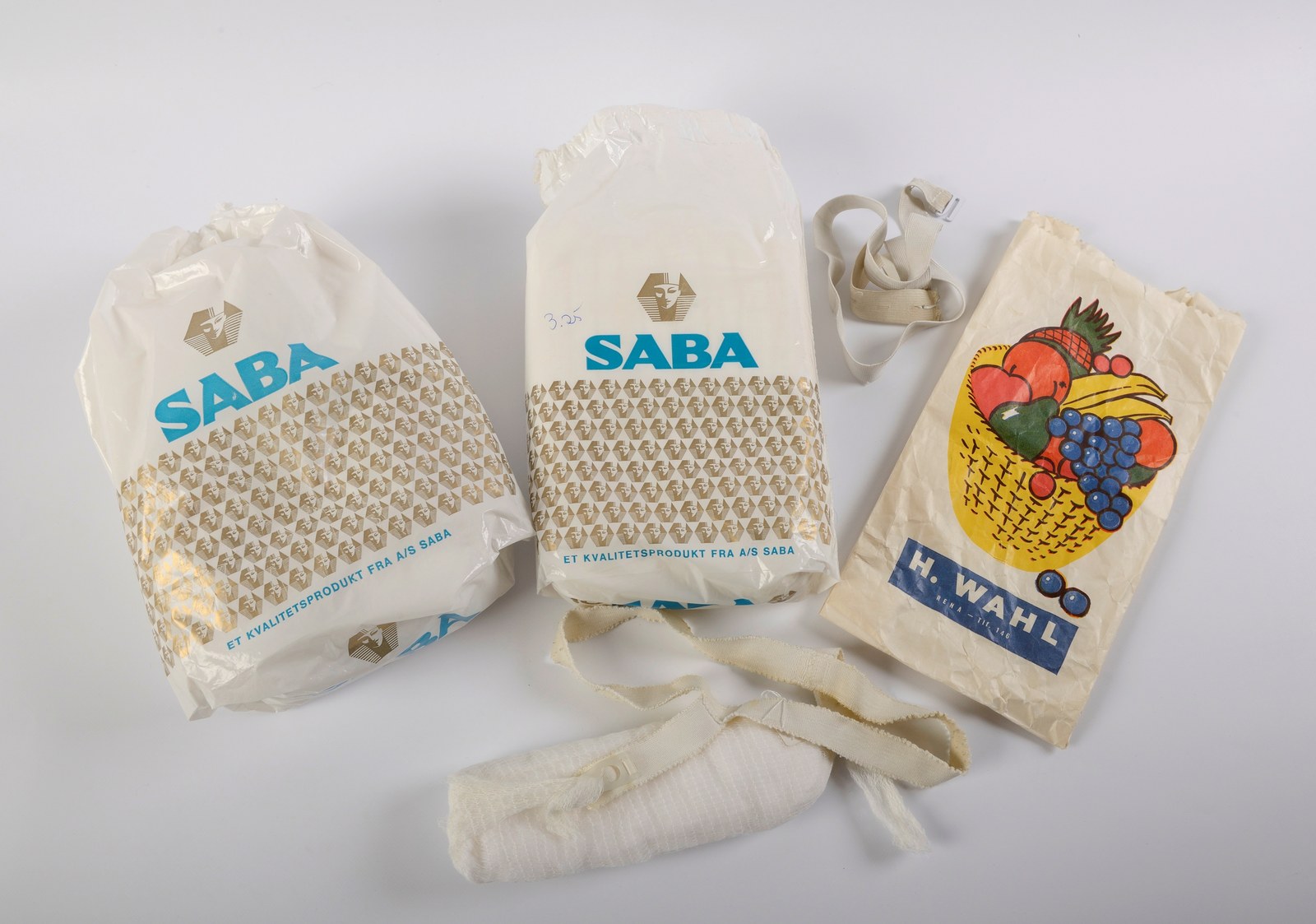
    Featured image: “SABA damebind” by Geir Ove Andreassen / Anno Kvinnemuseet, CC BY-SA 4.0, via Wikimedia Commons (https://commons.wikimedia.org/w/index.php?curid=98467535).

    Sources

  • 5-Minute Self-Care That Actually Fits a Busy Week

    5-Minute Self-Care That Actually Fits a Busy Week

    When a week gets loud, the first thing to go is usually the thing that would help most. The inbox wins, the walk loses, and the stretch you meant to do at 4pm turns into something you promise yourself on Sunday. Most advice about 5-minute self-care assumes you can carve out a clean gap in the day and defend it from interruptions. The practices below are the ones with real evidence behind them, and every one of them fits into gaps a busy week already has.

    Key takeaways

    • Five minutes is a real dose rather than a token one: the NHS asks people to repeat its slow-breathing exercise for at least 5 minutes.
    • In a randomised trial from 2023, five minutes of daily breathwork beat five minutes of mindfulness meditation on mood and breathing rate after a month.
    • Micro-breaks raised energy and cut fatigue across 2,335 people, but they did not significantly improve performance on demanding work.
    • In a study of 36 urban adults, the shortest nature break that showed up in cortisol was 10 minutes, with the best return between 20 and 30 minutes.
    • Reminders can backfire: in a meta-analysis of 77 mood-tracking studies, prompts were linked to lower adherence.

    Why five minutes counts

    The NHS puts “me time” on the same stress-management list as exercise, sleep and contact with other people, and it sets no minimum length for it. Cleveland Clinic’s coping advice is equally modest: “Take brief rest periods during the day to relax”. Neither source treats the short version as a warm-up for the real thing.

    Coping is a process rather than a single decision, and Cleveland Clinic notes that “rigidity in coping is less likely to help than is flexibility in coping”. A practice you can start in four minutes fits a bad day more easily than a 45-minute ritual you keep postponing. That flexibility is the whole argument for 5-minute self-care. It is also the lesson behind the self-care routine that stopped trying to be good.

    The five-minute practice with the best evidence: slow breathing

    The NHS guide to breathing exercises for stress opens with an unusually concrete promise: the technique “takes just a few minutes and can be done anywhere”. Sit or stand with both feet flat and roughly hip-width apart. Breathe in through your nose while counting steadily to 5, breathe out through your mouth on the same count, and repeat for at least 5 minutes.

    The evidence for 5-minute self-care is thinner than that page implies, but it exists. A trial published in Cell Reports Medicine in 2023 compared three daily 5-minute breathwork exercises against 5 minutes of mindfulness meditation over one month. Cyclic sighing, which emphasises long exhales, produced the largest improvement in mood and the biggest drop in breathing rate, and both held up against the meditation group.

    The study has limits worth naming. Its participants practised remotely and were not selected for any diagnosis, and one month says nothing about a year. It is still the closest thing in the research to a direct test of “five minutes a day, does anything happen”. If you want a longer version of the technique, our article on the 4-7-8 breathing pattern walks through it step by step.

    What a micro-break can and cannot do

    The strongest evidence in this area comes from a 2022 meta-analysis of micro-breaks, the short pauses people take between tasks. It pooled 22 study samples covering 2,335 people and found small but statistically significant gains in vigour and reductions in fatigue. The effect on overall performance was not statistically significant, and where performance did improve, the tasks were the less mentally demanding ones.

    One detail from that review is worth keeping. The longer the break, the bigger the performance boost, and the authors concluded that recovering from highly depleting work may need more than 10-minute breaks. So 5-minute self-care can change how you feel within minutes, and it will not undo an afternoon of work that has already scattered your attention.

    How to make 5-minute self-care a habit you keep

    The reason 5-minute self-care fails is rarely motivation, and the adherence research suggests it is often the design. A meta-analysis of 77 mood-monitoring studies, covering 17,123 participants, found pooled adherence of about 0.64, meaning roughly a third of people did not stick with the protocol they were given. Two things made adherence worse: reminders, and a higher risk of bias in the study itself. Financial incentives were the one lever that clearly improved it.

    You are not going to pay yourself to sit still, so the lesson is about structure.

    • Attach the practice to something you already do without deciding, such as the kettle boiling or the lid of the laptop closing.
    • Keep one practice, because a stack of five habits is five decisions and decisions are what a busy week eats first.
    • Cap it at five minutes on purpose, because a practice that can expand will eventually be postponed.
    • Review it weekly instead of logging it daily, so that a habit does not turn into admin.

    The pattern across all of this is unglamorous. Small enough to survive a bad week beats impressive enough to deserve a good one. If you keep a mood journal, the weekly review replaces the daily log it used to need. For more in this vein, the Self-Care archive collects the practical pieces.

    When five minutes is not enough

    The nature research is the clearest case of a dose that five minutes does not reach. In an eight-week study, 36 urban adults were asked to spend at least 10 minutes in nature at least three times a week. Their salivary cortisol fell by 21.3% per hour beyond the 11.7% hourly drop the hormone makes on its own, and the best return per minute came between 20 and 30 minutes.

    That study assigned nobody a five-minute break, so it cannot tell you that five minutes outdoors does nothing. It can tell you that ten minutes is the shortest dose that showed up in a measured stress biomarker. Treat that as the ceiling of the small-practice argument rather than as proof it works everywhere.

    Some weeks are also beyond what any five-minute practice can carry. If stress is disrupting your sleep, appetite or work for weeks on end, or if you have lost interest in things you used to enjoy, that is a reason to see a doctor. The NHS describes depression as “a low mood that lasts for weeks or months and affects your daily life”, and short practices sit alongside treatment rather than in place of it.

    How Ananta can help

    Ananta is our own self-care app, and it is built around the smallest version of a check-in rather than a long routine. Inside it you get daily affirmations, a mood check that turns into monthly graphs, short guided journaling prompts, a sleep log and a water reminder. The mood graph is the part that matters here, because it shows patterns across weeks that a single rough afternoon cannot. Ananta is free on Google Play, and you can see it beside our other apps on the products page.

    FAQ

    Is 5-minute self-care worth doing, or just a token effort?

    The evidence says 5-minute self-care is worth doing for how you feel in the moment. Micro-breaks produced small but reliable gains in energy and fatigue across 2,335 people. It is not a stand-in for sleep, treatment or a genuinely slower week.

    What is the best five-minute practice?

    Slow breathing with long exhales has the most direct evidence, because it is the one practice tested at exactly that dose. A short walk, a cup of tea away from your phone, or writing down one thing that went well all fit the same slot. Choose the one you will repeat tomorrow, since frequency matters more than technique.

    Can five minutes of breathing really calm you down?

    In the 2023 trial, five minutes of daily cyclic sighing improved mood more than five minutes of meditation did. The measured changes were larger in mood and breathing rate than in any clinical symptom. Read that as a small, repeatable shift rather than as a treatment for anxiety.

    How do I remember to take a break?

    The adherence research suggests reminders often do not help, and in that dataset they were associated with lower adherence. Attach the break to something that already happens at the same time every day. If you want a record, check in weekly rather than daily.

    This article is educational and is not medical advice. Talk to a qualified healthcare provider about your own situation.

    Featured image: “hourglass 1” by graymalkn via Flickr, CC BY 2.0.

    Sources

  • Heartburn in Pregnancy: What Helps and What to Avoid

    Heartburn in Pregnancy: What Helps and What to Avoid

    Somewhere in the middle months, a burning ache starts turning up after dinner and gets worse the moment you lie down. It is easy to wave off as one more minor annoyance, especially when there are bigger things to ask about at your next appointment. But heartburn in pregnancy is genuinely common, and most people can improve it a lot with fairly small changes. Here is what drives it, what actually helps, and what is safe to take.

    Key takeaways

    • Estimates of how common heartburn in pregnancy is vary widely, from about 30% to 80% of pregnant women.
    • A 2025 meta-analysis of 21 studies covering 9,497 pregnant participants put the pooled prevalence of reflux symptoms at 40.96%, rising to 55.93% in the third trimester.
    • Smaller and slower meals, staying upright after eating, and leaving three hours between dinner and bed do most of the work.
    • Antacids and alginates are the usual first-line medicines, and a meta-analysis of 5,618 first-trimester PPI exposures found no significant rise in major malformations.
    • Call your midwife or GP if you cannot swallow properly, spit up blood, lose weight, or if symptoms keep waking you at night.

    Why heartburn in pregnancy gets worse over the months

    Two things happen at once, and neither is your fault. Progesterone relaxes the ring of muscle between your stomach and your food pipe, so acid slips back up more easily. Your growing uterus also pushes your stomach upward, which is why the third trimester is usually the roughest stretch.

    Digestion also slows down, so food sits in the stomach longer and brings on bloating, reflux and constipation together. You are more likely to be affected if you had heartburn before you were pregnant, or if you have been pregnant before. It also turns up alongside other third-trimester complaints such as back pain.

    The numbers back up how ordinary this is. A 2025 systematic review and meta-analysis pooled 21 studies covering 9,497 pregnant participants and put the prevalence of reflux symptoms at 40.96%. Broken down by trimester, it climbs from 26.12% in the first to 33.40% in the second and 55.93% in the third. Pregnant women in those studies were more than eight times as likely to report reflux symptoms as non-pregnant controls.

    What helps day to day

    The advice that shows up everywhere is boring and effective. Eat smaller meals more often instead of three big ones, and slow down while you eat. Sitting up straight during and after a meal takes pressure off your stomach. Leaving at least three hours between your last food and bedtime matters more than most people expect.

    Where you sleep counts too. Raising the head of your bed by 10cm to 20cm, using blocks or books under the legs, keeps acid from travelling upward overnight. Sleeping on your left side helps as well. Extra pillows do not work, and can make things worse by pressing on your belly.

    Cutting back on caffeine and on rich, spicy or fatty food eases symptoms for many people. Some people get quick comfort from yogurt, a glass of milk, or chewing gum, though that is relief rather than a cure.

    The evidence behind these habits is thinner than the confidence of the advice suggests. A BMJ Clinical Evidence overview rated the efficacy of six interventions, including acid-suppressing drugs, antacids with or without alginates, raising the head of the bed, and cutting caffeine, fatty food or meal size. Its 2015 update added no new trials at all. Treat the list as sensible clinical practice rather than proven protocol.

    If diet and habit changes have not touched your heartburn in pregnancy, that is normal. It means you have finished the first line of care, not that you failed at it.

    What is safe to take

    Two families of medicine do most of the work. Antacids neutralise the acid already sitting in your stomach, while alginates form a barrier that stops it coming back up. Both are available from a pharmacist, and you should say that you are pregnant, because some antacids are not suitable.

    One timing rule catches people out. Do not take antacids within two hours of your folic acid or iron supplement, because they stop those supplements being absorbed properly.

    If antacids and alginates are not enough, your GP can prescribe something stronger, usually a proton pump inhibitor such as omeprazole or lansoprazole. The safety picture is reassuring but not perfect. A 2023 meta-analysis pooled 11 studies covering 5,618 first-trimester PPI exposures and found no significant increase in major congenital malformations, with an odds ratio of 1.10 and a confidence interval that crossed 1.0.

    The honest caveat is that this evidence comes from observational studies, and there is not enough data to judge each PPI on its own. Cleveland Clinic makes a related point from the other direction: most drug safety trials exclude pregnant women, so more is unknown than anyone would like. Ask your own provider before starting anything, especially in the first trimester.

    What to skip

    • Do not stack extra pillows to lift your head, use blocks under the bed legs instead.
    • Do not eat within three hours of going to bed, or lie down straight after a meal.
    • Do not wear anything tight around your waist.
    • Do not smoke or drink alcohol, because both make reflux worse and both harm the baby.

    Smoking deserves its own line because it works directly on the problem. Chemicals in cigarette smoke relax the ring of muscle at the lower end of your gullet, the same mechanism that lets acid travel back up. It also raises the risk of premature birth and low birthweight, so ask your midwife for help stopping.

    Several folk remedies for heartburn in pregnancy sound harmless and are simply unproven. There is no good evidence behind them. Stick with the habits and the pharmacy shelf.

    Do not stop a prescribed medicine on your own because you think it is worsening your reflux. Speak to your GP, who may be able to switch you to something else.

    Does heartburn mean a hairier baby?

    This one has been passed down for generations, and researchers actually tested it in 2006. They asked 64 pregnant women to rate how severe their heartburn was, then had independent coders score newborn hair volume from photographs taken shortly after birth. Severity and hair volume were correlated, at r = 0.40.

    The split was striking enough to publish. Of the 28 women with moderate or severe heartburn, 23 had babies with average or above-average hair. Of the 12 women with no heartburn, 10 had babies with less hair than average or none at all. The authors proposed that pregnancy hormones might relax the oesophageal sphincter and influence fetal hair growth at the same time.

    Read that as a curiosity, not a forecast. Sixty-four women in a single 2006 study is a small sample, and nobody has repeated it since. Symptom severity was also unrelated to the baby’s sex, so a hairy baby and a girl are not linked either.

    When to get medical help

    Routine reflux is uncomfortable, not dangerous, and the list of things that should prompt a call is short. See your midwife or GP if lifestyle changes and pharmacy medicines are not controlling your symptoms, or if heartburn is happening most days.

    NHS guidance also lists difficulty swallowing, a hoarse voice, a cough that keeps coming back, swollen glands on each side of your neck, unexplained weight loss, and pain or swelling in your stomach as reasons to get checked. Cleveland Clinic adds heartburn that wakes you at night, spitting up blood, and black stool.

    One warning is worth knowing by heart. Heartburn can feel like a heart attack. If you have never had it before and you are having chest pain, contact your provider or go to the nearest emergency room instead of waiting to see whether it settles. More symptom guides are collected in the pregnancy health archive.

    How Utun can help

    Utun is our own pregnancy companion app, built for exactly this stretch of pregnancy. It gives you development information with daily guidance matched to how far along you are, plus a weight log, a kick counter, a contraction timer, a mood journal, a hospital bag checklist and trimester to-do lists. If you want one place to keep track of symptoms like these, it is on Google Play and listed with our other apps on the products page.

    Is heartburn in pregnancy a sign of a girl?

    No. In the 2006 study that measured it, symptom severity was unrelated to fetal sex, along with parity, age and weight. The sex prediction belongs with the other old wives’ tales about carrying high or craving sweets.

    Can I take omeprazole while pregnant?

    Possibly, but only with a doctor’s agreement. NHS guidance says a GP may prescribe a proton pump inhibitor if antacids and alginates have not worked. The pooled evidence from 5,618 first-trimester exposures found no significant increase in major malformations, but it came from observational studies, so it is not a green light to self-prescribe.

    Why is heartburn worse at night?

    Lying flat takes gravity out of the equation and lets acid pool in your food pipe. Eating close to bedtime makes it worse. Raising the head of your bed and leaving three hours after eating are the two changes that help most.

    Does it go away after birth?

    For most people, yes. Cleveland Clinic notes that heartburn in pregnancy usually settles once the baby is born, so if you never had reflux before pregnancy there is a good chance you will not have it afterwards.

    This article is educational and is not medical advice. Talk to your midwife, GP or another qualified healthcare provider about your own symptoms, and before taking any medicine during pregnancy.

    Featured image: “Glass of milk” by Santeri Viinamäki, CC BY-SA 4.0, via Wikimedia Commons.

    Sources

  • How to Reduce Screen Time on Android Without Willpower

    How to Reduce Screen Time on Android Without Willpower

    My phone says I picked it up 96 times yesterday. That figure is far more honest than my memory of the day. If you want to reduce screen time on Android, the counterintuitive first move is to stop treating it as a test of character. What the evidence supports is quieter and more effective: change the situation, not your resolve.

    Key takeaways

    • Android’s built-in tool is Digital Wellbeing, not Screen Time, and it counts pickups and per-app time.
    • App timers are a speed bump rather than a lock, so use them on two apps instead of ten.
    • Focus mode and Bedtime mode can switch themselves on, which removes a nightly decision.
    • A six-study paper found that people with better self-control lean on habits rather than effortful inhibition.
    • You can reduce screen time on Android from the settings you already have, without buying anything.

    Start with the real number, not the guilt

    Open Settings, then Digital Wellbeing & parental controls. You will see how often you pick the phone up and how long each app stays on screen, and on some phones you can add a screen time widget that shows your top three apps for the day. Guessing is unreliable, because a 2025 study that measured smartphone use objectively with an app found no significant link between actual screen time and sleep or mental health in 99 young adults. One analysis of 355,358 adolescents put the link between digital technology and wellbeing at 0.4% of the variation, small enough that its authors argued against policy change.

    Why willpower keeps losing

    A meta-analysis of six studies covering 2,274 people found that better self-control shows up as useful habits rather than extra resistance. In an experience-sampling study where 205 adults logged 7,827 desire episodes across a week, situational factors mattered more than personality for whether people held out and what they actually did. That is the awkward part of trying to reduce screen time on Android: a limit you have to re-decide every night competes with a device built to be picked up. Move the decision earlier and let the phone carry it.

    How to reduce screen time on Android with settings you already have

    Next to those numbers sits the tool that does the work. App timers pause a chosen app once your time is up, and they reset at midnight so the cap lasts exactly one day; Chrome adds site timers if a single website is the real problem. Focus mode pauses the apps you select and silences their notifications, and you can give it a schedule so it turns itself on during working hours. One caveat from Google’s own documentation: some work and school accounts do not support app timers. If the built-in settings stop short of what you need, what to check before you install an app blocker for Android is a separate decision from the ones on this list.

    • Put an app timer on your two worst apps, not on everything.
    • Add a site timer in Chrome for the one website that eats the most minutes.
    • Schedule Focus mode for your working hours so the pause is automatic.
    • Turn on Bedtime mode with grayscale, which makes the screen noticeably less appealing.

    Notifications are the invitation

    Every notification is an invitation to pick the phone up, and most apps have not earned one. Android lets you silence an app’s notifications individually in Settings, under Apps, then Notifications, which is faster than it sounds once you do it for the top three offenders. Keep calls and messages from people you actually know, and turn the rest off. You are not deleting the app, you are removing its ability to interrupt you from a locked screen.

    If you work from your phone

    Work apps deserve different rules from entertainment apps. A timer on your email mostly teaches you to fight the timer, so leave the tools you need for actual work alone and aim the limits at whatever you open when you are bored. If you cannot tell which is which, the Digital Wellbeing dashboard answers it in one screen, and the app with the most pickups is rarely the one you would have guessed.

    Protect sleep first

    Sleep is where the evidence is least ambiguous. A meta-analysis of 20 studies covering 125,198 children and teenagers found that using a media device at bedtime was linked to inadequate sleep quantity, with an odds ratio of 2.17. Even having a device within reach without using it carried an odds ratio of 1.79 for short sleep, though the participants were young, so read the figures as a direction rather than a promise about your own nights. Bedtime mode is the setting aimed at this, and it can follow a schedule, turn on Do Not Disturb and dim the wallpaper.

    Decide what replaces the scrolling

    An app timer tells you what to stop and says nothing about what to do next, which is where most limits quietly die. The habit research points the same way, so decide the substitute while you are calm instead of when the timer expires. Write it as one if-then line you can actually follow: if I reach for my phone before breakfast, then I start the kettle first. If the evening is your weak point, our post on an evening routine without your phone is a more detailed version of this idea.

    When it is more than a habit

    If your phone use is tangled up with anxiety, low mood, or sleep that has been poor for weeks, the phone is more likely a symptom than a cause, and a GP is a better first stop than another app. A sudden jump in screen time alongside withdrawal from people and activities you normally enjoy is worth mentioning to a doctor. The productivity archive holds the rest of our writing on focus and work habits, including one post on small digital boundaries and another on giving up productivity apps.

    How Uhh can help

    Uhh is our own Android app for this exact problem, and its Play listing describes it plainly: block distracting apps, reduce screen time, and build better focus habits. It puts a blocker between you and the apps you have already decided to pause, so that decision happens once instead of every time you reach for the phone. You can find it on Google Play at https://play.google.com/store/apps/details?id=com.nayabisa.uhh, and the rest of our apps at https://nayabisa.com/products/ If you would rather start with what Android already gives you, the Digital Wellbeing settings above cost nothing and cover most of the ground.

    Is there a Screen Time app on Android?

    No, and the naming is why the search results look confusing. Android calls the feature Digital Wellbeing, and on most phones you will find it in Settings under “Digital Wellbeing & parental controls”. Screen Time is Apple’s name for the equivalent iPhone feature.

    Can I limit screen time on Android for just one app?

    Yes, and it is the fastest way to reduce screen time on Android for a single app. Open Settings, then Digital Wellbeing, then App timers, and set a limit next to the app you want to cap. When the timer runs out the app pauses until midnight, and you can delete the timer early if you genuinely need it.

    Why do app timers stop working for me?

    They were built as a speed bump rather than a lock, and removing one takes a few taps. Google also notes that some work and school accounts do not support app timers at all. If you keep deleting yours, hold the limit at two apps and add a blocker or Focus mode behind it.

    Does limiting apps really need willpower?

    Less than you would think, which is the point of putting the limits on a schedule. Once Focus mode and Bedtime mode switch themselves on, the decision is already made and you are not negotiating with yourself at 11pm. What still takes effort is choosing the replacement activity once, in advance.

    This article is educational content, not medical advice. Talk to a qualified healthcare provider about your own health or sleep.

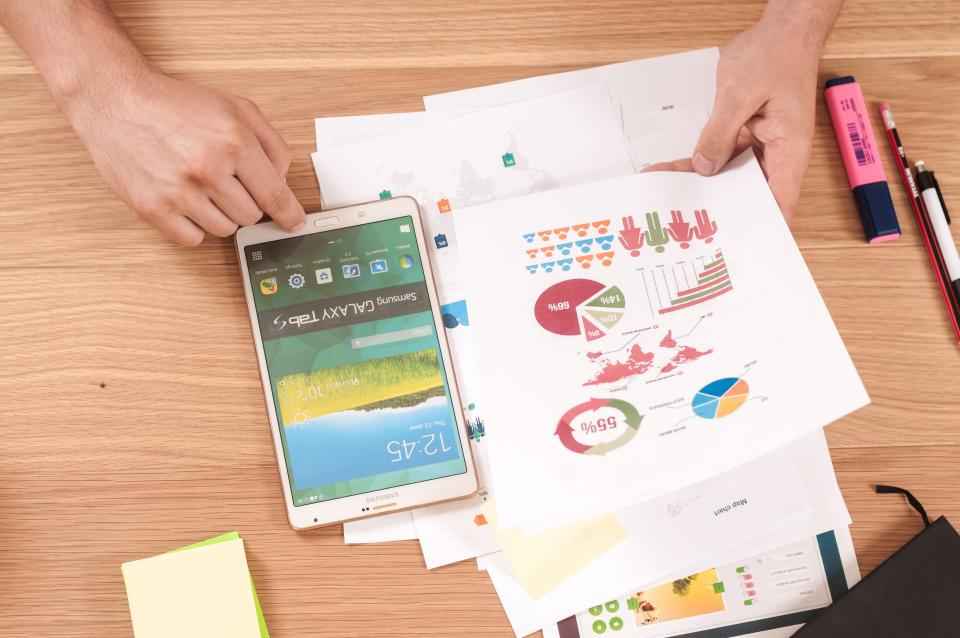
    Featured image: “Samsung Galaxy” by Wilfred Iven, StockSnap, CC0 1.0 (public domain).

    Sources

  • How to Track Ovulation Without an App: What Works

    How to Track Ovulation Without an App: What Works

    A few days in the middle of every cycle matter more than the rest, and your body marks them in advance. Reading those marks yourself is a learnable skill. Learning how to track ovulation without an app comes down to four signals: cervical mucus, basal body temperature, LH test strips, and the pattern of your own cycle. Each of them has limits worth knowing before you trust it.

    Key takeaways

    • Ovulation usually happens about 14 days before your next period, not automatically on day 14 of the cycle.
    • Cervical mucus that turns clear, wet and stretchy is the most useful signal you can read at home.
    • Basal body temperature confirms that ovulation happened; it cannot tell you it is about to.
    • Calendar maths is the weakest method, and a 2026 analysis of 543,167 cycles found it marked at least one fertile day as safe in 67% of them.
    • Most people need three or more charted cycles before their own pattern becomes readable.

    What ovulation is, and why the day-14 rule fails

    Ovulation is the moment a mature egg leaves your ovary. On average it lands around day 14 of a 28-day cycle, counting the first day of bleeding as day 1. A normal cycle runs anywhere from 21 to 35 days, so your ovulation day moves with it. The egg itself survives roughly 12 to 24 hours after release.

    Sperm live longer inside the uterus, usually three to five days. That mismatch is why the fertile window is wider than ovulation itself. Sex can lead to pregnancy from about five days before ovulation to one day after. Ovulation is only one phase of the cycle, and the rest of the month has its own cues, from appetite and energy through to the dip before your period.

    How to track ovulation at home, signal by signal

    Cervical mucus

    Cervical mucus changes texture as oestrogen climbs before ovulation. It usually moves from dry or tacky, to sticky, to creamy, and finally to something slippery that looks like raw egg white. That last stage lasts about three or four days and is the most fertile stretch of the cycle. This is where most people start when they learn how to track ovulation at home.

    A rough pattern to compare against:

    • Dry or sticky, like paste, often white or light yellow
    • Creamy, smooth and white, a bit like yoghurt
    • Wet, watery and clear
    • Slippery, stretchy and clear, close to raw egg white

    Chart it for at least two cycles before reading much into it. Several things blur the reading, including feminine hygiene products, douching, recent sex, breastfeeding, and lubricant used during a pelvic exam. If you keep a private cycle record, note the mucus texture next to the date so the pattern shows up on paper. If your mucus never seems to reach the slippery stage, that is worth raising with a doctor rather than guessing at.

    Basal body temperature

    Basal body temperature is your temperature at complete rest, taken before you get out of bed. After ovulation, progesterone nudges it up by roughly 0.5 to 1 degree Fahrenheit, and it stays higher until your next period. The catch is direction. A rise confirms that you ovulated, not that you are about to.

    ACOG puts your most fertile days at the two or three days before that shift appears. If you are learning how to track ovulation, treat the thermometer as a confirmation tool rather than a forecast. Chart for at least three cycles, because a single cycle is mostly noise.

    Fever, alcohol, poor sleep, stress, travel across time zones and some medicines all push the number around. An irregular cycle makes the method unreliable. A thermometer used after you have been up and moving is not measuring basal temperature at all.

    LH test strips

    Ovulation test strips detect luteinising hormone in your urine. The LH surge arrives before the egg is released, so a positive result usually means ovulation within about 36 hours. Cleveland Clinic suggests testing in the morning and starting around day 10 of your cycle, then continuing until you get a positive.

    Test strips are the only one of these four signals that looks forward instead of back. The trade-off is cost and waste, because a strip used on a quiet day tells you nothing new. A large 2026 study used urine LH tests as its reference standard precisely because they sit closest to the biology.

    Cycle arithmetic

    The oldest approach to how to track ovulation is arithmetic. Ovulation tends to arrive about 14 days before your next period, so a 30-day cycle points to roughly day 16. That estimate weakens the more your cycle length varies, and it is the method the 2026 analysis found most error-prone. Stress and illness can also push ovulation back by a few days, which is why a stress-shifted cycle breaks predictions made months in advance.

    Keep a simple record of the first day of each period for several months. A paper diary or a wall calendar does the job. What you are looking for is your own average, not the textbook one.

    What the evidence says about getting it wrong

    Two separate bodies of evidence should temper anyone’s confidence. NHS guidance puts fertility awareness at 91 to 99 percent effective with perfect use for contraception, and only 76 percent with typical use, which works out to 24 pregnancies per 100 women over a year. ACOG’s figures are in the same territory, with 12 to 24 pregnancies per 100 in the first year of typical use.

    A 2026 observational analysis went further and checked where apps actually go wrong across 543,167 cycles. Calendar-based tracking put at least one genuinely fertile day in the safe zone in 67 percent of cycles, with a predicted pregnancy risk of 22 percent. BBT-supported tracking did better but still missed in 41 percent of cycles, with a risk of 9 percent. A regulated digital contraceptive, cleared as a medical device, came in at 3 percent.

    The conclusion is narrow but firm. Period trackers misclassify fertile days often enough that they should not be used to prevent pregnancy. For people with irregular cycles the calendar-based numbers were worse still, reaching a 65 percent risk.

    When to see a doctor

    Occasional twinges around ovulation are common and usually harmless. Ovulation pain typically lasts from a few minutes to a day or two and tends to switch sides from cycle to cycle. Get medical advice if the pain is severe, does not ease with painkillers, keeps coming back, or arrives with a fever, unusual discharge or bleeding between periods.

    You may not be ovulating at all if you go months without a period. Thyroid problems, primary ovarian insufficiency, very high exercise loads and significant stress can all be behind it. Irregular or absent cycles are worth investigating rather than tracking harder, and the cycle and fertility archive collects more on the signals worth raising with a doctor.

    How Lail can help

    Lail is our own period and ovulation tracker, built for people who would rather their cycle data stayed on their phone. It estimates your ovulation day and fertile window from the cycles you log, and shows which phase you are in today. You can record symptoms, moods and weight alongside your periods, with no account required and no cloud backup. Everything sits in an encrypted database on the device, and you can find it on Google Play alongside the rest of our tools on the products page.

    FAQ

    Can I track ovulation using only my period dates?

    You can estimate it, but estimates built from period dates alone are the least reliable option. They assume ovulation sits a fixed number of days before your next period, which only holds for regular cycles. The 2026 analysis found this approach marked fertile days as safe in two-thirds of all cycles.

    How accurate is cervical mucus on its own?

    It is one of the better at-home signals, though it is a pattern rather than a switch. Expect the slippery stage to last about three or four days before ovulation. Medicines, hygiene products and recent sex can all muddy the reading.

    Do I need to chart all four signals at once?

    Most people find two or three is enough, and mucus plus cycle maths is the lightest starting point. Adding basal body temperature gives you confirmation after the fact. Reading all four at once gets tedious fast and tends to fall apart by the second month.

    How many cycles should I chart before trusting the pattern?

    Three is a reasonable minimum for basal body temperature, and two for cervical mucus. Charting longer gives you a better sense of how much your own cycle moves around. If you are tracking to conceive and the picture stays unclear, raise it with a doctor rather than charting for another year.

    This article is educational and is not medical advice. Talk to a qualified healthcare provider about your own cycle, fertility or contraception.

    Featured image: Open calendar with scribbled notes, rawpixel, CC0 1.0, via Openverse

    Sources

  • Braxton Hicks vs Real Contractions: How to Tell the Difference

    Braxton Hicks vs Real Contractions: How to Tell the Difference

    Halfway through the third trimester, your bump tightens into a hard ball and holds there for a moment before it softens again. You can still talk through it, and you can still walk, but twenty minutes later it happens again. This is where most people start searching braxton hicks vs real contractions, because the two can feel surprisingly similar until you know what separates them. A few concrete differences, and the habit of watching the clock, usually make the answer obvious.

    Key takeaways

    • Braxton Hicks contractions are normal practice tightenings, and they do not open the cervix.
    • The clearest signal in braxton hicks vs real contractions is the trend: practice tightenings wander, true labor builds.
    • True labor contractions settle into a rhythm and get closer together over time.
    • Rest, water and a change of position often quiet Braxton Hicks, but they will not stop real labor.
    • Call your midwife or maternity unit if your waters break, you bleed, your baby moves less than usual, or a contraction lasts longer than two minutes.

    What Braxton Hicks contractions are

    Braxton Hicks are the tightenings your uterus makes as it prepares for birth. Cleveland Clinic calls them practice contractions, and notes they can begin as early as the second trimester, though plenty of people never notice them at all. They often feel like mild period cramps or a band of tightness across the belly, and they are usually strongest at the end of the day. NHS guidance describes them as uncomfortable but normally painless, and adds that they do not last long, do not come often and do not build up.

    When they start, and what they do not mean

    Nobody knows exactly why some people get Braxton Hicks and others do not. What providers do know is that they happen when the uterus is getting ready for labor, and some think they help soften and thin the cervix along the way. The important part is what they do not do. They do not open the cervix, they do not fall into a regular pattern, and they are not a sign that labor is starting.

    Braxton Hicks vs real contractions: the four differences that matter

    Timing, strength, how they respond to movement and where you feel them are the four things that separate one from the other. Put together, the differences in braxton hicks vs real contractions come down to four practical questions. Here is how ACOG and Cleveland Clinic answer each one.

    • Real contractions arrive at regular intervals and the gaps between them get shorter, while Braxton Hicks stay irregular and never settle into a rhythm.
    • Real contractions build steadily and become hard to talk through, while Braxton Hicks vary in intensity but do not keep escalating.
    • Walking, resting or changing position tends to ease Braxton Hicks, while real contractions carry on regardless.
    • Labor pain usually starts low in the back and spreads to the front, while Braxton Hicks are generally felt only at the front of the belly.

    A single symptom on its own proves little. ACOG notes that the only certain way to confirm true labor is a vaginal exam showing the cervix changing, which is why your midwife will ask about the overall pattern rather than one contraction.

    How to time contractions

    Timing turns a vague ache into useful information, and it is the one thing you can do at home. Note when a contraction starts, when it ends, and the gap until the next one, then watch how those numbers change over an hour or two. ACOG suggests noting whether the contractions continue while you rest and drink water, because false ones often fade with both. That is what makes braxton hicks vs real contractions a question most people can answer themselves: a true pattern tightens and shortens the gaps, while a false one drifts.

    What triggers Braxton Hicks, and what helps

    Cleveland Clinic lists dehydration, heavy activity, a full bladder, sex and lifting as common triggers. When one starts, drink a glass of water, empty your bladder, change position and give it a few minutes. Most settle on their own, and they are not a sign that anything is wrong. If they keep coming in a steady rhythm despite rest, treat that as a reason to call your midwife rather than a reason to wait.

    The blurry start of real labor

    Real labor usually begins with a long, untidy stretch before anything looks like the movies. NHS guidance calls this the latent phase, and it can last hours or occasionally days while the cervix softens and starts to open. During this time you will often be advised to stay at home, and if you go to the hospital early you may be sent home again. The practical job is to rest, eat, drink and keep timing, rather than to rush anywhere.

    When to call your midwife or maternity unit

    NHS guidance is direct: call your midwife or maternity unit if you think you are in labor, or if your contractions are coming every five minutes or more often. Call urgently if your waters break, you have vaginal bleeding, your baby is moving less than usual, you are less than 37 weeks pregnant and think labor has started, any contraction lasts longer than two minutes, or you have six or more contractions in ten minutes. ACOG adds that you should go to hospital if your waters have broken and you are not contracting, if you are bleeding heavily, or if you have constant severe pain with no relief between contractions. If you feel a strong urge to push and think your baby is coming now, call 999, and remember that being unsure is a good enough reason to ring.

    If you are checking your baby’s movements as well, our guide to kick counting explains how to build a clear daily picture. Lower back pain with no rhythm behind it is usually a separate late-pregnancy ache rather than labor, and our piece on back pain during pregnancy covers what tends to help. The rest of our pregnancy health guides are in one place too.

    How Utun can help

    Utun is our own pregnancy companion app, built around the practical side of late pregnancy. It includes a contraction timer that records how long each contraction lasts and how far apart they are, so you can watch the pattern instead of guessing at it. There is also a kick counter for tracking your baby’s movements, a mood journal, a hospital bag checklist and trimester to-do lists. You can download it on the Play Store and see the rest of our apps on the products page.

    FAQ

    Can Braxton Hicks contractions be painful?

    Yes, they can be. Cleveland Clinic describes them as less intense than real contractions on average, but ACOG notes they can still be painful enough to make you think labor has started. The giveaway is not the pain itself but the pattern, or the lack of one.

    How often should I feel them?

    There is no normal number. Some people feel a few a day and others notice nothing at all, and Cleveland Clinic says they can start as early as the second trimester. What matters is whether they stay irregular or begin to settle into a rhythm that gets closer together.

    Do Braxton Hicks mean labor is close?

    Not on their own. Cleveland Clinic says they are your body getting ready for labor, but they do not mean labor is coming, and they can happen for many weeks beforehand. ACOG points out that you may notice them more at the end of the day, which is normal.

    How long do real contractions last?

    ACOG puts a true labor contraction at about 60 to 90 seconds, arriving at regular intervals that get closer together. Cleveland Clinic describes them as lasting 40 to 60 seconds and becoming more frequent over time. Either way, the number matters less than the trend.

    This article is educational content and is not medical advice. Always speak to your midwife, doctor or another qualified healthcare professional about your own pregnancy and any symptoms that worry you.

    Featured image: Heart shape on a pregnant belly by freestocks.org (CC0 1.0, public domain) via Openverse.

    Sources

  • How to Start a Mood Journal When You Hate Journaling

    How to Start a Mood Journal When You Hate Journaling

    Most people who say they want to write things down are not actually looking for another blank page to feel guilty about. Two weeks of neat entries followed by four months of silence is the normal pattern, not a character flaw. A mood journal asks for something smaller: a number, a word, and one line about what happened. Keep it that short and it stops competing with the rest of your life.

    Key takeaways

    • A mood journal does not need paragraphs. A rating from 1 to 5 plus one specific line is enough.
    • Research on writing about feelings is mixed. It is not a treatment and it is not a cure for a bad week.
    • Tracking helps most when you are looking for patterns across weeks, not grading individual days.
    • The habit that lasts is the one attached to something you already do, not one that needs a reminder.
    • If low mood lasts for weeks and interferes with daily life, a notebook is not the answer. See a doctor.

    Why most journaling advice falls apart

    If you have ever bought a nice notebook and abandoned it in a drawer, the problem was probably the size of the ask rather than your discipline. Journaling advice usually arrives with a template: prompts, gratitude lists, reflection questions, a page minimum. Cleveland Clinic’s guide to coping with stress makes a point that applies here, that coping is a process rather than a single event, and that rigid strategies tend to serve people worse than flexible ones. A fixed template is rigid by design.

    NHS guidance points in a different direction. Its stress-busting list does not ask for a page a day. It suggests writing down three things that went well, or that you are grateful for, at the end of every day, which works out to roughly ninety seconds. That is the size of habit worth building.

    Two smaller practices from this blog pair well with tracking, and both are about lowering effort rather than raising it: the 4-7-8 breathing trick for the moment you need to come down, and letting go of the idea that self-care has to look impressive.

    What a mood journal actually asks of you

    A mood journal is a record, not a piece of writing. The version worth keeping has three parts: a number for how you feel, one line about what happened, and the date. There are no prompts to answer and no paragraphs to produce.

    In a mood journal, the number matters more than the words. Rating your mood from 1 to 5 takes a second, and unlike prose it can be compared across months. The word “fine” tells you nothing in November about what October felt like; a 2 tells you something immediately.

    One line of context makes the number useful later. A note like “3, slept badly, big meeting” takes ten seconds and explains a dip you would otherwise misread as a bad month. Skip the line and you are left with a chart and no story. If you would rather write at length than rate, our guide to a journaling method that survives covers that; a mood journal is the smaller cousin.

    What the research says about tracking how you feel

    A 2026 systematic review and meta-analysis in JMIR Mental Health pooled 8 randomized trials with 1,230 participants and six different mood monitoring protocols. In people with bipolar disorder it found a small effect on mania symptoms that was not statistically significant (n=873, P=.06) and no effect on bipolar depression. In people with depression it found a small effect of borderline significance at 12 months (2 comparisons, n=262, SMD -0.25, P=.05) but not at 6 months. The authors found no evidence that mood monitoring changed relapse or readmission rates.

    The honest reading is that tracking how you feel is not a treatment and does not reliably lift symptoms on its own. What it can do is hand you information. That is a modest claim, and it is the one the evidence supports.

    Research on writing itself is similarly cautious. A meta-analysis of 16 randomized trials of expressive writing in cancer patients and survivors found no statistically significant benefit for psychological outcomes (Hedges g 0.04), physical outcomes (0.08) or quality of life (0.09). A separate meta-analysis of 8 trials with 929 women found expressive writing reduced PTSD symptoms related to pregnancy but made no measurable difference to anxiety or stress, and the depression result was inconclusive.

    So why does naming a feeling seem to help at all? One line of research on affect labeling, the plain act of putting feelings into words, found that brain activity during that act predicted changes in depression, anxiety and life satisfaction three months later. That is a mechanism, not a promise, and it suggests the value sits in the naming. Which is why a mood journal does not need to be long.

    Adherence is where most tracking quietly dies. A 2026 review of 77 mood tracking and ambulatory assessment studies with 17,123 participants reported a pooled adherence proportion of 0.64 and attrition of 0.28, with very high heterogeneity between studies. The detail worth knowing is that mood monitoring reminders were associated with lower adherence, not higher. A mood journal that nags you is one you will eventually avoid.

    A two-minute mood journal setup

    A mood journal that survives is boring to look at and takes under a minute. Pick one place you already look at daily, and put the entry there. A notes app on the phone you already carry works better than a notebook that lives in a drawer.

    • Date and a number from 1 to 5, written the same way every time.
    • One line of what happened, kept under ten words.
    • Anything obvious that could explain it: sleep, alcohol, your period, a deadline.
    • A single word for the dominant feeling, which is the part affect labeling research cares about.

    Then leave it alone until tomorrow. Reading yesterday’s entry is fine; scoring your week is not. The moment a mood journal becomes a report card, you will start writing what you want to see.

    Review it once a month, not once a day. Lay the month out and look for repeats: the same weekday dip, the same few days before your period, the same reaction to a particular meeting. NHS guidance on mindfulness makes a related point, that noticing signs of stress earlier gives you a better chance of dealing with them. There are more ideas like this in our self-care archive.

    When a mood journal is not the answer

    A mood journal is a good tool for spotting patterns and a poor tool for treating anything. Depression, as NHS describes it, is a low mood that lasts for weeks or months and affects daily life. If that sounds familiar, a notebook will not fix it. Talk to a doctor or a mental health professional.

    There are also signs that need attention sooner than a monthly review allows. Watch for low mood that has not lifted in several weeks, losing interest in things you used to enjoy, persistent changes in sleep or appetite, or drinking more to cope. If you have thoughts of harming yourself, contact emergency services or a crisis line in your country straight away, and do not wait for a pattern to emerge.

    How Ananta can help

    Ananta is our own app, and mood tracking is one of the things it does. A mood tracker records your daily mood and shows it as a monthly graph, which is the pattern view a paper log only gives you if you do the arithmetic yourself. It also includes guided journaling prompts, daily affirmations, a sleep log and a water reminder, so the entry you write can sit next to the sleep and hydration data that often explains it. You can get it free on Google Play and see it alongside the rest of our apps on the products page.

    FAQ

    Does a mood journal have to be written every day?

    No. Missing days is normal, and a gap is data too. What matters is that each mood journal entry is short enough that you come back instead of quitting.

    What should I actually write in a mood journal?

    Three things: a number, one line of context, and a word for the feeling. That is enough to compare one month with another. If you feel like writing more on some days, treat it as a bonus rather than a requirement.

    Is a mood journal the same as therapy?

    No. It is a record that can help you and your doctor spot patterns. Writing does not treat depression or anxiety on its own, and the research on written disclosure is mixed.

    Can tracking my mood make me feel worse?

    Possibly, if you use it to grade yourself. The evidence on mood monitoring in bipolar disorder found no overall increase in symptoms, and reminders were linked to lower adherence rather than better results. Keep your mood journal entries short and the review monthly.

    Is paper or an app better for a mood journal?

    Whichever one you will actually open. Paper is private and has no battery to run out; an app can draw the month for you and sit next to your sleep and water data. The format matters far less than the size of the daily entry.

    This article is educational and is not medical advice. It does not replace care from a qualified healthcare professional. If your mood is affecting your daily life, please talk to a doctor.

    Featured image: “Journal Notepad” by Artsy Crafty via StockSnap, CC0 1.0.

    Sources

  • Magnesium for Period Cramps: What the Evidence Actually Shows

    Magnesium for Period Cramps: What the Evidence Actually Shows

    That kind of pain does not care about your plans. By the time the painkillers wear off, most people will try whatever is in the cupboard. So does magnesium for period cramps actually change anything, or is it a supplement with a better marketing budget than evidence? The research is small, older than you would expect, and more interesting than the internet usually admits.

    Key takeaways

    • Magnesium sits in more than 300 enzyme reactions, including the muscle and nerve functions that decide how a contraction feels.
    • The strongest evidence for painful periods comes from three small trials published in 1989 and 1990, plus one 2022 trial against the contraceptive pill.
    • A 2016 Cochrane review of 27 supplement trials rated every comparison low or very low quality, and safety reporting was close to absent.
    • The upper limit for magnesium from supplements is 350 mg a day, and diarrhoea is the usual sign you have passed it.
    • Food carries magnesium with no laxative ceiling, and pumpkin seeds, beans, nuts and leafy greens are the cheapest places to find it.

    What magnesium does in your body

    Magnesium is a mineral your body uses in more than 300 enzyme reactions: building proteins and bones, regulating blood sugar and blood pressure, and running muscle and nerve signals. Harvard’s Nutrition Source describes it as an electrical conductor that contracts muscles and keeps the heart beating steadily.

    Muscle contraction is the part that matters for monthly pain. Period pain happens when the womb tightens during your period, according to the NHS. A 2020 review in Nutrients explains magnesium’s role in pain as an antagonist at the NMDA receptor, which reduces central sensitisation and dampens an already sensitised pain system.

    Nobody has shown that low magnesium causes period pain. The mineral simply sits inside the pathways that regulate contraction and pain signalling, which is why researchers tested whether adding more of it changes the experience.

    What the evidence on magnesium for period cramps shows

    The best summary of magnesium for period cramps is still the 2001 Cochrane review by Proctor and Murphy. Three small trials compared magnesium with placebo, and overall magnesium was better for pain relief while women needed less additional medication. There was no significant difference in the number of adverse effects. The reviewers called magnesium promising, but said the dose and schedule could not be pinned down from the trials available.

    Two of those trials are worth knowing in detail. Seifert and colleagues followed 50 women with primary dysmenorrhoea for six months in a double-blind study: 21 of the 25 women on magnesium reported fewer symptoms, and prostaglandin F2 alpha in menstrual blood fell to 45% of the pre-treatment level, against 90% in the placebo group. Fontana-Klaiber and Hogg ran a smaller double-blind trial of 32 women and analysed 21 of them. Magnesium did little on day one, helped back pain and lower abdominal pain on days two and three, and cut days lost from work.

    Newer evidence is thinner than the supplement aisle suggests. A 2022 study followed 172 women with primary dysmenorrhoea for three cycles: 86 took 200 mg of magnesium citrate daily and 86 took a combined oral contraceptive. The magnesium group finished with significantly lower pain scores than before treatment and needed fewer painkillers, but the contraceptive group did better on both measures. That study had no placebo arm.

    A 2020 meta-analysis of micronutrients in primary dysmenorrhoea screened 16 clinical trials and listed magnesium among the supplements with a desirable effect on pain. Only six studies were pooled, though, and the pooled results that reached significance were for vitamin D and vitamin E, not magnesium.

    The honest counterweight for anyone weighing magnesium for period cramps is the 2016 Cochrane review of dietary supplements for period pain. It covered 27 trials and 3,101 women, mostly students in their late teens and early twenties in Iran, and graded every comparison as low or very low quality. Only four of the 27 trials reported adverse effects in both treatment groups. Magnesium was not among the supplements included in that update, so the 2001 conclusion remains the fairest reading: promising, tiny, and unclear on dose.

    One more finding is worth flagging for anyone whose symptoms run into the week before their period. A 2017 systematic review of 14 trials found that magnesium combined with vitamin B6 reduced premenstrual anxiety, but magnesium on its own did not, and neither version changed stress levels in women with dysmenorrhoea.

    Which type of magnesium, and how much

    Supplements come as magnesium oxide, hydroxide, gluconate, chloride and citrate salts, plus amino acid chelates such as magnesium aspartate. A few of those salts are also used as antacids and laxatives, which tells you something about how they behave in the gut. No trial has compared the forms head to head for cramps, and the studies that did show a benefit used different preparations: a granulate in 1990, 200 mg of citrate daily in 2022. The practical answer for magnesium for period cramps is to pick a form you tolerate and can take consistently.

    The dose ceiling is better documented than the dose target. The tolerable upper intake level for magnesium is 350 mg a day from supplements only, and it exists specifically because higher intakes cause diarrhoea and gastrointestinal upset. That limit does not apply to magnesium from food, because the kidneys clear the excess.

    Magnesium also interferes with some medicines. It reduces the absorption of digoxin, nitrofurantoin and certain antimalarials, needs a two-hour gap from bisphosphonates such as alendronate, and can reduce the effect of chlorpromazine, penicillamine, oral anticoagulants and quinolone antibiotics. If you take prescription medicine daily, ask a pharmacist before adding a supplement.

    Food sources first

    About 30% to 40% of the magnesium you eat is absorbed, and absorption shifts with the amount eaten and with the rest of the meal. Adults need 310 to 320 mg a day, more during pregnancy. Good sources, according to MedlinePlus and Harvard, include:

    • Pumpkin seeds, almonds, cashews, peanuts and hazelnuts.
    • Beans, peas, lentils, chickpeas and soy products such as tofu.
    • Leafy greens such as spinach, whole grains such as brown rice, avocados and bananas.
    • Milk, and fortified foods such as breakfast cereals.

    A bowl of beans and a handful of seeds gets you a long way toward the daily figure without touching the supplement ceiling. If your diet is already built on those foods, the case for a pill gets weaker.

    What else helps with cramps

    The NHS self-care list is unglamorous and better evidenced than any supplement: a warm bath or shower, a heat pad or hot water bottle wrapped in a tea towel on your tummy, massage, and gentle exercise such as yoga, swimming, walking or cycling. Paracetamol and ibuprofen are listed as first-line painkillers, and ibuprofen specifically lowers the prostaglandins behind the contractions.

    Three articles on this site go deeper on those options. Our piece on heat for period cramps covers the head-to-head trials, ginger and chamomile tea looks at the herbal evidence and its limits, and what to eat on your period maps food to each phase of the cycle. For more in this cluster, browse the Cycle & Fertility archive.

    When to talk to a doctor

    Period pain that is severe or worse than usual and has not eased with painkillers needs an urgent appointment or a call to NHS 111. Book a routine appointment if your periods are getting heavier or more painful, if pain stops you doing your usual activities, if sex or going to the toilet hurts, if you bleed between periods, or if you have a swollen tummy, no appetite or unexplained weight loss. Skip magnesium supplements until you have spoken to a doctor if you have kidney problems, because impaired kidney function raises the risk of a build-up.

    How Lail can help

    Lail is our own period tracker for Android, and it keeps everything on your phone rather than in a cloud account. You can log symptoms, mood, flow and weight, and see insights built around each phase of your cycle, which is how you find out whether the magnesium, the heat pad or the earlier bedtime actually changed anything. There is no account and no cloud backup; the database is encrypted on your device. You can download Lail from the Play Store or find it alongside our other apps on the products page.

    How long does magnesium take to work for period cramps?

    The trials that showed a benefit dosed across whole cycles rather than single days. The 1990 study gave magnesium the day before bleeding plus days one and two, while the 2022 study measured pain after three cycles. Give magnesium for period cramps two full cycles before you judge it.

    Which magnesium is best for period cramps?

    No trial has compared the forms against each other for cramps, so any confident ranking online is guesswork. Trials have used a granulate and magnesium citrate, and the safety limit of 350 mg a day applies to all of them. Choose one you tolerate and keep the total below that ceiling.

    Should I take magnesium every day or only during my period?

    Both approaches have been tested, and neither has been compared with the other. The 1989 trial dosed continuously for six months, while the 1990 trial used a short window around bleeding. Daily dosing is easier to remember; the trade-off is more days of loose stools if you overshoot the dose.

    Can magnesium replace painkillers?

    No. In the 2022 trial the contraceptive pill outperformed magnesium, and the NHS still lists paracetamol and ibuprofen as first-line treatment. Treat magnesium as an addition to your usual pain plan, not a replacement for it.

    This article is educational and is not medical advice. Talk to a qualified healthcare provider about your own symptoms, medicines and supplements.

    Featured image: Roasted Pumpkin Seeds by jaxzin via Flickr (CC BY 2.0).

    Sources