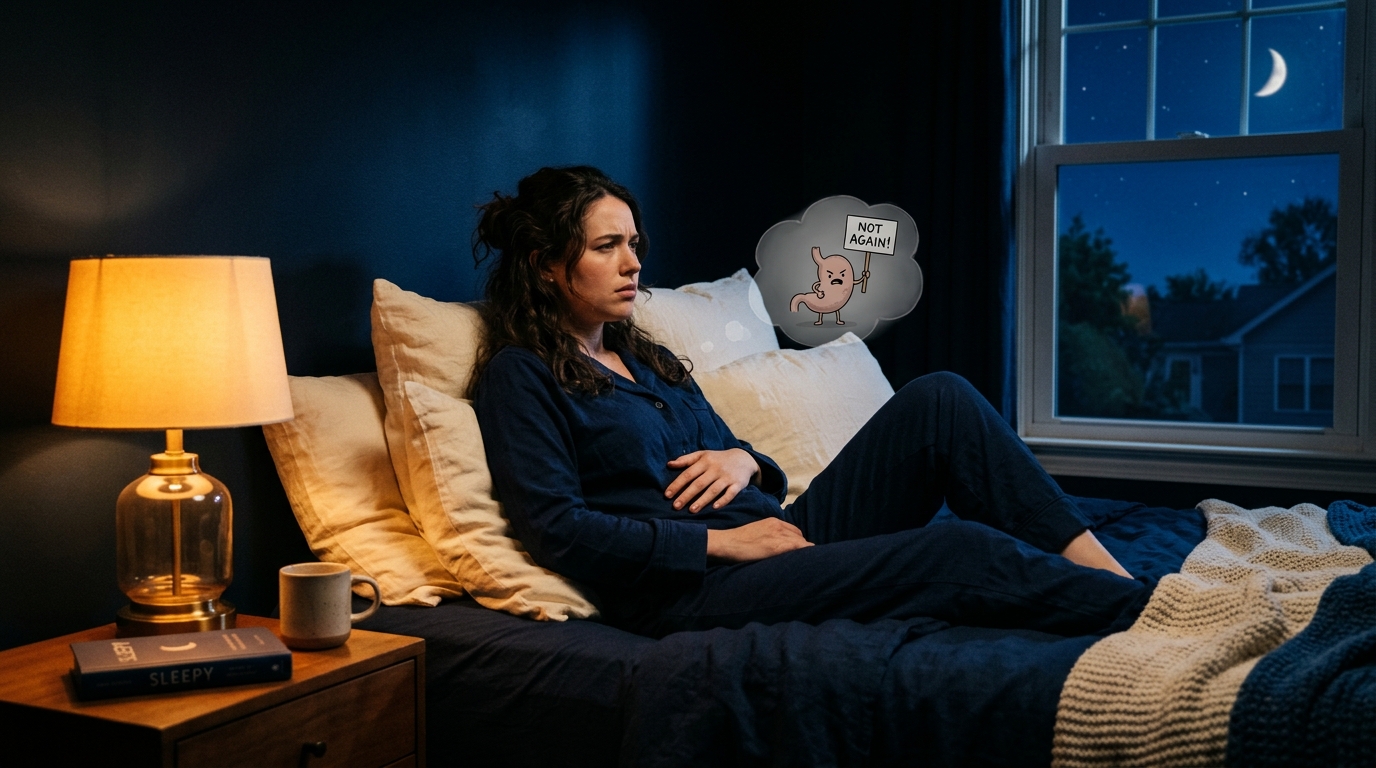
I used to think my midnight stomach grumbles were simple. I ate dinner too early. I was hungry again. Grab a snack, problem solved.
Then I started paying attention.
The “hunger” didn’t feel like regular hunger. It was a weird, gnawing, burn-y kind of discomfort. Sometimes it came with a sour taste at the back of my throat. Other times my stomach made noises so dramatic it sounded like it was holding a press conference. At 2 AM. On a Tuesday.
Eventually I connected the dots. This wasn’t about food. My gut was trying to tell me something, and I’d been ignoring it for years.
The real reason your stomach acts up at night
Here’s what I learned after falling down a research rabbit hole (and talking to an actual doctor — my aunt, who put up with my 11 PM panicked texts).
When you lie down after eating, gravity stops doing its job. Normally, gravity helps keep stomach acid where it belongs — in your stomach. But when you’re horizontal, that acid can creep up into your esophagus. This is gastroesophageal reflux, or GERD if it happens regularly. Your esophagus doesn’t have the protective lining your stomach has, so that acid burns.
And here’s the part that blew my mind: your brain sometimes misreads that burning sensation as hunger. The irritation in your esophagus gets translated as “empty stomach, need food.” So you eat. Which triggers more acid production. Which makes things worse. It’s a loop that feeds itself.
It’s not always acid reflux
Turns out there are several reasons your stomach might stage a midnight protest:
- Late-night large meals. Your digestive system slows way down at night. A heavy dinner at 9 PM is still sitting there when you go to bed at 11. That’s a recipe for discomfort.
- Stress. Your gut and brain are wired together through the vagus nerve. If you’re anxious, your digestion gets weird. Cortisol levels that spike from stress can send your stomach into chaos, especially at night when you’re not distracted by the day’s tasks.
- Trigger foods. Spicy food, citrus, tomatoes, garlic, onions, chocolate, coffee, alcohol. All of these relax the valve between your stomach and esophagus. I ate a giant plate of sambal-heavy noodles at 9 PM once and my stomach did not speak to me for two days.
- Eating too fast. If you inhale your dinner in 10 minutes, you swallow a ton of air. That air expands in your stomach and pushes acid upward. Plus your stomach hasn’t had time to signal your brain that it’s full.
- Dehydration. Not drinking enough water during the day can mess with your stomach lining and slow digestion. Chugging a liter right before bed won’t fix it either — that just sloshes around in your stomach.
What actually helped me
I’m not going to pretend I flipped some switch and now sleep like a baby every night. But a few changes made a genuine difference:
- I moved dinner earlier. Even a 30-minute shift helped. Eating at 7 instead of 8:30 gave my stomach time to process before I went horizontal. The sweet spot is 2 to 3 hours between your last meal and bedtime.
- I propped up my pillow. Nothing fancy. I added an extra pillow so my head and shoulders are slightly elevated. This uses whatever gravity is left to keep acid down. It sounds too simple to work, but it does.
- I paid attention to what I ate for dinner. I didn’t cut anything out completely. I just noticed which foods made my stomach angry and kept those for lunch instead. My beloved spicy noodles moved to a 1 PM slot.
- I chewed my food. Embarrassingly basic, but I realized I was basically swallowing my dinner whole while watching YouTube. Slowing down cut the nighttime discomfort by a noticeable amount.
- I stopped doom-scrolling before bed. This one was unexpected. Less bedtime anxiety meant less cortisol, and my stomach seemed to appreciate the calmer nervous system. Who knew my gut had opinions about my Twitter habits?
When it’s more than just discomfort
I want to be careful here. I’m not a doctor, and some stomach issues need actual medical attention. If your nighttime pain is severe, wakes you up consistently, or comes with symptoms like unexplained weight loss, trouble swallowing, or blood, please see a doctor. The lifestyle changes I mentioned are helpful for occasional midnight stomach grumbles, but they’re not a replacement for medical advice.
That said, for a lot of people — myself included — the midnight stomach protest is just the body’s way of asking you to treat it a little better. Eat a bit earlier. Chew a bit slower. Stress a bit less. Simple things, but they add up. If you are also short on sleep, that is a separate hunger signal — see why lack of sleep makes you hungry.
My stomach still complains sometimes. But now when it does, I know it’s probably not asking for crackers. It’s asking me to pay attention.
How Ananta can help
Ananta is our self-care and journal app for Android: a short daily place to log your mood and sleep, read one affirmation, and keep a small routine going through a busy week. If the advice above sounds right but you know a paper journal will not survive past Tuesday, that is the gap Ananta is built for. It is on the landing page and on Google Play, and you can see all of our apps on the Apps & Products page.
Leave a Reply