For most of my adult life, I thought self-care was something I had to earn. Like a treat for finishing everything on my list first. The problem was, my list never ended. And so self-care kept getting pushed to some imaginary Friday that never came.
I’d scroll past women on Instagram doing their elaborate morning routines: lemon water, meditation cushions, gratitude journals with perfect handwriting, ten-step skincare. Fifteen minutes of content compressed into reels that made it look effortless. It wasn’t effortless for me. Every time I tried to copy one of those routines, I’d last maybe three days before collapsing back into bed fifteen minutes before my first meeting.
So I stopped trying to be aspirational about self-care. I got embarrassingly practical instead. I built a simple self-care routine that actually works — not because it is optimized or photogenic, but because it fits into the cracks of my actual day. And that’s when things started to shift.
I stopped trying to have a “morning routine”
There was a period where I consumed every morning routine video on YouTube. The 5 AM club. The miracle morning. The billionaire morning routine that was supposed to change my life. I tried them. I failed them. I felt worse about myself after each failure, which is ironically the opposite of what self-care is supposed to do.
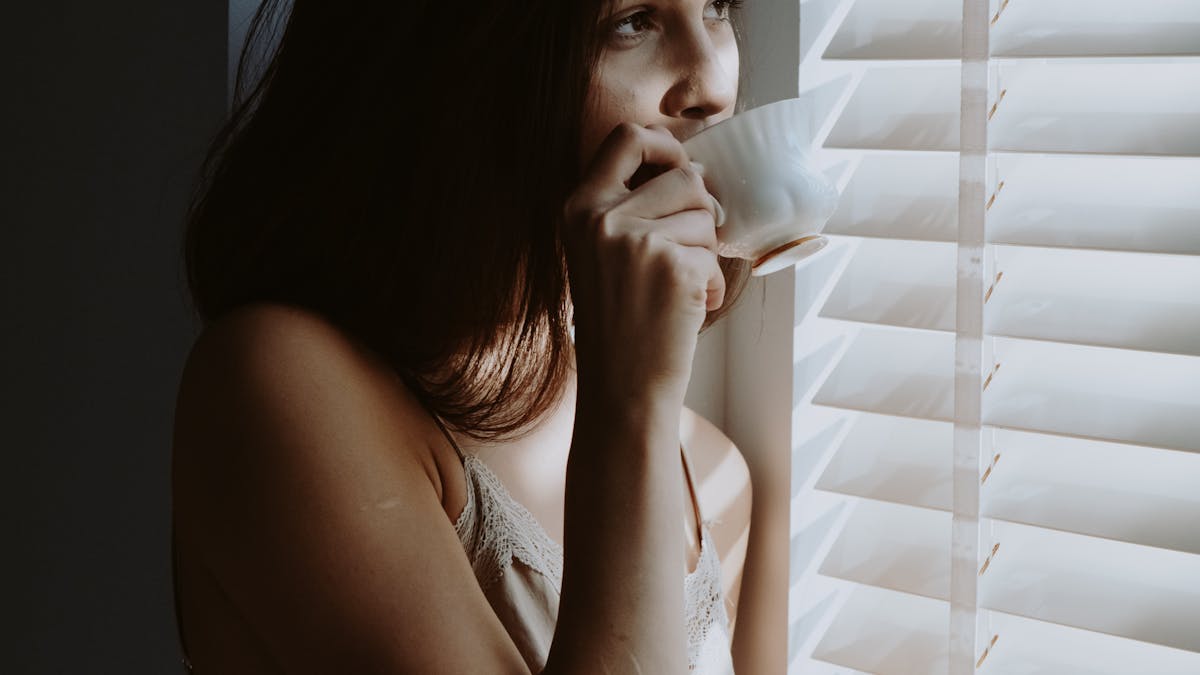
What I have now is embarrassingly simple. I get up. I drink a glass of water because I read somewhere that dehydration makes you groggy, and I am already groggy enough. I stand by the kitchen window for maybe three minutes with my coffee. I don’t meditate. I don’t journal. I don’t do yoga flows or cold plunges. I just stand there, warm mug in hand, looking at the sky. Sometimes the sky is gray. Sometimes there’s a bird. That’s it. That’s the routine. If you have tried to drink more and just ended up uncomfortable, the fix is pacing rather than willpower: drinking two litres a day without bloating.
The surprising thing: those three minutes actually shift something. Not because they’re magical, but because they’re mine. Nobody needs anything from me in those three minutes. Nobody is asking me questions. My phone is somewhere else. It’s the only part of my day where I don’t produce or consume or respond. I just exist. That sounds extremely cheesy, I know. But I’ve come to believe that for women who carry a lot of invisible labor, simply existing without output is a form of resistance.
Skincare that’s actually about care, not about skin
I wrote before about how I stopped buying skincare products and started actually caring for my skin. That realization kept growing. I noticed that what I valued wasn’t the result, clearer skin, smaller pores, whatever; it was the ritual. The sixty seconds at night where I wash my face and nobody can ask me for anything because my hands are wet and my eyes are closed.
My skincare now is three steps: cleanser, moisturizer, done. No serums. No actives I can’t pronounce. No ten-step protocol that makes me feel like I’m prepping for surgery. Just warm water, something that smells slightly like oats, and two minutes of touching my own face gently. I think that last part matters more than the products. When was the last time you touched your own face with kindness?
I used to roll my eyes at people who called skincare “grounding.” Now I kind of get it. It’s not about the skincare. It’s about the pause. The bathroom door closed. The noise of the day finally off. Nobody needing me for two whole minutes. For someone who spends most of her waking hours attending to other people’s needs, those two minutes feel almost illicit. Like I’m getting away with something.
The journaling method that doesn’t ask me to be deep
I’ve written about my journaling approach before, but here’s the part I didn’t say: I still have days where I write nothing. Sometimes a week goes by and my notebook stays closed. Old me would have treated that as failure. Current me understands that journaling works precisely because it doesn’t punish me for skipping it.
My journal is not aesthetic. It’s a cheap spiral notebook I bought at a supermarket. The entries are messy. Sometimes it’s just three bullet points: “Tired. Had toast. Forgot to reply to Sarah.” That’s it. There is no deep reflection. There is no gratitude list. There is just a record of being alive that day. And somehow, looking back at those mundane entries feels more meaningful than any curated journal could. Because it’s real. It’s my actual life, not the version I’d present to an audience.
I think we’ve overcomplicated journaling. We’ve turned it into another thing we’re supposed to optimize. Morning pages, shadow work prompts, five-minute gratitude sprints. All of that is fine if it helps you. But if it makes you feel like you’re failing at journaling — which is absurd, you can’t fail at writing your own thoughts — then it’s not serving you.
Digital detox in small doses (because 48 hours is unrealistic most weeks)
I did a proper 48-hour digital detox once and wrote about how it reminded me what boredom felt like. It was great. It was also completely unsustainable. I am a working mom with responsibilities that require me to be reachable. I cannot disappear into the woods for a weekend every month.
What I can do is much smaller. Phone goes to another room during meals. No scrolling in bed — that one took months to actually stick. The charger lives in the living room now, not on my nightstand. On Saturday mornings I don’t check anything until I’ve had breakfast. Not email, not messages, not the news. The world continues spinning. Nobody has ever died because I replied to their message at 10 AM instead of 7 AM.
These tiny boundaries with my phone feel almost laughable to describe. But the cumulative effect is real. I sleep better when I don’t scroll before bed. I’m more present at breakfast when my phone isn’t face-up on the table. And I notice , actually notice , how often I reach for my phone out of pure reflex. The reaching itself has become a signal. What am I avoiding? What feeling am I trying to escape? Usually it’s boredom. Or anxiety. Or the uncomfortable reality that there is nothing urgent to do and I don’t know how to sit with that.
Walking for my head, not for my body
I started walking every day last year, not to lose weight or hit a step goal, but because my thoughts had gotten too loud and I didn’t know what else to do. I still walk. Not every single day, let me be honest, but most days. Twenty minutes. No podcast, no music, no phone calls. Just walking.
The walking itself isn’t the point. The point is that I’m not doing anything else. I’m not productive during the walk. I’m not multitasking. I’m not optimizing. I’m just moving my legs and looking at trees and letting my thoughts unspool. Half the time my brain is looping a song lyric I can’t get rid of. The other half I’m mentally drafting emails I’ll never send. Neither is particularly enlightened. Both feel surprisingly healing.
There’s something about forward motion that helps my brain process backward things. I don’t know the science. I don’t need to. I just know that when I’m stuck on a problem or a feeling, walking tends to loosen whatever’s jammed. Even if I come home with no solutions, I come home a little less clenched. That counts.
Self-care as permission, not punishment
The biggest shift for me wasn’t adding habits. It was changing how I talked to myself about adding habits. I spent years framing self-care as something I needed because I was broken. “I should meditate because I’m so anxious.” “I should walk because I’m out of shape.” “I should journal because my thoughts are a mess.” Every “should” was a tiny indictment. Every self-care practice was a reminder of my inadequacy.
That framing never worked. It just made self-care feel like another thing on the to-do list, another way I was falling short. The turning point came when I started thinking about it differently: not as fixing myself, but as being with myself. The three-minute coffee. The face washing. The walk around the block. None of these fix anything. They don’t cure anxiety or make me more productive or give me glowing skin. They just put me in the same room as myself for a few minutes a day. And that, I’ve discovered, is more valuable than any cure.
I also had to get comfortable with the discomfort of not being needed. This sounds strange, but stay with me. For a long time, my sense of worth was tangled up with how much people relied on me. Taking time for myself felt like abandoning a post. What if someone needed me during those twenty minutes I was walking? What if an urgent message came while my phone was in the other room? The guilt was real. It still shows up sometimes.
What helped: learning to say no without explaining myself. Not just to other people , to the voice in my head that insists I must always be available. I started treating my small self-care habits not as indulgences but as non-negotiables. The same way I wouldn’t skip brushing my teeth, I try not to skip my three minutes of morning silence. I don’t always succeed. But having the standard matters more than hitting it perfectly.
What a simple self-care routine that actually works looks like
My self-care is not impressive. Nobody would film a reel about it. It’s three minutes of standing by a window, two minutes of washing my face, twenty minutes of walking, and a notebook where I sometimes write “had toast.” It is aggressively boring. It doesn’t require special equipment or early wake-up times or a personality transplant. It costs almost nothing. It fits into the cracks of my day rather than demanding space I don’t have. The version of this that fits a genuinely packed week is smaller still: five minutes of self-care is a real dose, not a token one.
And it works. Not because it’s clever or optimized, but because it’s doable. Because I don’t feel guilty when I miss a day. Because nobody can tell me I’m doing it wrong , there’s no wrong way to stand by a window. Because the bar is so low I can’t fail, and not-failing builds momentum, and momentum builds something that starts to feel a lot like actually caring about myself.
If you’re reading this and your self-care routine is also small and boring and ungrammable , keep it. Guard it. Don’t let anyone convince you it’s not enough. The most sustainable self-care might just be the kind that doesn’t look like self-care at all.
How Ananta can help
Ananta is our self-care and journal app for Android: a short daily place to log your mood and sleep, read one affirmation, and keep a small routine going through a busy week. If the advice above sounds right but you know a paper journal will not survive past Tuesday, that is the gap Ananta is built for. It is on the landing page and on Google Play, and you can see all of our apps on the Apps & Products page.
Leave a Reply