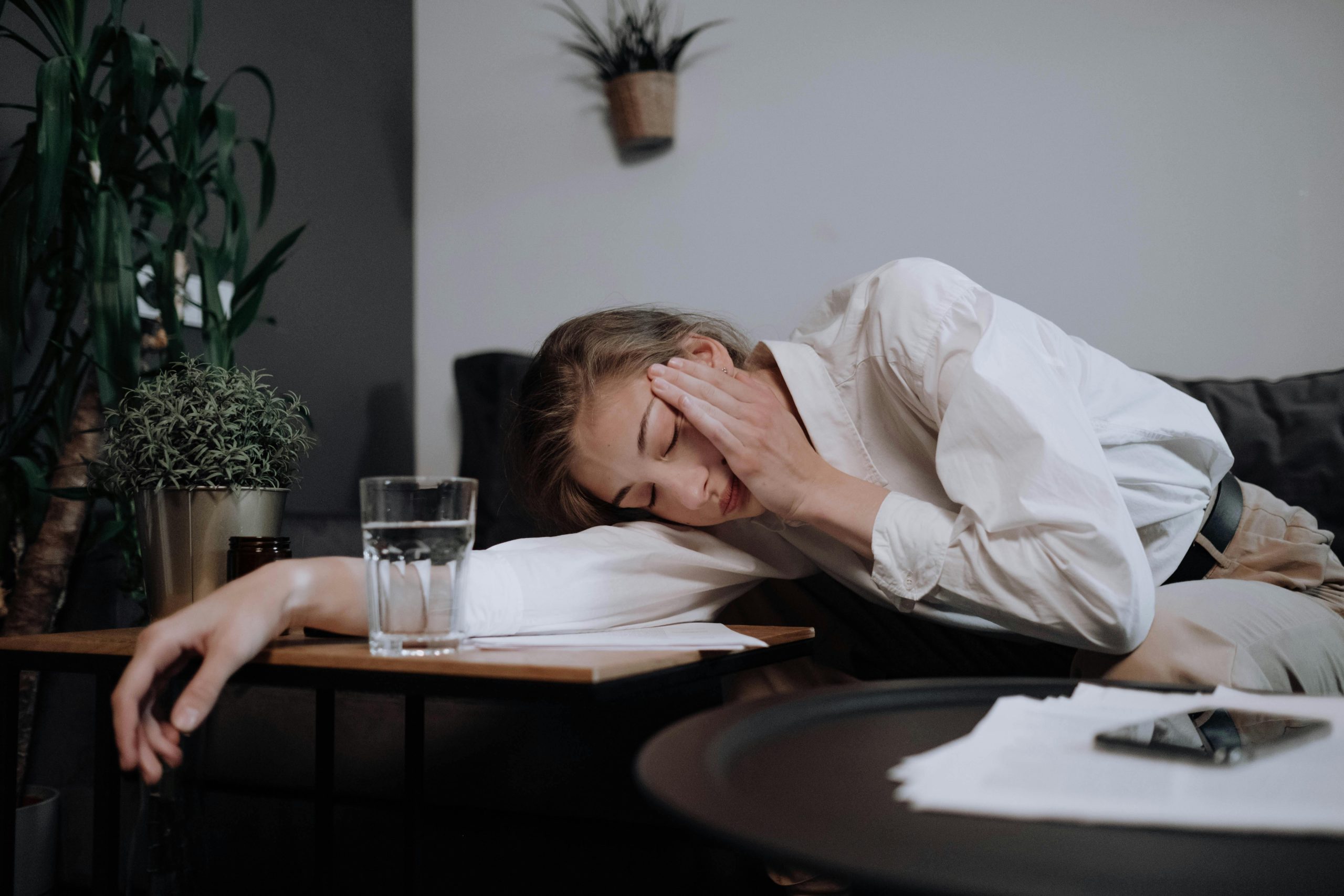
Every day, somewhere between 12:45 and 1:15 PM, the afternoon slump hits. My eyelids start feeling like they have tiny weights sewn into them. My brain, which was firing on all cylinders ten minutes earlier, suddenly starts buffering like a video on bad hotel Wi-Fi. And my body just wants to curl up under my desk and nap like a cat in a sunbeam.
For years I blamed lunch. “It’s the rice,” I told myself. “Too many carbs.” And yes, what you eat matters. But when I finally got curious and started digging into what was actually going on, I realized the afternoon slump is both more interesting and a lot less about personal weakness than I had assumed.
The Afternoon Slump Is Not Laziness. It’s Biology.
Here is something nobody bothered to tell me: your body has a built-in energy dip programmed right into the middle of your day. It is called the circadian dip, and it is as natural as feeling tired at midnight. (The Sleep Foundation explains how circadian rhythms govern these daily energy cycles.)
Our internal body clock, the same one that nudges us awake in the morning and winds us down at night, has two low-energy points in every 24-hour cycle. One hits around 2 to 4 AM, which explains why even night owls eventually crash. The other arrives between roughly 1 and 4 PM. During that midday window, your core body temperature drops by a fraction of a degree, and your brain releases a tiny pulse of melatonin, the same hormone that helps you fall asleep after dark.
So when you are fighting to keep your eyes open during a 2 PM meeting, you are not weak. You are not undisciplined. You are a mammal doing what mammal bodies do.
Scientists call this the “post-lunch dip,” but that name is misleading because the dip happens whether you eat lunch or not. Food makes it more noticeable since a carb-heavy meal pulls blood toward your digestive system and triggers an insulin response, which can amplify the drowsiness. But the underlying energy trough is your body clock doing its thing, not your sandwich staging a coup.
What I Tried (and What Actually Helped)
Once I stopped treating my 1 PM crash as a moral failing, I started experimenting. Some things did nothing. A few things genuinely shifted my afternoons. Here is what worked:
How Ananta can help
Ananta is our self-care and journal app for Android: a short daily place to log your mood and sleep, read one affirmation, and keep a small routine going through a busy week. If the advice above sounds right but you know a paper journal will not survive past Tuesday, that is the gap Ananta is built for. It is on the landing page and on Google Play, and you can see all of our apps on the Apps & Products page.
1. I stopped eating lunch at my desk.
For months I was shoveling food into my mouth while staring at a spreadsheet, and it turns out that was making everything worse. Not because of the food itself, but because my brain was getting zero transition between work mode and break mode. Now I eat somewhere else. The kitchen table, the balcony, the couch. Anywhere that is not the same 60 centimeters of desk I have been staring at since 8 AM. This sounds laughably basic, but that small physical shift tells my brain something important: we paused. We can resume.
2. I added a five-minute walk right after eating.
I used to roll my eyes at this advice. Then I tried it. A short walk helps your muscles pull glucose from your bloodstream more efficiently, which blunts the blood sugar spike that often follows a meal. Natural light, even on an overcast day, also sends a direct wakefulness signal to your brain. (I wrote more about this after I started walking every day without treating it as exercise.) I do not do anything ambitious. Just a loop around the block. Sometimes I do not even change out of my house slippers. The point is not exercise. The point is telling your system, “We are still awake, thank you very much.”
3. I checked my water intake, and it was embarrassing.
By 1 PM on a typical day, I had consumed exactly one large cup of coffee and approximately zero sips of actual water. Mild dehydration is one of the sneakiest contributors to fatigue, and most of us walk around slightly dehydrated without ever realizing it. Now I keep a bottle on my desk and aim to finish half of it before lunch. Some days I remember. Some days I do not. On the days I do, my afternoon brain feels noticeably less foggy.
4. I stopped fighting the dip and started working with it.
This shift changed more than anything else on this list. Instead of attacking my afternoon energy trough with more caffeine, more willpower, and more silent self-criticism, I started treating 1 to 2 PM as my light work zone. Tasks that need actual brainpower, like writing or planning or making decisions, I save for morning and late afternoon. (Related: I once tried to force myself into morning-person habits and learned to work with my natural rhythm instead.) The post-lunch slot belongs to email, admin, organizing files. The kind of work my brain can do on low-power mode.
Giving myself permission to slow down during that window (a lot like what happened when I did a 48-hour digital detox), instead of treating it like a daily character test I kept failing, made me more productive overall. I was no longer burning energy thrashing against my own biology.
So No, It’s Not Just the Rice
The next time your eyelids start drooping at 1 PM, remember this: your body is not broken. It is running an ancient operating system that includes a scheduled rest period right in the center of the day. Entire cultures that practice midday rest understood this long before we turned lunch into a fifteen-minute desk race.
You can tweak what you eat. You can move your body a little. You can drink some actual water instead of just coffee. Those things genuinely help. But the single most useful thing I did was stop treating my afternoon energy dip like a personal flaw that needed to be conquered.
Some days I still want to nap face-down on my keyboard. The difference is, I no longer think that makes me lazy. It just makes me a human being with a human body clock, same as everyone else.
Leave a Reply