I tried yoga for burnout because I had run out of other options. Three months into what I now call my “great unraveling,” I found myself lying on a yoga mat in a dimly lit studio, crying quietly during savasana. I had started yoga because I was burned out. Not the casual, “I need a vacation” kind of tired. The kind where your brain fog gets so thick you forget why you walked into a room, where Sunday evenings feel like a countdown to doom, and where you snap at people you love over things that do not matter.
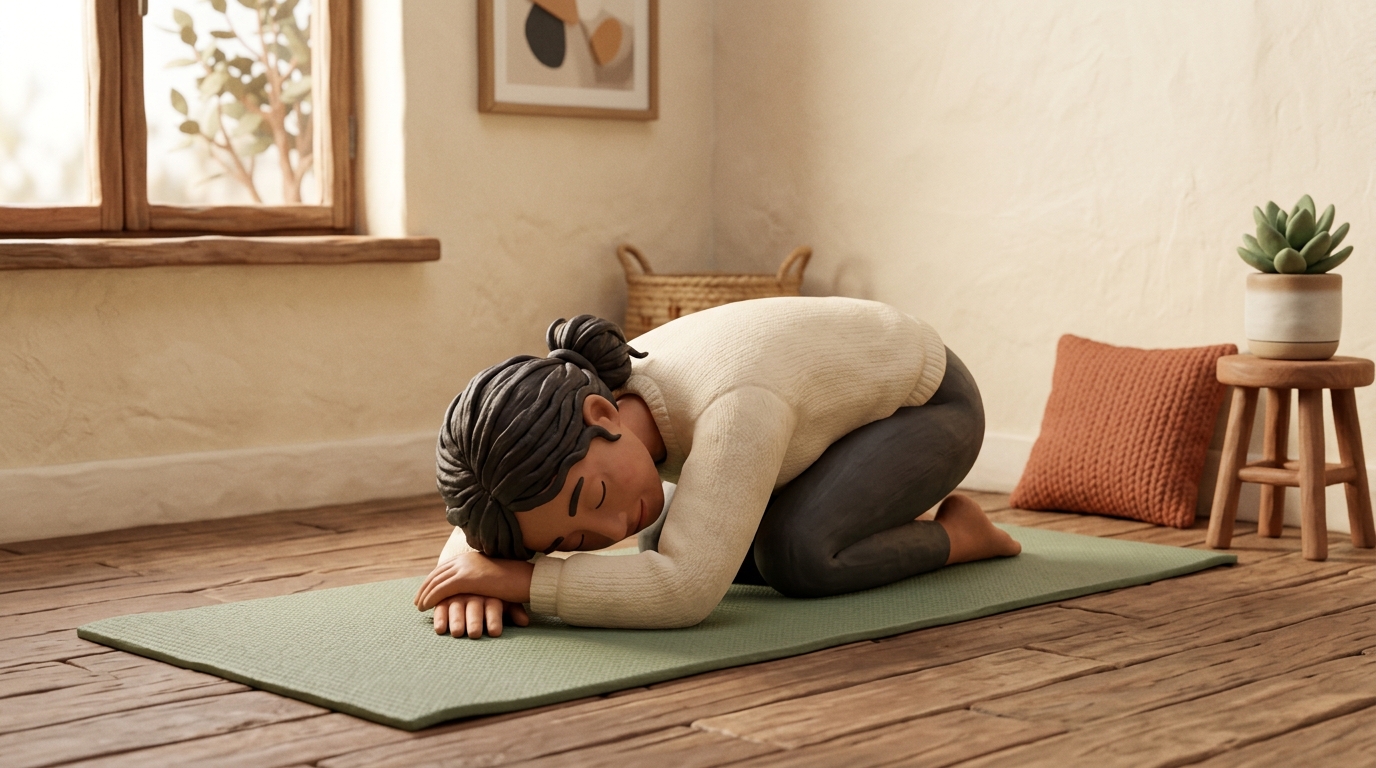
I expected yoga to fix me. Spoiler: it did not. What it did was stranger and, honestly, more useful.
I Thought Burnout Meant I Needed to Try Harder
For most of my adult life, I operated on the assumption that feeling overwhelmed meant I was not working hard enough. So when burnout hit, I did what any overachiever does: I added more things to my schedule. More productivity hacks. Earlier mornings. A stricter to-do list. None of it worked, because burnout is not a motivation problem. It is a nervous system problem.
Burnout happens when your body has been running on stress hormones for so long that it forgets how to turn off the alarm. Cortisol stays elevated. Sleep stops being restorative. Your brain treats a full inbox the same way it would treat a predator in the bushes. You are not lazy; you are physiologically exhausted.
Multiple meta-analyses and pilot studies have confirmed what anyone who has tried yoga for burnout already suspects: yoga practice can measurably reduce stress, anxiety, and depressive symptoms. A growing body of research shows that yoga lowers cortisol levels and activates the parasympathetic nervous system, the part of your body responsible for rest, digestion, and actually feeling human again.
The First Month Was Just Showing Up
My first few sessions were humiliating. I could barely hold downward dog without shaking. My mind would drift to work emails during child’s pose. I kept waiting for the part where yoga would make me feel calm and glowing, like the women in yoga ads who seem to have their entire lives figured out. Instead I felt restless, stiff, and a little embarrassed.
But I kept going back. Not because I loved it. Because it was the only 45 minutes of my day where nobody could ask me for anything, and that alone made yoga for burnout worth continuing. That alone, just being unreachable for three-quarters of an hour — was doing more for my burnout than any amount of planning or list-making ever had.
Then something shifted. Around week five, I noticed I was breathing differently during the day. Not just on the mat, but during meetings, in traffic, when my kid was having a meltdown. My body had started remembering how to breathe from my diaphragm instead of my upper chest. I had not realized I had spent years breathing like someone being chased.
What the Research Actually Says About Yoga for Burnout
The literature on yoga for burnout does not claim yoga is a magic cure. What it does show is that yoga addresses burnout through multiple pathways at once: physical, emotional, and neurological. A review from the Kundalini Research Institute found that regular yoga and meditation practice reduced emotional exhaustion, one of the core symptoms of burnout, in healthcare workers and corporate employees alike.
Breathing techniques, specifically, known as pranayama in yoga — appear to be one of the most effective tools for calming an overactive stress response. Slow, controlled breathing signals to your brain that you are safe. When you practice this repeatedly, your nervous system starts to recalibrate. You stop living in fight-or-flight mode as your default setting.
This is not just a feeling. Studies show that yoga practice is associated with lower resting cortisol, improved heart rate variability, and reduced activity in the amygdala, the part of your brain responsible for fear and threat detection. In other words, yoga for burnout was physically changing how my brain responded to stress.
Stronger Than I Expected, in a Different Way
I thought yoga would make me flexible. It did, eventually, but that was never the point. What it actually did was teach me what it feels like to be in my body without trying to fix it or push it or optimize it. As someone who had spent years treating my body like a machine that needed to perform, this was genuinely uncomfortable at first. Stillness felt like failure.
Over time, I started noticing things. My shoulders, which I had been carrying somewhere near my ears for approximately a decade, started dropping. I slept more deeply on nights I practiced, even if only for fifteen minutes. I became less reactive — not because I was trying to be Zen, but because my baseline stress level had actually gone down.
I also stopped expecting yoga to solve my problems. It does not fix toxic workplaces or unmanageable workloads or the structural reasons women burn out at higher rates than men. What it does is give your nervous system a fighting chance. It creates small, reliable moments of regulation in a life that otherwise runs on chaos.
The Yoga for Burnout Practices That Actually Helped (and the Ones That Did Not)
Not all yoga is created equal when it comes to burnout recovery. Fast-paced vinyasa classes, the kind where you are jumping from pose to pose in a heated room, sometimes made me feel more wired, not less. Restorative yoga — the slow, supported, barely-moving kind — was the one that actually calmed my system down.
Yin yoga, where you hold poses for several minutes, was helpful too. It taught me to sit with discomfort without immediately trying to escape it. That skill transferred off the mat more than I expected. Sometimes the answer to burnout is not doing less; it is learning to tolerate the uncomfortable feelings without spiraling.
Breathing practices became my most-used tool. I started doing three minutes of alternate nostril breathing before bed. It felt silly at first, like something from a wellness influencer’s morning routine. But it worked. Within a week, I was falling asleep faster and staying asleep longer.
Still Burned Out, Just Less Destroyed by It
I want to be honest: I am not fully recovered. Burnout is not something you fix with a few months of yoga and some deep breathing. It is a long process of unlearning the habits and beliefs that got you there in the first place. My experiment with yoga for burnout did not cure me. It made me resilient enough to start addressing it from a place of regulation instead of survival.
Some days I still feel fried. I still go for walks in the morning when my thoughts get too loud, and I still scribble in my journal on evenings when everything feels like too much. I still struggle with saying no and protecting my time. Yoga is not a replacement for those things. It is what makes those things possible.
The difference is that I can now feel the burnout coming before it consumes me. My body sends signals: tight shoulders, shallow breathing, a low-grade irritation that sits just under the surface, and I actually notice them now. That might not sound like much. But when you have spent years ignoring your own limits until they forced you to stop, learning to listen is a kind of radical act.
A Small Practice That Made a Big Difference
If you are burned out and considering yoga for burnout, here is what I wish someone had told me: you do not need a 90-minute class. You do not need expensive leggings or a studio membership. You need maybe ten minutes, a quiet corner, and permission to be terrible at it.
Start with child’s pose. Just two minutes, breathing slowly through your nose. That is it. If you want more, add a few gentle stretches. Cat-cow for your spine. Legs up the wall at the end of the day. Nothing fancy. Nothing that requires you to be good at it.
Yoga did not fix my burnout. But it gave me back something I had lost: the ability to feel what was happening inside my own body. That turned out to be the first step toward everything else.
How Ananta can help
Ananta is our self-care and journal app for Android: a short daily place to log your mood and sleep, read one affirmation, and keep a small routine going through a busy week. If the advice above sounds right but you know a paper journal will not survive past Tuesday, that is the gap Ananta is built for. It is on the landing page and on Google Play, and you can see all of our apps on the Apps & Products page.
Leave a Reply