Blog

  • Our Home Was Always Clean but Never Felt Like Ours — So We Changed Everything

    Our Home Was Always Clean but Never Felt Like Ours — So We Changed Everything

    For the first three years we lived in our house, I thought the problem was that it was not organized enough. If I could just find the right storage system, the right drawer dividers, the right labeled bins, then our home would finally feel like the peaceful sanctuary I kept seeing on Pinterest.

    I bought the containers. I labeled the bins. I KonMaried until my closets sparked joy but my heart still did not. The house was clean. It was organized. It looked fine in photos. But it did not feel like us.

    It felt like a showroom where we happened to sleep and eat. A place designed for hypothetical guests who never actually visited, not for the real family who lived there every single day.

    So we made a change , not to the storage, but to the philosophy.

    The Question That Changed Our Home

    We stopped asking “Does this look good?” and started asking “Does this feel like us?”

    Those are two completely different questions. The first one is about other people. The second one is about your actual life.

    When we started applying that filter honestly, we realized how much of our home was built around imaginary expectations. The formal dining area we used twice a year. The living room layout designed for entertaining instead of afternoon Lego sessions. The perfectly styled shelves that held things we did not care about.

    We gave ourselves permission to build our home around the life we actually live, not the one we thought we were supposed to want.

    What We Actually Changed

    The dining area became a play-and-create zone. We do not host dinner parties. We host a four-year-old who needs space to draw, build, and make messes. We moved her art supplies to the dining area, put a washable rug down, and stopped apologizing for it. Now, when friends come over, they sit at a table with crayon marks on it. And honestly? It feels more like a real home than any centerpiece ever did.

    The living room got rearranged for connection, not presentation. We pushed the sofa closer to the coffee table so we could actually reach our mugs without leaning forward dramatically. We added floor cushions because our daughter loves building forts. We replaced a fragile glass side table with a sturdy wooden one that can survive a toddler and look better for it.

    We stopped keeping things “for best.” The nice candles? We burn them on random Tuesday afternoons. The special mugs? They are in the daily rotation, not hidden at the back of the cabinet. The handmade quilt from my grandmother? It lives on the couch where it gets used, not folded in a closet waiting for an occasion that never comes.. After starting our Sunday Reset conversation practice, and it reinforced what I was learning.

    The Relief of Letting Go

    There is something deeply freeing about admitting that your home does not need to impress anyone. It just needs to hold you , your mess, your laughter, your quiet afternoons, your chaotic mornings, your real, unfiltered life.

    Our house is not going to be featured in a design magazine. There are toys on the floor more often than not. The throw pillows do not match in a curated way. But when I walk through the door now, I feel like I am walking into our space. Not a set designed for strangers to admire, but a place that actually feels like the people who live here.

    The Questions We Ask Ourselves Now

    These days, when I walk past a home decor store or scroll past a perfectly styled living room on Instagram, I do not feel the familiar pang of inadequacy. I know our house is not aspirational in the way the internet defines it. But it is ours. The crayon marks on the dining table are proof that a small person creates here. The floor cushions are evidence of fort-building and afternoon naps. These are not flaws to fix. They are the texture of our life.

    If you are feeling like your home is supposed to look a certain way, I promise you it is not. Your home is supposed to hold you. That is the only job it has. Everything else is furniture.

    And that , finally , feels like home.

  • The Friendship Cleanse: Why I Stopped Chasing Friends Who Never Chased Me Back

    The Friendship Cleanse: Why I Stopped Chasing Friends Who Never Chased Me Back

    I used to believe that being a good friend meant never giving up on anyone. That loyalty was measured by how long you kept showing up, even when the other person had stopped showing up a long time ago.

    So I chased. I sent the “we should catch up!” texts. I initiated the plans. I remembered the birthdays, asked about the new job, checked in after the breakup. And I waited , sometimes for days, sometimes for weeks , for replies that never came, or came so late and so brief that they felt like punctuation marks at the end of a conversation I had mostly had with myself.

    It took me a long time to admit what was happening: I was in one-sided friendships, and they were slowly draining me.

    The Moment That Broke the Pattern

    It was not a dramatic falling-out. It was a Tuesday afternoon, and I had just sent yet another “thinking of you” message to a friend I had not seen in over a year , someone I used to be close to, someone I still genuinely cared about. The message went unread for three weeks. Three weeks.

    And I realized: if this person and I met today, as strangers, with the current version of our lives , would this become a friendship? The honest answer was no. I was holding onto a memory of who we used to be, not who we actually were now.

    That was the day I decided to do something I now call a friendship cleanse. Not dramatic bridge-burning. Not angry texts. Just a quiet, intentional letting go of the friendships that were not really friendships anymore.

    What I Let Go Of

    The effort-only-on-one-side friendships. If I stopped reaching out and the entire communication just… stopped? That was information. Painful information, but information nonetheless. Some of these people I had known for a decade. But affection in your heart does not count if the other person does not feel it or act on it.

    The friendships based on who we used to be. College friends I had nothing in common with anymore. Former coworkers whose lives had diverged so completely from mine that our conversations became highlight reels with no substance. I still love these people in an abstract way. But holding onto the obligation of “we should stay close” was exhausting me more than it was enriching either of us.

    The guilt-driven check-ins. The coffee dates I dreaded. The catch-up calls I scheduled out of obligation, not desire. The relationships where I spent more time feeling guilty about not being a better friend than I spent actually enjoying the friendship. Those had to go.

    What I Made Room For

    When I stopped pouring energy into friendships that were not reciprocal, something surprising happened. I had more energy for the ones that were.

    I started being more present with the two close friends who always text back within hours, not weeks. I started hosting low-key dinners instead of trying to maintain a dozen surface-level coffee dates. I invested in the relationships where I felt lighter after talking, not heavier.

    My circle got smaller. Much smaller. And it is one of the best things that has ever happened to my emotional health.. I had to learn to have hard money conversations too, and it reinforced what I was learning.

    The Surprising Truth

    Nobody teaches you this about adult friendships. No one tells you that it is okay , healthy, even , to let some friendships fade. That not every relationship is meant to last forever. That outgrowing people is not a moral failure; it is just life.

    I still wish those old friends well. Truly. If any of them reached out wanting to genuinely reconnect, I would probably say yes. But I am done chasing. I am done measuring my worth by how long I can hold onto something that is already gone.

    Real friendship should not feel like a workout where you are the only one showing up. It should feel like a conversation that pauses and resumes easily, like no time has passed at all.

    A Year Later

    It has been about a year since I stopped chasing. My circle is still small. Two close friends I see regularly. A handful of others I catch up with every few months. I do not get invited to every gathering, and I am not the first person someone thinks of when they need a plus-one. But the friendships I do have are reciprocal in a way they never were when I was spread across a dozen surface-level connections.

    This is not the version of female friendship the movies sell. It is quieter. Less photogenic. But it is real, and real is what I needed all along.

    If you have even one or two of those, you are already rich.

  • I Stopped Trying to Be a Morning Person

    I Stopped Trying to Be a Morning Person

    For years, I believed the narrative. Successful women wake up at 5 AM. They meditate. They journal. They drink green smoothies while watching the sunrise before anyone else in the house stirs.

    And for years, I felt like a failure because that was never me.

    I tried. I really did. I set my alarm for 5 AM probably two dozen times. Each time, I would spend the next three days walking around like a zombie, snapping at my kids over minor things, and mainlining coffee just to keep my eyes open past 2 PM.

    Then one Tuesday, after yet another failed attempt at early rising, I stopped and asked myself a question nobody in the wellness space seems to ask: What if I am just not a morning person , and what if that is completely fine?

    The Cult of the Morning Routine

    You know the books. You have seen the Instagram reels. The message is everywhere: the early hours are sacred, and anyone who sleeps past 6 AM is squandering their potential.

    But here is what nobody tells you. The research on chronotypes , your body’s natural preference for sleep and wake times , suggests that about 30% of people are evening types. Their brains literally do not function optimally in the early morning. Asking an evening type to thrive at 5 AM is like asking a morning person to do creative work at midnight. It fights biology.

    I am one of those evening types. My brain hits its creative peak around 9 PM. That is when I write best. That is when ideas flow. That is when I actually want to journal.

    What Happened When I Stopped Fighting My Body

    I made three simple changes that changed everything.

    1. I stopped setting alarms on purpose. Now, before you panic , I have kids, so I cannot sleep until noon. But on days when I do not have school drop-off, I let my body wake up naturally. Usually that is around 7:30 AM. And you know what? I wake up feeling rested instead of resentful.

    2. I moved my “morning routine” to 9 AM. Instead of forcing meditation at 5:15 AM while half-asleep, I do it after the kids leave for school. I sit on my couch with a cup of coffee that is actually hot, not reheated three times. I breathe. I write three lines in my journal. It takes fifteen minutes total, and it works because I am actually conscious.

    3. I embraced my night owl creativity. Once the house is quiet around 9 PM, that is my time. I write. I brainstorm. Sometimes I just sit and think. I stopped feeling guilty about being productive at night and started treating it as the gift it is.

    The Real Lesson

    The self-care industry has a habit of turning everything into a rule. Wake up at this time. Do this routine. Follow this exact sequence. But real self-care, the kind that actually sticks, is about listening to your own body and your own life , not copying someone else’s.. I also tried a full digital detox for 48 hours once, and it reinforced what I was learning.

    If you are a morning person, I genuinely celebrate that. Wake up at 5 AM and do your thing. But if you have been beating yourself up because you cannot seem to become one, please hear this: you are not lazy. You are not undisciplined. You might just be wired differently.

    And that wiring is not a flaw. It is just you.

    So tonight, instead of setting that 5 AM alarm with dread in your stomach, try this: go to bed at a time that feels natural. Wake up when your body is ready. And use your best hours , whatever time they happen to fall , to do the things that make you feel alive.

    The Quiet Revolution

    Since I stopped trying to become a morning person, a few things have shifted that I did not expect. I no longer start every day feeling like I have already failed at something before my feet hit the floor. I do not compare myself to the 5 AM club people with that familiar mix of envy and self-loathing. I just live my life in the hours that work for my body, and I get more done — more actual, creative, meaningful work — than I ever did when I was dragging myself through mornings on four hours of sleep.

    If you needed permission to stop fighting your natural rhythm, consider this it.

    You might be surprised by how much changes when you stop fighting yourself and start working with who you actually are.

  • The Mom Guilt I Never Talk About (But Know I Should)

    The Mom Guilt I Never Talk About (But Know I Should)

    I was sitting on the bathroom floor at 3 PM on a Wednesday, eating a granola bar that had been in my purse for at least two weeks, while my three-year-old banged on the door asking for a snack she would not eat. I had not showered. I had snapped at my partner that morning for leaving a single dish in the sink. And the voice in my head , the one that never seems to take a day off , was telling me I was failing at the most important job I had ever been given.

    Mom guilt. It is not just a phrase. It is a weight that sits on your chest while you are trying to breathe through another chaotic day.

    And here is the thing: we do not talk about it enough. Not really. We make jokes about wine o’clock and messy buns, but underneath the humor is something raw and real that deserves more than a punchline.

    The Guilt I Carry

    I feel guilty when I work. I feel guilty when I do not work. I feel guilty when I am present with my kids but my mind is elsewhere. I feel guilty when I am fully focused on work and not thinking about my kids at all.

    I feel guilty when I lose my temper , which happens more often than I would like to admit. I feel guilty ten minutes later when I am hugging them and apologizing, wondering if I have already done damage that cannot be undone.

    I feel guilty comparing myself to other mothers. The one at school pickup who always looks put together. The one on social media whose house is somehow always clean. The one who seems to genuinely enjoy playing on the floor for hours while I count down the minutes until nap time.

    And perhaps the guilt I carry most heavily: the guilt of sometimes wanting to be somewhere else. Not forever. Just for an afternoon. A day. Long enough to remember who I was before I became “Mama.”

    Why We Stay Silent

    Part of the problem is that admitting these feelings feels dangerous. What if someone thinks I do not love my children? What if they judge me? What if saying it out loud makes it more real?

    But I have learned something important. Silence does not protect us. It isolates us. Every time I have been brave enough to tell another mom , a real friend, over coffee, with no filters , that I am struggling, the response has never been judgment. It has always been relief.

    “Me too.”

    “I thought I was the only one.”

    “Thank you for saying that.”

    Because here is the truth nobody tells you about motherhood: everyone feels this way sometimes. The difference is just who admits it and who buries it under a perfectly curated Instagram grid.

    What I Am Trying to Do Instead

    I am not writing this because I have figured it out. I am writing this because I am in the middle of it, and I suspect you might be too.

    But here are a few things I am practicing, slowly and imperfectly:

    Naming the guilt instead of swallowing it. When the voice starts telling me I am a bad mom because I let them watch an extra episode so I could finish a work email, I pause and say it out loud: “I am feeling guilty right now.” Just naming it takes some of its power away.

    Reminding myself that guilt does not equal truth. Feeling like a bad mom is not the same thing as being a bad mom. Guilt is an emotion, not an accurate assessment of my parenting.. I have talked about quitting the Pinterest mom competition, and it reinforced what I was learning.

    Finding one person I do not have to perform for. A friend who will not flinch when I admit that some days I count the minutes until bedtime. Someone who will laugh with me about the absurdity of it all instead of giving me a worried look.

    Letting good enough be good enough. The dishes can wait. The perfectly planned activity can be replaced by coloring books and a movie. My kids will not remember whether the living room was spotless. They will remember whether I was there , really there , even if only for twenty minutes at a time.

    To the Mom Reading This

    If you are carrying guilt today , about working, about not working, about losing your temper, about not being enough , I want you to know something.

    You are not failing. You are doing something impossibly hard without a manual, without enough support, and often without enough sleep. The guilt you feel is not proof that you are getting it wrong. It is proof that you care so deeply it hurts.

    And that , caring that much , is the opposite of failure.

  • How I Finally Stopped Burning Out: 5 Things I Actually Do

    How I Finally Stopped Burning Out: 5 Things I Actually Do

    Three months ago, I hit a wall. Not the metaphorical kind where you just need a good night’s sleep and some positive thinking. The real kind. The kind where you stare at your laptop screen for forty minutes without typing a single word. Where you cancel plans not because you are busy, but because the thought of putting on real pants feels impossible. Where you snap at your partner for breathing too loudly and then burst into tears because you cannot remember the last time you felt genuinely rested.

    Burnout. I had read about it. I had even written about it. But I did not truly understand it until I was living inside it.

    The recovery was slow and messy. It did not involve a single dramatic change or a magical productivity system. What actually worked were five small, unglamorous, surprisingly practical shifts that I am still practicing every single day.

    1. I Stopped Using My Phone as an Alarm Clock

    This one change rippled through my entire morning. Before, I would wake up to my phone alarm, immediately check notifications, scroll through emails in bed, and start my day already flooded with other people’s demands before my feet hit the floor.

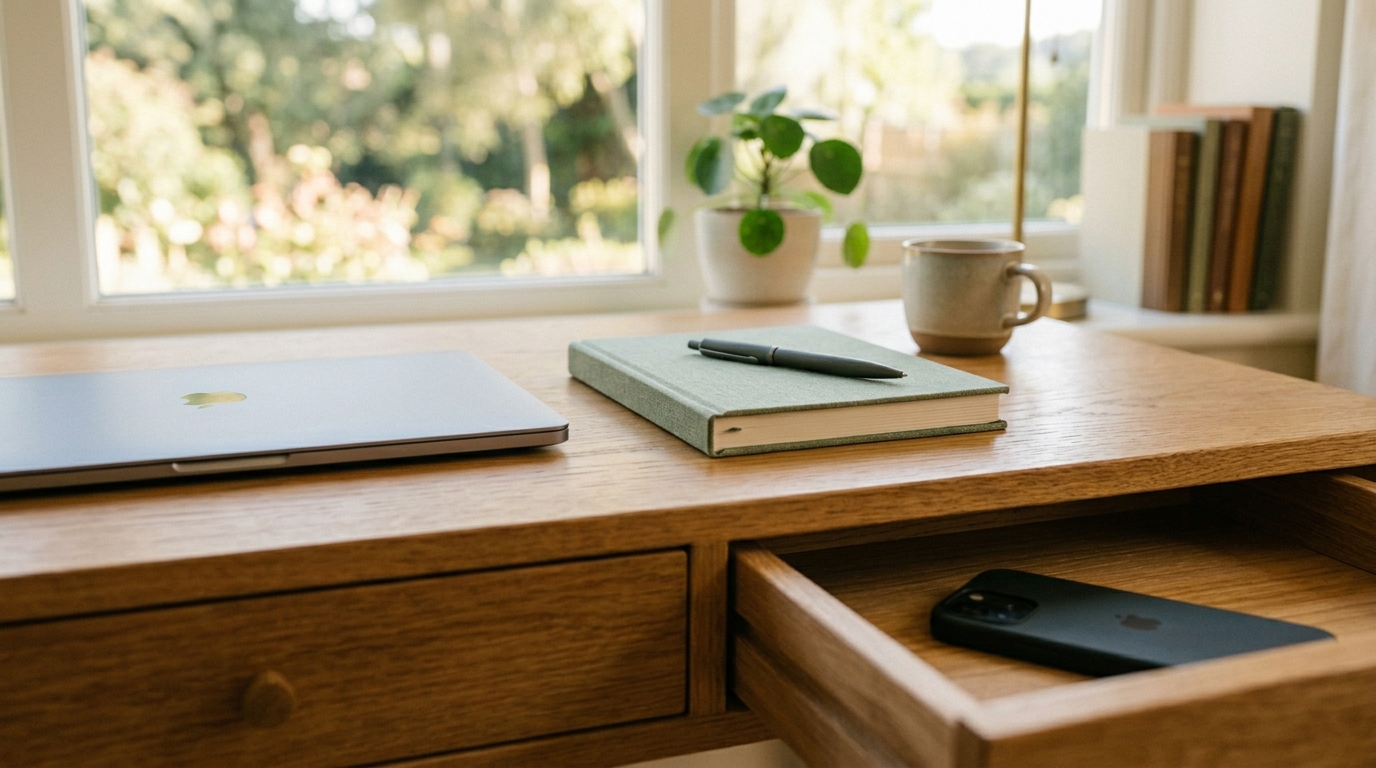
    I bought a basic alarm clock for about fifteen dollars. My phone now charges in the living room overnight. The first thirty minutes of my day belong to me , not to Instagram, not to work emails, not to anyone else’s agenda.

    It sounds almost too simple to matter. But when you stop letting the outside world into your brain the moment you open your eyes, something shifts. You start the day as yourself, not as a responder.

    2. I Learned the Difference Between “Urgent” and “Important”

    Most of my burnout came from treating everything like it was on fire. The email that could wait until tomorrow? Urgent. The request from a colleague that was not actually time-sensitive? Urgent. The third load of laundry that could sit in the basket for another day? Somehow, also urgent.

    Now, when a task lands on my plate, I pause and ask one question: Will this matter in a week?

    If the answer is no, it goes to the bottom of the list , or off the list entirely. If the answer is yes, it gets my actual attention. This single question has probably saved me hundreds of hours of unnecessary stress.

    3. I Gave Myself Permission to Half-Finish Things

    This was the hardest one for me. I used to believe that if I started something, I had to finish it , and finish it well , before moving on. A clean kitchen meant every dish washed, every counter wiped, every floor swept. A completed work project meant every detail polished.

    But perfectionism is just procrastination wearing a fancy outfit. And often, half-done is better than not done at all.

    Now I let myself load the dishwasher and leave the pots to soak. I send the email that is 80% good enough instead of spending an extra hour perfecting the last 20%. I close my laptop at a reasonable hour even when there is more I could do , because there will always be more I could do.

    4. I Scheduled Rest Before I Scheduled Work

    Every Sunday evening, I open my calendar for the week ahead. And the first thing I block out is not meetings or deadlines or deep work sessions. It is rest.

    Tuesday afternoon: nothing. Thursday morning: protected. Saturday: completely clear.

    These are non-negotiable. Work has to fit around the rest, not the other way around. And here is what surprised me: when I started protecting my rest this aggressively, my productivity during work hours actually increased. A rested brain works faster and makes better decisions. Who knew?

    5. I Stopped Measuring My Worth by My Output

    This is the big one. The root. The thing everything else sits on top of.

    I spent years believing that my value as a person was directly connected to how much I produced. More articles written = more worthy. Cleaner house = better mother. Fuller calendar = more successful.

    But productivity is not identity. It is a tool. And a tool should serve you , you should not serve the tool.. I now use a two-hour work block system, and it reinforced what I was learning.

    Now, when I catch myself spiraling into output-as-self-worth thinking, I pause and remind myself: I am not valuable because of what I do. I am valuable because I exist. Full stop.

    Some days I genuinely believe that. Some days I am just going through the motions of saying it. But I keep saying it anyway, because I know the alternative , the version of me who burned out , and I do not want to go back there.

    If You Are Tired Right Now

    If you are reading this while running on fumes, I want you to hear something.

    You do not need a better productivity system. You do not need more discipline. You do not need to optimize your morning routine or download another app.

    You need rest. Real, unapologetic, guilt-free rest. The kind where you do absolutely nothing productive and feel zero shame about it.

    Start there. The rest can wait.