Tag: stress

  • 5-Minute Self-Care That Actually Fits a Busy Week

    5-Minute Self-Care That Actually Fits a Busy Week

    When a week gets loud, the first thing to go is usually the thing that would help most. The inbox wins, the walk loses, and the stretch you meant to do at 4pm turns into something you promise yourself on Sunday. Most advice about 5-minute self-care assumes you can carve out a clean gap in the day and defend it from interruptions. The practices below are the ones with real evidence behind them, and every one of them fits into gaps a busy week already has.

    Key takeaways

    • Five minutes is a real dose rather than a token one: the NHS asks people to repeat its slow-breathing exercise for at least 5 minutes.
    • In a randomised trial from 2023, five minutes of daily breathwork beat five minutes of mindfulness meditation on mood and breathing rate after a month.
    • Micro-breaks raised energy and cut fatigue across 2,335 people, but they did not significantly improve performance on demanding work.
    • In a study of 36 urban adults, the shortest nature break that showed up in cortisol was 10 minutes, with the best return between 20 and 30 minutes.
    • Reminders can backfire: in a meta-analysis of 77 mood-tracking studies, prompts were linked to lower adherence.

    Why five minutes counts

    The NHS puts “me time” on the same stress-management list as exercise, sleep and contact with other people, and it sets no minimum length for it. Cleveland Clinic’s coping advice is equally modest: “Take brief rest periods during the day to relax”. Neither source treats the short version as a warm-up for the real thing.

    Coping is a process rather than a single decision, and Cleveland Clinic notes that “rigidity in coping is less likely to help than is flexibility in coping”. A practice you can start in four minutes fits a bad day more easily than a 45-minute ritual you keep postponing. That flexibility is the whole argument for 5-minute self-care. It is also the lesson behind the self-care routine that stopped trying to be good.

    The five-minute practice with the best evidence: slow breathing

    The NHS guide to breathing exercises for stress opens with an unusually concrete promise: the technique “takes just a few minutes and can be done anywhere”. Sit or stand with both feet flat and roughly hip-width apart. Breathe in through your nose while counting steadily to 5, breathe out through your mouth on the same count, and repeat for at least 5 minutes.

    The evidence for 5-minute self-care is thinner than that page implies, but it exists. A trial published in Cell Reports Medicine in 2023 compared three daily 5-minute breathwork exercises against 5 minutes of mindfulness meditation over one month. Cyclic sighing, which emphasises long exhales, produced the largest improvement in mood and the biggest drop in breathing rate, and both held up against the meditation group.

    The study has limits worth naming. Its participants practised remotely and were not selected for any diagnosis, and one month says nothing about a year. It is still the closest thing in the research to a direct test of “five minutes a day, does anything happen”. If you want a longer version of the technique, our article on the 4-7-8 breathing pattern walks through it step by step.

    What a micro-break can and cannot do

    The strongest evidence in this area comes from a 2022 meta-analysis of micro-breaks, the short pauses people take between tasks. It pooled 22 study samples covering 2,335 people and found small but statistically significant gains in vigour and reductions in fatigue. The effect on overall performance was not statistically significant, and where performance did improve, the tasks were the less mentally demanding ones.

    One detail from that review is worth keeping. The longer the break, the bigger the performance boost, and the authors concluded that recovering from highly depleting work may need more than 10-minute breaks. So 5-minute self-care can change how you feel within minutes, and it will not undo an afternoon of work that has already scattered your attention.

    How to make 5-minute self-care a habit you keep

    The reason 5-minute self-care fails is rarely motivation, and the adherence research suggests it is often the design. A meta-analysis of 77 mood-monitoring studies, covering 17,123 participants, found pooled adherence of about 0.64, meaning roughly a third of people did not stick with the protocol they were given. Two things made adherence worse: reminders, and a higher risk of bias in the study itself. Financial incentives were the one lever that clearly improved it.

    You are not going to pay yourself to sit still, so the lesson is about structure.

    • Attach the practice to something you already do without deciding, such as the kettle boiling or the lid of the laptop closing.
    • Keep one practice, because a stack of five habits is five decisions and decisions are what a busy week eats first.
    • Cap it at five minutes on purpose, because a practice that can expand will eventually be postponed.
    • Review it weekly instead of logging it daily, so that a habit does not turn into admin.

    The pattern across all of this is unglamorous. Small enough to survive a bad week beats impressive enough to deserve a good one. If you keep a mood journal, the weekly review replaces the daily log it used to need. For more in this vein, the Self-Care archive collects the practical pieces.

    When five minutes is not enough

    The nature research is the clearest case of a dose that five minutes does not reach. In an eight-week study, 36 urban adults were asked to spend at least 10 minutes in nature at least three times a week. Their salivary cortisol fell by 21.3% per hour beyond the 11.7% hourly drop the hormone makes on its own, and the best return per minute came between 20 and 30 minutes.

    That study assigned nobody a five-minute break, so it cannot tell you that five minutes outdoors does nothing. It can tell you that ten minutes is the shortest dose that showed up in a measured stress biomarker. Treat that as the ceiling of the small-practice argument rather than as proof it works everywhere.

    Some weeks are also beyond what any five-minute practice can carry. If stress is disrupting your sleep, appetite or work for weeks on end, or if you have lost interest in things you used to enjoy, that is a reason to see a doctor. The NHS describes depression as “a low mood that lasts for weeks or months and affects your daily life”, and short practices sit alongside treatment rather than in place of it.

    How Ananta can help

    Ananta is our own self-care app, and it is built around the smallest version of a check-in rather than a long routine. Inside it you get daily affirmations, a mood check that turns into monthly graphs, short guided journaling prompts, a sleep log and a water reminder. The mood graph is the part that matters here, because it shows patterns across weeks that a single rough afternoon cannot. Ananta is free on Google Play, and you can see it beside our other apps on the products page.

    FAQ

    Is 5-minute self-care worth doing, or just a token effort?

    The evidence says 5-minute self-care is worth doing for how you feel in the moment. Micro-breaks produced small but reliable gains in energy and fatigue across 2,335 people. It is not a stand-in for sleep, treatment or a genuinely slower week.

    What is the best five-minute practice?

    Slow breathing with long exhales has the most direct evidence, because it is the one practice tested at exactly that dose. A short walk, a cup of tea away from your phone, or writing down one thing that went well all fit the same slot. Choose the one you will repeat tomorrow, since frequency matters more than technique.

    Can five minutes of breathing really calm you down?

    In the 2023 trial, five minutes of daily cyclic sighing improved mood more than five minutes of meditation did. The measured changes were larger in mood and breathing rate than in any clinical symptom. Read that as a small, repeatable shift rather than as a treatment for anxiety.

    How do I remember to take a break?

    The adherence research suggests reminders often do not help, and in that dataset they were associated with lower adherence. Attach the break to something that already happens at the same time every day. If you want a record, check in weekly rather than daily.

    This article is educational and is not medical advice. Talk to a qualified healthcare provider about your own situation.

    Featured image: “hourglass 1” by graymalkn via Flickr, CC BY 2.0.

    Sources

  • Clutter and Stress: Why a Messy Room Wears Down Your Mind

    Clutter and Stress: Why a Messy Room Wears Down Your Mind

    You walk in, drop your bag, and your shoulders tighten before you have decided anything. Your eyes land on the pile by the door, the mug on the desk, the chair holding clothes. The link between clutter and stress shows up in research too, in cortisol patterns and in how the visual system handles a crowded scene. The useful part is knowing which fixes lower that load, because a full weekend of cleaning is not one of them.

    Key takeaways

    • A messy room asks your brain to process many objects at once, and that competition has a measurable cost in attention.
    • In a study of 60 dual-income spouses, women whose homes scored higher on clutter had flatter daily cortisol slopes and rising low mood through the day.
    • Clutter and stress often run through decisions rather than laziness, because a pile is a set of choices you have not made yet.
    • Order and mess are not good and evil. One experiment found tidy rooms pushed healthier choices, while messy rooms pushed creative thinking.
    • If clutter makes a home unsafe or causes serious distress, that is a medical conversation, not a scheduling problem.

    What your brain does with a cluttered scene

    Your visual system works on a limited budget. A scene packed with unrelated objects makes those objects compete for neural representation, and their responses partly suppress each other (Kastner and Ungerleider, 2001). Attention settles that competition, which is why finding your keys in a crowded room feels like work instead of plain looking.

    fMRI work at Princeton found the same mutual suppression across visual cortex when several stimuli appear at once (McMains and Kastner, 2011). Top-down attention can bias the contest toward whatever you are hunting for. It cannot enlarge the budget.

    Arrangement changes the cost. A 2014 fMRI study found less competition between objects shown in familiar configurations, such as a lamp above a table, than the same objects scattered (Kaiser, Stein and Peelen, 2014). People also found targets faster when the distractors sat in regular positions. Grouping things the way you expect them lowers the load, which is what a shelf, a tray or a hook does.

    Clutter and stress in the research

    The most cited study of clutter and stress asked 60 dual-income spouses to give a self-guided tour of their homes. Researchers then analysed the language for clutter and unfinished-project words against restful and nature words (Saxbe and Repetti, 2010). Wives with higher stressful-home scores had flatter daily cortisol slopes over the next three weekdays, a profile linked to worse health outcomes. Their low mood also climbed as the day went on.

    Two limits deserve naming. The design is correlational, so it cannot prove that clutter caused the cortisol pattern. The analysis reported the result in wives rather than husbands, and household mental load is its own subject.

    A later study of 44 parents found home chaos and morning cortisol were each linked to higher fat intake, but the connection between chaos and cortisol was not statistically significant (MacRae et al., 2017). So the clutter and stress story is plausible without being settled. Anyone claiming the science is unanimous is selling something.

    The loop that keeps a room messy

    Clutter is usually a stack of unmade decisions. Every item you have not sorted stays an open question, and open questions keep tugging at attention after you look away.

    In a 2023 study of 227 adults, people who described themselves as hesitant and indecisive reported larger negative effects from their clutter than decisive, action-oriented people did (Patel, Graupmann and Ferrari, 2023). The authors suggested that improving decision-making belongs in the fix, alongside buying more storage.

    That explains a familiar sequence. You tidy for an hour, hit the box of cables, and stop because each cable needs a verdict. The mess returns within a week. Verdicts are the work.

    When mess helps

    Vohs and colleagues ran three experiments in neat and messy rooms (Vohs, Redden and Rahinel, 2013). People in the tidy room chose healthier snacks and donated more money. People in the messy room produced more creative ideas and preferred options labelled new over options labelled classic.

    So the clutter and stress link does not run one way, and a tidy room is not automatically the better room. If you write, design or brainstorm, some mess may be earning its keep. The honest question is which kind of work you are doing today.

    Small resets that lower the load

    Small resets beat cleanouts because they cost almost nothing to start. NHS guidance on stress says breathing and mindfulness practices pay off most when they are part of a daily routine, not a rescue mission (NHS, 2026). Rooms behave the same way: five minutes on most days outlasts five hours twice a year.

    Give every category a home. Since objects in familiar arrangements compete less for attention, a key tray, a bag hook and one charger drawer do more for the load than a general tidying spree. Once a thing has a place, putting it back stops being a decision.

    • Set a ten-minute timer and clear the first surface you see when you walk in.
    • Keep a donate bag by the door, so an item gets a verdict the moment you touch it.
    • For things you buy often, such as mugs or cables, let a new one replace an old one.
    • Ask for help when the pile wins: in a Japanese trial of 61 people with organising problems, a workshop plus a home visit from a professional organiser improved clutter scores over seven months (Aso et al., 2022).

    If you want company while you work through this, our pieces on the apology loop around a messy house and keeping a home manageable with small children are the realistic version of the advice. For the stress side, lowering cortisol at night and Sunday reset routines cover the wind-down.

    When clutter is more than a chore

    For some people, clutter stops being background noise and becomes a condition. Hoarding disorder is a mental health condition in which someone has a strong need to save a large number of items and feels distress when trying to part with them (Cleveland Clinic). The NHS describes it as collecting lots of things and finding it very difficult to get rid of them, even when it affects your life.

    The health associations are not trivial. Among 20,745 people in a Brain Health Registry sample, those who met criteria for hoarding disorder were more likely to report chronic pain, sleep apnea, diabetes and high cholesterol than people who did not (Nutley et al., 2021). About 6.5% met the criteria and another 6.1% were subclinical. The data were self-reported and cross-sectional, so they describe patterns rather than causes.

    Everyday clutter and stress sit far from that end of the scale. Most untidiness tracks time, energy and the number of things a household owns.

    How Ananta can help

    Ananta is our self-care and journal app for Android: a short daily place to log your mood and sleep, read one affirmation, and keep a small routine going through a busy week. If the advice above sounds right but you know a paper journal will not survive past Tuesday, that is the gap Ananta is built for. It is on the landing page and on Google Play, and you can see all of our apps on the Apps & Products page.

    When to see a doctor

    Talk to a GP if you think you might have hoarding disorder, if someone close to you has raised it, or if clutter is making your home unsafe (NHS). The same advice applies if you have been diagnosed and treatment is not helping. If stress or low mood affects your daily life and is hard to control over months, that is worth a GP visit too. For a crisis, contact emergency services or a crisis line rather than waiting for a routine appointment.

    FAQ

    Does clutter and stress always go together?

    No. The research shows a tendency rather than a rule. Some people work better with visible piles, and one experiment found messy rooms produced more creative thinking than tidy ones.

    Does a messy room cause stress, or reflect it?

    Both directions are plausible, and current studies cannot separate them. The home-tour study found a correlation between clutter language and flatter cortisol slopes, which is not proof of cause.

    Why does clutter bother me more when I am tired?

    A crowded scene competes for limited processing capacity in the visual system. When you are tired or worried, you have less spare attention for that contest, so the same pile costs more.

    Is a messy room a sign of a mental health condition?

    Not usually. Most untidiness tracks time, decisions and how much stuff you own. Hoarding disorder is different: it involves distress about discarding, it can affect safety, and therapy helps.

    This article is educational content and not medical advice. Speak with a qualified healthcare provider about your own situation.

    Featured image: “My messy room” by Adnan Islam, CC BY 2.0, via Wikimedia Commons. https://commons.wikimedia.org/wiki/File:My_messy_room_(16200326361).jpg

    Sources

  • Sunday Scaries: 3 Simple Reset Routines for a Calmer Monday

    Sunday Scaries: 3 Simple Reset Routines for a Calmer Monday

    The weekend disappears faster than it should, and by Sunday afternoon the good part is over. Your shoulders tighten before you have even opened a laptop. The Sunday scaries are a low dread about the week ahead, and they are common enough to have a name. What helps is smaller than most people expect.

    Key takeaways

    • The Sunday scaries are anticipatory anxiety, which means worry about something that has not happened yet.
    • For most people the feeling builds in the late afternoon or evening, though some wake up with it.
    • A tight stomach, racing heartbeat, headache and trouble sleeping are the usual physical signs.
    • Three routines help most with the Sunday scaries: park your Monday list on paper, move your body outside, and slow your breathing.
    • Worry that lasts six months or more, most days, is worth a conversation with a doctor.

    What the Sunday scaries actually are

    Psychologists group this under anticipatory anxiety. The worry points forward, at something that has not happened, rather than backward at something that already did. Cleveland Clinic describes the Sunday scaries as exactly that kind of angst, aimed at the emails, meetings and demands waiting on Monday morning.

    It is not a diagnosis, and it is not a personality flaw. It sits closer to a normal reaction to changing roles, from weekend mode back into work mode.

    The term itself is informal and mostly American, but the experience is not. Anyone who works a regular week can meet it, including people who like their jobs. That detail matters, because it rules out the idea that Sunday dread is a message about your career.

    Sometimes it is. Often it is just a body bracing for a switch.

    Two numbers from Cleveland Clinic are worth knowing. The page cites an often-quoted LinkedIn survey in which 80% of professionals said they get the Sunday scaries, and younger workers reported the most worry. It also notes that more heart attacks happen on Sundays and Mondays than on any other days of the week, which is a reason not to dismiss weekly dread as harmless background noise.

    When the dread shows up

    Signs of the Sunday scaries usually begin in the late afternoon or early evening, as the free part of the day runs out. Plenty of people feel it the moment they open their eyes on Sunday morning instead. Cleveland Clinic psychologists describe it as a pit in the stomach that grows as the day goes on, which is why Sunday can start to feel like a countdown. Racing heartbeat, sweating, an upset stomach, a headache and trouble falling asleep are all reported signs.

    Part of this is contrast. Weekends lower your cognitive load, as Cleveland Clinic puts it, and work asks for a lot of mental energy in return. Going from one to the other is a sharp turn, and your body registers the switch before you have thought about it consciously. Control is the other half of it, since people tend to get anxious about work precisely because so much of it sits outside their hands.

    3 reset routines for the Sunday scaries

    Recovery research gives a useful frame. A study that built the Recovery Experience Questionnaire identified four things that help people unwind from work: detachment, relaxation, mastery and control. The routines below lean on the first three, and none of them needs to take longer than half an hour.

    How Ananta can help

    Ananta is our self-care and journal app for Android: a short daily place to log your mood and sleep, read one affirmation, and keep a small routine going through a busy week. If the advice above sounds right but you know a paper journal will not survive past Tuesday, that is the gap Ananta is built for. It is on the landing page and on Google Play, and you can see all of our apps on the Apps & Products page.

    1. Park Monday on paper

    This one takes about ten minutes and needs nothing but a pen and something to write on. Put down everything you are carrying about the week: the email you owe, the meeting you have not prepared for, the thing you keep meaning to chase. Cleveland Clinic suggests making a to-do list for when you get back to work, and adds one detail people skip. Keep the list out of your head once it is written.

    How much this genuinely calms you is worth being honest about. In one small study, students who wrote about their worries before a maths test closed most of the performance gap between anxious and calm test takers. A meta-analysis covering 21 studies and 1,457 participants then found that a single writing session had a negligible effect on test anxiety, with the result staying non-significant. Treat the list as a way to park thoughts somewhere reliable, not as a cure.

    2. Move your body outside

    This is the routine people drop first when they are busy, and it has the broadest evidence behind it. The NHS lists physical activity as one of five steps to mental wellbeing, noting that it causes chemical changes in the brain that can shift your mood. Cleveland Clinic makes the same point about the Sunday scaries, recommending exercise as a way to burn off tension before Monday.

    A walk counts. Nobody needs a gym session on a Sunday evening.

    Daylight is part of why the walk works. Getting outside in the late afternoon gives your body a clear signal about what time it is, which helps when bedtime arrives. Pair it with the wind-down advice in our guide to sleeping better on Sunday night and the evening stops feeling like a countdown.

    3. Slow your breathing before bed

    The last routine fits inside the final hour of the day and costs nothing. The NHS teaches a breathing exercise that takes a few minutes. Sit or lie somewhere comfortable, breathe in gently through your nose while counting steadily to five, then let the breath out through your mouth while counting to five again.

    Repeat that for at least five minutes. The NHS notes that the benefit is largest when the exercise becomes a regular part of your routine rather than a rescue attempt on bad weeks. If your mind keeps returning to work while you breathe, that is normal and not a failure of the technique. The point is to give your body something slow to do.

    Screens are the other half of this hour. If your Sunday nights end with a phone in bed, our piece on a phone-free evening routine covers the practical version of that swap.

    When to see a doctor

    Feeling low on a Sunday is not a medical problem by itself. It becomes worth checking when the worry stops being tied to a particular week and turns into a background hum. The NHS advises seeing a GP if you often worry about a wide range of things and have felt anxious much of the time for at least six months. Talking therapies such as CBT are the first option a GP usually offers, ahead of medicine.

    Get urgent help if the anxiety comes with thoughts of harming yourself. Emergency services and a crisis line are the right call at that point, not another breathing exercise.

    FAQ

    What are the Sunday scaries?

    They are a form of anticipatory anxiety, meaning worry about something that has not happened yet. Cleveland Clinic describes them as the dread that shows up as a work week gets close. They are common, and having them does not mean something is wrong with you.

    Why do the Sunday scaries start in the afternoon?

    For many people the unease begins in the late afternoon or early evening, while others feel it from the moment they wake up. It tends to grow as the day goes on. A quieter, lower-demand weekend makes the switch back to work feel sharper by comparison.

    How do I stop the Sunday scaries?

    There is no single switch, and what works for one person often does not work for the next. The Sunday scaries are not something you have to solve in one evening. Start with the three routines above, and if the dread arrives every week for months, talk to a doctor rather than pushing through.

    Is it normal to get the Sunday scaries every week?

    It is common enough that clinics write about it as a routine experience rather than an unusual one. Frequent is not the same as harmless, though. Pay attention if it starts affecting your sleep, appetite or mood on most days, and read our guide to lowering cortisol at night if the physical symptoms are the ones bothering you most.

    This article is for general information and is not medical advice. If you have concerns about anxiety, consult a qualified healthcare provider.

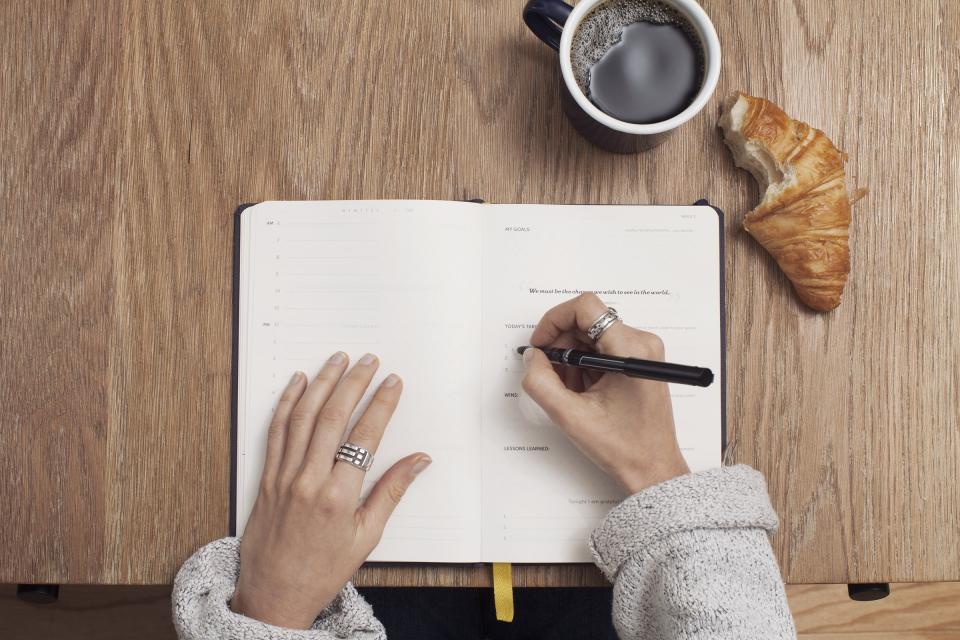
    Featured image: Journal Notepad by Cathryn Lavery, StockSnap (CC0 public domain).

    Sources

  • Why Stress Can Delay Your Period (and What Actually Helps)

    Why Stress Can Delay Your Period (and What Actually Helps)

    You check the calendar once in the morning, once after lunch, and once more before bed. The date passes, nothing arrives, and a small alarm starts ringing in your head. Stress can delay your period by days or even weeks, and it is one of the most common reasons a cycle goes quiet. Understanding why that happens shrinks the panic down to a size you can handle.

    Key takeaways

    • A normal cycle runs 24 to 38 days, so a few days of variation is not automatically a problem (US Office on Women’s Health).
    • Heavy, lasting stress can delay your period because it interferes with the hormones that run ovulation (Cleveland Clinic).
    • Minor everyday stress usually does not change your cycle; it takes heavy, sustained pressure to do that.
    • See a GP if you have missed three periods in a row, or if a late period comes with weight changes, tiredness or other new symptoms (NHS).

    How stress can delay your period

    The route runs through your brain. A stressful event triggers the hypothalamus, which sets off a chain that ends with cortisol pouring from your adrenal glands, and that is what keeps your body on high alert (Harvard Health). When that same stress keeps you wired at night, the fix is often in how you wind down before bed.

    That alarm is useful in short bursts. The trouble starts when stress does not end, because a stress system that stays switched on interferes with the delicate hormone balance that runs your cycle, and a period can end up late as a result (Cleveland Clinic).

    Think of ovulation as the hinge. Your period arrives after ovulation and the hormone shifts that follow it, so when ovulation is delayed, the bleed that follows is delayed with it (US Office on Women’s Health). The gap between ovulation and the next period can range from about a week to more than two weeks across different people, which is another reason cycle lengths look so different from person to person. Working out when you ovulate in the first place is its own skill, and tracking ovulation without an app starts with three signals you can read yourself.

    What actually counts as a late period

    Before assuming the worst, check the numbers. Cycles are counted from the first day of one period to the first day of the next, and although 28 days is the average, anything from 24 to 38 days is still considered regular (US Office on Women’s Health). Variation from month to month is normal too.

    Cleveland Clinic suggests calling a period late when more than 35 days have passed, or when someone who is normally very regular goes more than three days beyond schedule. A one-off 26-day month followed by a 29-day month is usually just noise. A pattern of lateness tells you more than a single late bleed. That is where a private record of your cycles earns its keep, because a few months of dates give you something solid to compare.

    The kind of stress that actually delays a period

    Not every stressful day reaches your cycle. Minor everyday pressure usually does not, Cleveland Clinic notes, which is reassuring if you are chronically busy but otherwise fine. It is the heavy, consuming stressors that tend to do the damage. The usual examples include:

    • Death of someone close, or caring for a seriously ill family member.
    • Exams or a make-or-break project that drags on for weeks.
    • Job loss, a toxic workplace, or money pressure that will not let up.
    • Major life changes such as moving, marriage, separation or divorce.

    What these share is weight and duration. These are not one bad afternoon. They are strains that occupy your mind for weeks, and that is exactly the kind of load that can reach your hormones.

    Other reasons a period runs late

    Pregnancy is the first thing most people want to rule out, and rightly so, because a missed period is often its earliest sign (Cleveland Clinic). Beyond that, the usual list includes polycystic ovary syndrome, thyroid conditions, sudden weight loss or gain, very heavy exercise, some hormonal contraception, and the transition to menopause (NHS). Each of these follows its own path, so guessing at home only adds stress.

    If your late period follows an obvious stressful stretch and you otherwise feel well, giving your body a few weeks to settle is reasonable. Keep sleeping, eating and moving normally while you wait. If the pattern repeats, that is information worth taking to a clinician rather than another round of self-diagnosis.

    When to see a doctor

    A single late period after a rough month is rarely an emergency, but NHS guidance is clear about when to get checked:

    • You have missed three periods in a row.
    • Your periods have not started by age 15.
    • Lateness comes with tiredness, weight change, facial hair growth, or dry or oily skin.
    • You are struggling to get pregnant or bleeding between periods.

    Bring what you know to the appointment. Dates of your last few periods, how heavy they were, and anything stressful that happened around that time all help your GP or gynecologist see the full picture.

    How Lail can help

    Tracking is the unglamorous habit that makes every other step easier. Lail is a private period companion that keeps your cycle data on your phone, with no account and no cloud upload, and its Wawasan (Insights) section offers food and activity suggestions matched to your cycle phase. Log your period, symptoms, mood and weight, and you start to see whether late periods track with stressful months. Browse our cycle and fertility guides, download Lail from Google Play, or visit lailapp.nayabisa.com.

    FAQ

    Can stress delay your period for a week or more?

    Yes. Heavy stress can delay your period by pushing ovulation later, and because the bleed follows ovulation, the whole cycle stretches. If more than 35 days pass, or you miss three periods in a row, it is time to see a clinician (NHS, Cleveland Clinic).

    How do I know if my late period is stress or pregnancy?

    A home pregnancy test is the fastest way to narrow it down, since a missed period is often the first sign of pregnancy (Cleveland Clinic). If the test is negative and the lateness followed a clearly stressful stretch, stress is a strong candidate. If tests stay negative and the period still does not arrive, tell your doctor.

    What is the difference between a late period and a missed period?

    A late period is one that has not arrived when you expected it but is still within a normal range, or arrives a little late. A missed period is one that does not show up at all in a given cycle, and missing three in a row is a clear reason to see a GP (NHS).

    Will my cycle go back to normal after stress passes?

    If the source of stress lifts, your cycle has room to return to its usual rhythm. That is why the practical advice is to manage the stress, keep a record of your cycles, and give your body time. See a doctor if the pattern keeps repeating or other symptoms show up alongside it.

    Disclaimer

    This article is for educational purposes only and is not medical advice. Menstrual cycles and stress responses vary from person to person. If you are concerned about a missed or persistently irregular period, or about any other change in your cycle, please consult a qualified healthcare provider.

    Sources