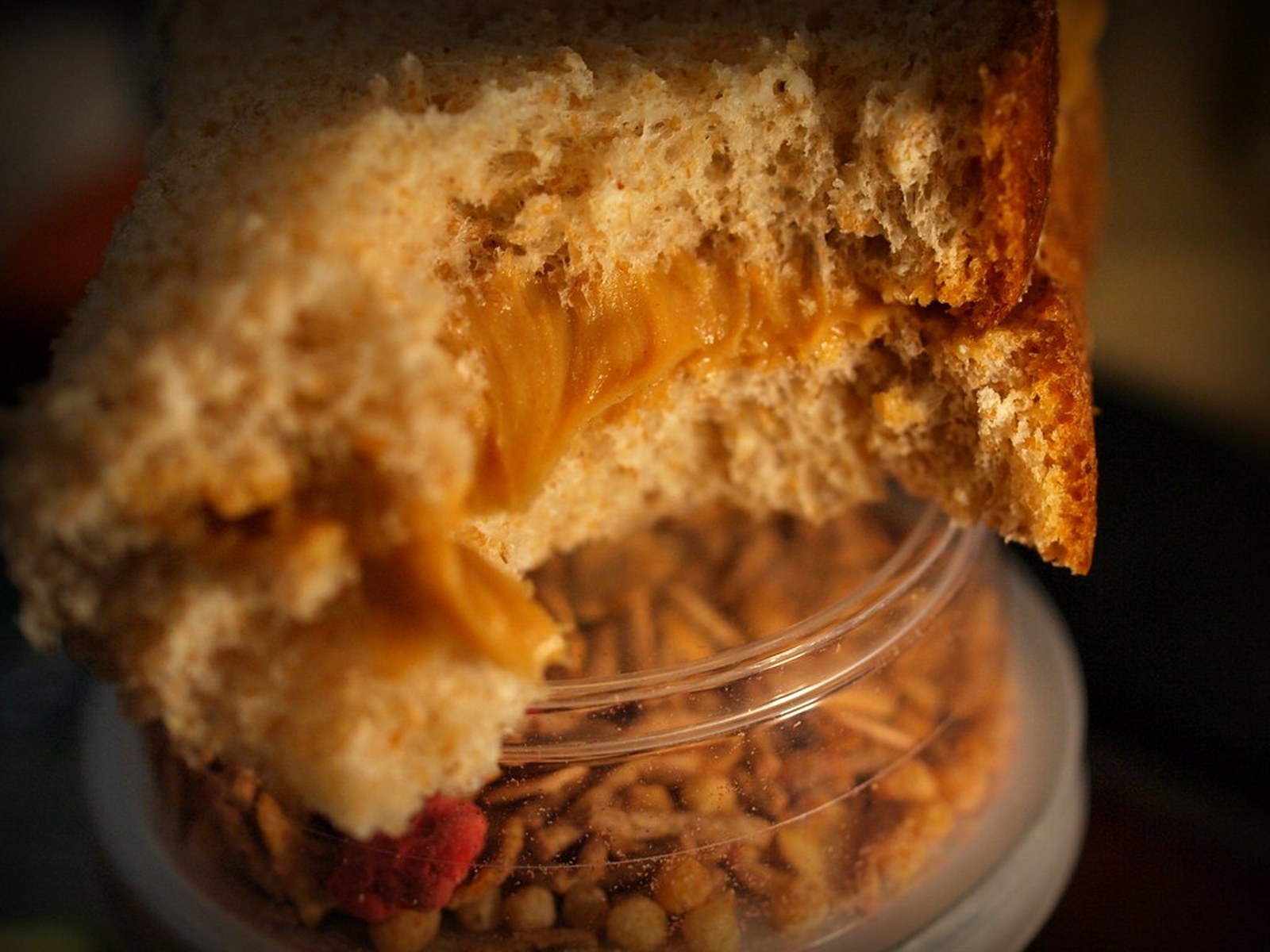
It is 11 PM, the day is finally quiet, and the kitchen keeps calling your name. Reaching for the biscuit tin at that hour feels like a character flaw, and it is not one. Once you understand why lack of sleep makes you hungry, that late-evening pull looks less like weak willpower and more like ordinary biology. The mechanism is well studied, even if researchers still argue over parts of it.
Key takeaways
- Short sleep pushes ghrelin, the hormone that says eat, up, and pulls leptin, the hormone that says you have had enough, down.
- Adults need 7 to 9 hours, and cutting sleep to 5 or 6 hours is enough to shift appetite and cravings.
- Controlled studies find roughly 385 extra calories eaten per day during sleep restriction, mostly from snacks and fat.
- Tired brains respond more strongly to high-calorie food and less strongly to the signals that help you stop.
- The pattern is not a willpower failure, and the useful fix is more sleep plus a planned snack instead of a strict ban.
Why lack of sleep makes you hungry
Ghrelin and leptin run your appetite in the background. Ghrelin is released mainly in the gut and tells the brain it is time to eat, while leptin is released by fat cells and signals that you have had enough. When you sleep too little, ghrelin climbs and leptin falls, and the National Heart, Lung, and Blood Institute states the result plainly: you feel hungrier than when you are well rested.
The most cited experiment on this came from the University of Chicago. Twelve healthy young men spent two days on restricted sleep and two days on extended sleep, with food and activity held constant. Sleep restriction cut leptin by 18 percent, raised ghrelin by 28 percent, and produced 24 percent more hunger and 23 percent more appetite. Their craving for calorie-dense, high-carbohydrate food rose by 33 to 45 percent.
Timing seems to matter as much as total hours. In a 2023 crossover study, fifteen healthy men lost four hours of sleep either in the first half of the night or the second half. Ghrelin, hunger, and the desire for food rose only after the loss in the second half, which suggests that late-night sleep loss is the harder version to absorb.
Why the craving is for snacks, not salad
Some of the extra eating is simple arithmetic: stay awake longer and you have more hours in which to eat. That is only part of why lack of sleep makes you hungry, though. Sleep loss also changes how rewarding food looks. In a brain-imaging study in Nature Communications, sleep-deprived participants showed stronger activity in reward-related regions when shown high-calorie food, alongside weaker activity in regions that normally help you hold back.
A second mechanism fits the pattern of constant snacking. A 2016 study in the journal Sleep found that four nights of 4.5-hour sleep amplified the daily rhythm of an endocannabinoid called 2-AG, a molecule involved in the rewarding properties of food, and pushed its peak later into the day. Participants reported more hunger and appetite at exactly the point when that signal was highest.
The behavioural side shows up clearly in a 14-day laboratory study of eleven volunteers. When bedtimes were cut from 8.5 hours to 5.5 hours, meal size stayed the same but calories from snacks rose from an average of 866 to 1,087 a day, with a higher share of carbohydrate and most of the extra eating falling between 7 PM and 7 AM. Energy expenditure did not rise to match it.
How many extra calories are we talking about
A 2017 meta-analysis in the European Journal of Clinical Nutrition pooled eleven controlled studies and found that partial sleep deprivation increased energy intake by 385 calories a day on average. No matching rise appeared in total energy expenditure or resting metabolic rate. Participants also ate more fat and less protein. A separate review of 50 randomised controlled trials pointed the same way: sleep restriction tended to raise energy intake, fat intake, appetite, hunger, eating occasions, and portion size.
Pooled across studies, changes in any single hormone reading look small. A 2020 meta-analysis in Obesity Reviews covering 2,250 participants found higher ghrelin in short sleepers, with an effect size of 0.14, and a rise in leptin as well. Numbers that small are real but modest, which is worth knowing before you treat a single blood test as the whole answer.
The hormone story is not settled
Not every study reproduces the hormone pattern. Harvard’s Nutrition Source notes that clinical studies have found sleep restriction raising ghrelin, while other studies found no change at all, leaving the association inconclusive. The 14-day laboratory study above is a good example of the messiness: snack calories went up, yet leptin and ghrelin did not differ significantly between the 5.5-hour and 8.5-hour conditions.
Two claims do survive that uncertainty. Short sleep reliably shifts eating towards more calories, more snacking, more fat, and a stronger pull towards high-carbohydrate food, and that is the honest answer to why lack of sleep makes you hungry. The exact hormonal pathway is the part still under debate.
What actually helps
Start with the wake time rather than the bedtime. A consistent wake time anchors the body clock, and the NHS notes that insomnia usually improves by changing your sleeping habits rather than by adding something. If you routinely sleep 5 or 6 hours and call it normal, the useful change is adding 60 to 90 minutes, not perfecting an evening routine. The NHS puts the average adult need at 7 to 9 hours, while the National Heart, Lung, and Blood Institute cites a recommendation of 7 to 8 hours for adults 18 and older.
Decide about food earlier in the evening, because willpower at 11 PM is a bad plan. Harvard’s sleep guidance suggests keeping a set meal schedule, planning meals ahead, and having prepped food ready so you are not relying on takeout or the nearest packet. Protein and fibre at dinner do more for how full you feel later than an outright ban on snacks.
Light and caffeine shape the rhythm that makes the evening easier. Harvard advises avoiding caffeine in the four to six hours before bed, and the NHS lists caffeine and alcohol among the common causes of poor sleep. Eating your larger meals earlier, rather than right before bed, also reduces the reflux that costs people sleep.
If you are awake and hungry anyway, a planned snack beats a stand-up raid on the fridge. Something with protein or fibre, eaten sitting down, is easier to stop than a bag of crisps. It will not fix why lack of sleep makes you hungry, but it stops one bad night from turning into a bad week.
If your evenings are the problem rather than your appetite, our guide to sleeping better on Sunday night covers the wind-down side in more detail. The two habits reinforce each other.
When to see a doctor
Talk to a doctor if poor sleep lasts for weeks, if you snore heavily or wake gasping, or if your weight is climbing without a change in how you eat. Persistent insomnia, sleep apnea, and emotional eating all have real treatments, and none of them are solved by discipline. Cleveland Clinic also lists warning signs that should be checked when they come with hunger symptoms, including rapid fluctuations in weight, shortness of breath, and nausea.
Frequently asked questions
How Ananta can help
Ananta is our self-care and journal app for Android: a short daily place to log your mood and sleep, read one affirmation, and keep a small routine going through a busy week. If the advice above sounds right but you know a paper journal will not survive past Tuesday, that is the gap Ananta is built for. It is on the landing page and on Google Play, and you can see all of our apps on the Apps & Products page.
Can one bad night change your appetite?
Brain-imaging work found that a single night of sleep deprivation was enough to strengthen reward responses to high-calorie food. Hormone shifts tend to need a few short nights to show up consistently. If you have had one rough night and feel ravenous, you are not imagining it.
Does sleeping less mean you burn more calories?
Being awake longer does cost some energy, but controlled studies found no significant rise in total energy expenditure or resting metabolic rate during sleep restriction. The extra calories eaten were larger than any extra calories burned. That gap is why short sleep tends to show up on the scales rather than as weight loss.
Is eating late at night the real problem?
Late and night-time eating is consistently observed in sleep-restricted people, and Harvard lists it as a pattern rather than the cause. Total intake across the day is the bigger driver in these studies. If the discomfort itself is what wakes you, that is a different problem, closer to the one we wrote about in what your midnight stomach is telling you.
Can naps make up for short sleep?
A nap can take the edge off daytime sleepiness. The appetite studies used night-time sleep restriction over days, so a nap is not a clean substitute for a longer main sleep period. If you cannot extend your sleep because of insomnia or a suspected sleep disorder, that is worth a conversation with a doctor.
This article is educational and does not replace advice from a qualified healthcare professional. If your sleep, appetite, or weight has changed in a way that worries you, get individual guidance from your doctor.
Featured image: Late Night Snack by MSVG / Flickr (CC BY 2.0).
Sources
- National Heart, Lung, and Blood Institute. Sleep Deprivation and Deficiency: How Sleep Affects Your Health. https://www.nhlbi.nih.gov/health/sleep-deprivation/health-effects
- National Heart, Lung, and Blood Institute. How Much Sleep Is Enough? https://www.nhlbi.nih.gov/health/sleep-deprivation/how-much-sleep
- Harvard T.H. Chan School of Public Health. Sleep. https://nutritionsource.hsph.harvard.edu/sleep/
- NHS. Insomnia. https://www.nhs.uk/conditions/insomnia/
- Cleveland Clinic. 13 Effects of Sleep Deprivation. https://health.clevelandclinic.org/happens-body-dont-get-enough-sleep
- Cleveland Clinic. Hunger Pangs: What They Are and Causes. https://health.clevelandclinic.org/hunger-pangs
- Spiegel K, Tasali E, Penev P, et al. Sleep curtailment in healthy young men is associated with decreased leptin levels, elevated ghrelin levels, and increased hunger and appetite. Ann Intern Med. 2004. https://pubmed.ncbi.nlm.nih.gov/15583226/
- Nedeltcheva AV, Kilkus JM, Imperial J, et al. Sleep curtailment is accompanied by increased intake of calories from snacks. Am J Clin Nutr. 2009. https://pubmed.ncbi.nlm.nih.gov/19056602/
- Al Khatib HK, Harding SV, Darzi J, et al. The effects of partial sleep deprivation on energy balance: a systematic review and meta-analysis. Eur J Clin Nutr. 2017. https://pubmed.ncbi.nlm.nih.gov/27804960/
- Lin J, Jiang Y, Wang G, et al. Associations of short sleep duration with appetite-regulating hormones and adipokines: A systematic review and meta-analysis. Obes Rev. 2020. https://pubmed.ncbi.nlm.nih.gov/32537891/
- Hanlon EC, Tasali E, Leproult R, et al. Sleep Restriction Enhances the Daily Rhythm of Circulating Levels of Endocannabinoid 2-Arachidonoylglycerol. Sleep. 2016. https://pubmed.ncbi.nlm.nih.gov/26612385/
- Meyhöfer S, Chamorro R, Hallschmid M, et al. Late, but Not Early, Night Sleep Loss Compromises Neuroendocrine Appetite Regulation and the Desire for Food. Nutrients. 2023. https://pubmed.ncbi.nlm.nih.gov/37432152/
- Soltanieh S, Solgi S, Ansari M, et al. Effect of sleep duration on dietary intake, desire to eat, measures of food intake and metabolic hormones. Clin Nutr ESPEN. 2021. https://pubmed.ncbi.nlm.nih.gov/34620371/
- Greer SM, Goldstein AN, Walker MP. The impact of sleep deprivation on food desire in the human brain. Nat Commun. 2013. https://pubmed.ncbi.nlm.nih.gov/23922121/
Leave a Reply