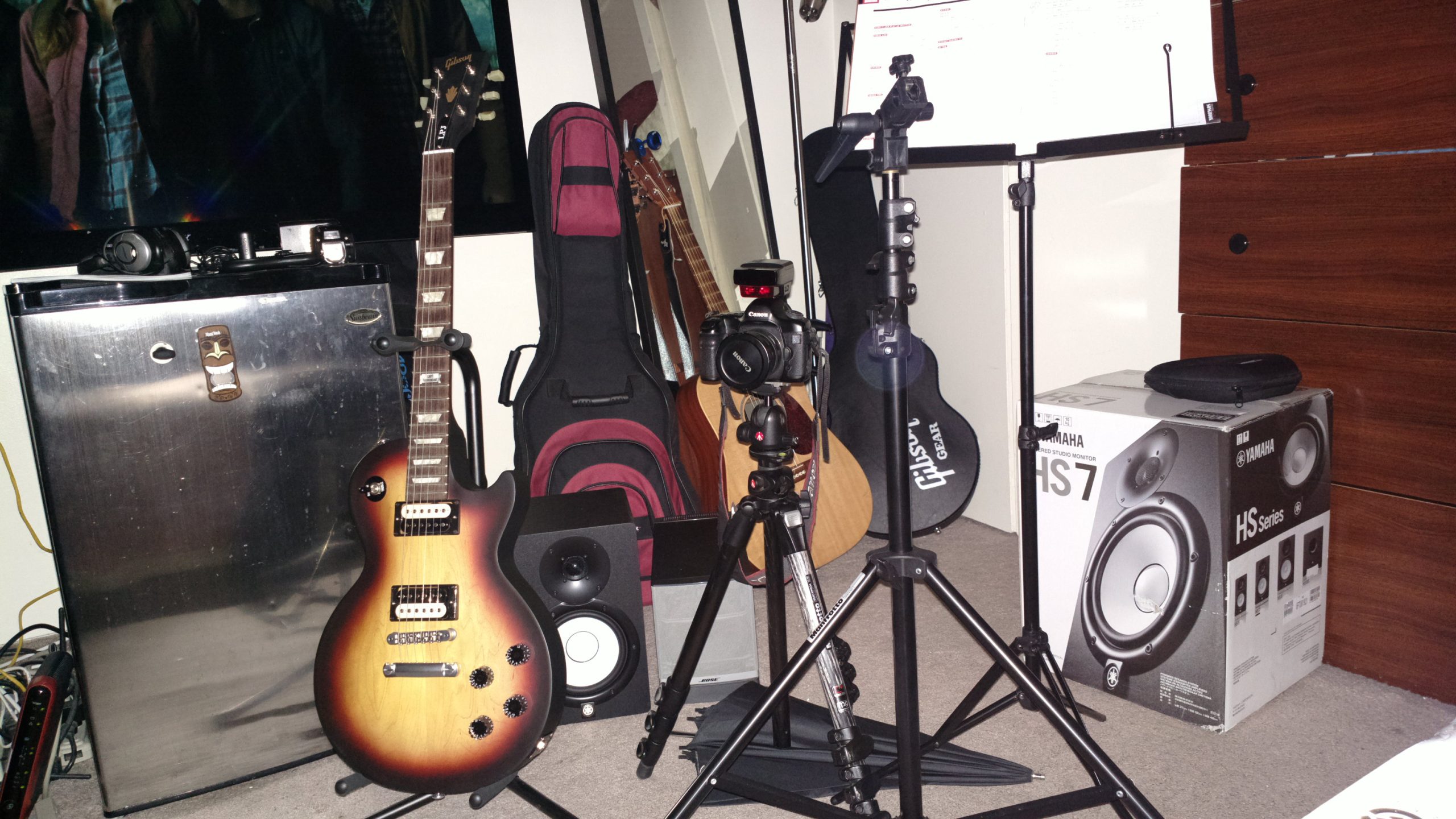
You walk in, drop your bag, and your shoulders tighten before you have decided anything. Your eyes land on the pile by the door, the mug on the desk, the chair holding clothes. The link between clutter and stress shows up in research too, in cortisol patterns and in how the visual system handles a crowded scene. The useful part is knowing which fixes lower that load, because a full weekend of cleaning is not one of them.
Key takeaways
- A messy room asks your brain to process many objects at once, and that competition has a measurable cost in attention.
- In a study of 60 dual-income spouses, women whose homes scored higher on clutter had flatter daily cortisol slopes and rising low mood through the day.
- Clutter and stress often run through decisions rather than laziness, because a pile is a set of choices you have not made yet.
- Order and mess are not good and evil. One experiment found tidy rooms pushed healthier choices, while messy rooms pushed creative thinking.
- If clutter makes a home unsafe or causes serious distress, that is a medical conversation, not a scheduling problem.
What your brain does with a cluttered scene
Your visual system works on a limited budget. A scene packed with unrelated objects makes those objects compete for neural representation, and their responses partly suppress each other (Kastner and Ungerleider, 2001). Attention settles that competition, which is why finding your keys in a crowded room feels like work instead of plain looking.
fMRI work at Princeton found the same mutual suppression across visual cortex when several stimuli appear at once (McMains and Kastner, 2011). Top-down attention can bias the contest toward whatever you are hunting for. It cannot enlarge the budget.
Arrangement changes the cost. A 2014 fMRI study found less competition between objects shown in familiar configurations, such as a lamp above a table, than the same objects scattered (Kaiser, Stein and Peelen, 2014). People also found targets faster when the distractors sat in regular positions. Grouping things the way you expect them lowers the load, which is what a shelf, a tray or a hook does.
Clutter and stress in the research
The most cited study of clutter and stress asked 60 dual-income spouses to give a self-guided tour of their homes. Researchers then analysed the language for clutter and unfinished-project words against restful and nature words (Saxbe and Repetti, 2010). Wives with higher stressful-home scores had flatter daily cortisol slopes over the next three weekdays, a profile linked to worse health outcomes. Their low mood also climbed as the day went on.
Two limits deserve naming. The design is correlational, so it cannot prove that clutter caused the cortisol pattern. The analysis reported the result in wives rather than husbands, and household mental load is its own subject.
A later study of 44 parents found home chaos and morning cortisol were each linked to higher fat intake, but the connection between chaos and cortisol was not statistically significant (MacRae et al., 2017). So the clutter and stress story is plausible without being settled. Anyone claiming the science is unanimous is selling something.
The loop that keeps a room messy
Clutter is usually a stack of unmade decisions. Every item you have not sorted stays an open question, and open questions keep tugging at attention after you look away.
In a 2023 study of 227 adults, people who described themselves as hesitant and indecisive reported larger negative effects from their clutter than decisive, action-oriented people did (Patel, Graupmann and Ferrari, 2023). The authors suggested that improving decision-making belongs in the fix, alongside buying more storage.
That explains a familiar sequence. You tidy for an hour, hit the box of cables, and stop because each cable needs a verdict. The mess returns within a week. Verdicts are the work.
When mess helps
Vohs and colleagues ran three experiments in neat and messy rooms (Vohs, Redden and Rahinel, 2013). People in the tidy room chose healthier snacks and donated more money. People in the messy room produced more creative ideas and preferred options labelled new over options labelled classic.
So the clutter and stress link does not run one way, and a tidy room is not automatically the better room. If you write, design or brainstorm, some mess may be earning its keep. The honest question is which kind of work you are doing today.
Small resets that lower the load
Small resets beat cleanouts because they cost almost nothing to start. NHS guidance on stress says breathing and mindfulness practices pay off most when they are part of a daily routine, not a rescue mission (NHS, 2026). Rooms behave the same way: five minutes on most days outlasts five hours twice a year.
Give every category a home. Since objects in familiar arrangements compete less for attention, a key tray, a bag hook and one charger drawer do more for the load than a general tidying spree. Once a thing has a place, putting it back stops being a decision.
- Set a ten-minute timer and clear the first surface you see when you walk in.
- Keep a donate bag by the door, so an item gets a verdict the moment you touch it.
- For things you buy often, such as mugs or cables, let a new one replace an old one.
- Ask for help when the pile wins: in a Japanese trial of 61 people with organising problems, a workshop plus a home visit from a professional organiser improved clutter scores over seven months (Aso et al., 2022).
If you want company while you work through this, our pieces on the apology loop around a messy house and keeping a home manageable with small children are the realistic version of the advice. For the stress side, lowering cortisol at night and Sunday reset routines cover the wind-down.
When clutter is more than a chore
For some people, clutter stops being background noise and becomes a condition. Hoarding disorder is a mental health condition in which someone has a strong need to save a large number of items and feels distress when trying to part with them (Cleveland Clinic). The NHS describes it as collecting lots of things and finding it very difficult to get rid of them, even when it affects your life.
The health associations are not trivial. Among 20,745 people in a Brain Health Registry sample, those who met criteria for hoarding disorder were more likely to report chronic pain, sleep apnea, diabetes and high cholesterol than people who did not (Nutley et al., 2021). About 6.5% met the criteria and another 6.1% were subclinical. The data were self-reported and cross-sectional, so they describe patterns rather than causes.
Everyday clutter and stress sit far from that end of the scale. Most untidiness tracks time, energy and the number of things a household owns.
How Ananta can help
Ananta is our self-care and journal app for Android: a short daily place to log your mood and sleep, read one affirmation, and keep a small routine going through a busy week. If the advice above sounds right but you know a paper journal will not survive past Tuesday, that is the gap Ananta is built for. It is on the landing page and on Google Play, and you can see all of our apps on the Apps & Products page.
When to see a doctor
Talk to a GP if you think you might have hoarding disorder, if someone close to you has raised it, or if clutter is making your home unsafe (NHS). The same advice applies if you have been diagnosed and treatment is not helping. If stress or low mood affects your daily life and is hard to control over months, that is worth a GP visit too. For a crisis, contact emergency services or a crisis line rather than waiting for a routine appointment.
FAQ
Does clutter and stress always go together?
No. The research shows a tendency rather than a rule. Some people work better with visible piles, and one experiment found messy rooms produced more creative thinking than tidy ones.
Does a messy room cause stress, or reflect it?
Both directions are plausible, and current studies cannot separate them. The home-tour study found a correlation between clutter language and flatter cortisol slopes, which is not proof of cause.
Why does clutter bother me more when I am tired?
A crowded scene competes for limited processing capacity in the visual system. When you are tired or worried, you have less spare attention for that contest, so the same pile costs more.
Is a messy room a sign of a mental health condition?
Not usually. Most untidiness tracks time, decisions and how much stuff you own. Hoarding disorder is different: it involves distress about discarding, it can affect safety, and therapy helps.
This article is educational content and not medical advice. Speak with a qualified healthcare provider about your own situation.
Featured image: “My messy room” by Adnan Islam, CC BY 2.0, via Wikimedia Commons. https://commons.wikimedia.org/wiki/File:My_messy_room_(16200326361).jpg
.jpg)
Sources
- Saxbe DE, Repetti R. No place like home: home tours correlate with daily patterns of mood and cortisol. Personality and Social Psychology Bulletin. 2010;36(1):71-81. https://pubmed.ncbi.nlm.nih.gov/19934011/
- Kastner S, Ungerleider LG. The neural basis of biased competition in human visual cortex. Neuropsychologia. 2001;39(12):1263-1276. https://pubmed.ncbi.nlm.nih.gov/11566310/
- McMains S, Kastner S. Interactions of top-down and bottom-up mechanisms in human visual cortex. Journal of Neuroscience. 2011;31(2):587-597. https://pubmed.ncbi.nlm.nih.gov/21228167/
- Kaiser D, Stein T, Peelen MV. Object grouping based on real-world regularities facilitates perception by reducing competitive interactions in visual cortex. PNAS. 2014;111(30):11217-11222. https://pubmed.ncbi.nlm.nih.gov/25024190/
- Vohs KD, Redden JP, Rahinel R. Physical order produces healthy choices, generosity, and conventionality, whereas disorder produces creativity. Psychological Science. 2013;24(9):1860-1867. https://pubmed.ncbi.nlm.nih.gov/23907542/
- MacRae LM, Darlington G, Haines J, Ma DWL. Examination of associations between chaos in the home environment, serum cortisol level, and dietary fat intake among parents of preschool-age children. Applied Physiology, Nutrition, and Metabolism. 2017;42(7):788-791. https://pubmed.ncbi.nlm.nih.gov/28319676/
- Patel DA, Graupmann V, Ferrari JR. Reactance, decisional procrastination, and hesitation: a latent class analysis of clutter behavior. International Journal of Environmental Research and Public Health. 2023;20(3):2061. https://pubmed.ncbi.nlm.nih.gov/36767429/
- Aso Y, Suzuki A, Nojiri Y, et al. Evaluation of an educational programme for people who have difficulty decluttering and organising: a randomised controlled trial in Japan. Health and Social Care in the Community. 2022;30(5):e2507-e2517. https://pubmed.ncbi.nlm.nih.gov/34939248/
- Nutley SK, Camacho MR, Eichenbaum J, et al. Hoarding disorder is associated with self-reported cardiovascular / metabolic dysfunction, chronic pain, and sleep apnea. Journal of Psychiatric Research. 2021;134:15-21. https://pubmed.ncbi.nlm.nih.gov/33360440/
- NHS. Hoarding disorder. https://www.nhs.uk/mental-health/conditions/hoarding-disorder/
- NHS. Breathing exercises for stress. https://www.nhs.uk/mental-health/self-help/guides-tools-and-activities/breathing-exercises-for-stress/
- NHS. 5 steps to mental wellbeing. https://www.nhs.uk/mental-health/self-help/guides-tools-and-activities/five-steps-to-mental-wellbeing/
- Cleveland Clinic. Hoarding disorder. https://my.clevelandclinic.org/health/diseases/17682-hoarding-disorder
Leave a Reply