Blog

  • Clutter and Stress: Why a Messy Room Wears Down Your Mind

    Clutter and Stress: Why a Messy Room Wears Down Your Mind

    You walk in, drop your bag, and your shoulders tighten before you have decided anything. Your eyes land on the pile by the door, the mug on the desk, the chair holding clothes. The link between clutter and stress shows up in research too, in cortisol patterns and in how the visual system handles a crowded scene. The useful part is knowing which fixes lower that load, because a full weekend of cleaning is not one of them.

    Key takeaways

    • A messy room asks your brain to process many objects at once, and that competition has a measurable cost in attention.
    • In a study of 60 dual-income spouses, women whose homes scored higher on clutter had flatter daily cortisol slopes and rising low mood through the day.
    • Clutter and stress often run through decisions rather than laziness, because a pile is a set of choices you have not made yet.
    • Order and mess are not good and evil. One experiment found tidy rooms pushed healthier choices, while messy rooms pushed creative thinking.
    • If clutter makes a home unsafe or causes serious distress, that is a medical conversation, not a scheduling problem.

    What your brain does with a cluttered scene

    Your visual system works on a limited budget. A scene packed with unrelated objects makes those objects compete for neural representation, and their responses partly suppress each other (Kastner and Ungerleider, 2001). Attention settles that competition, which is why finding your keys in a crowded room feels like work instead of plain looking.

    fMRI work at Princeton found the same mutual suppression across visual cortex when several stimuli appear at once (McMains and Kastner, 2011). Top-down attention can bias the contest toward whatever you are hunting for. It cannot enlarge the budget.

    Arrangement changes the cost. A 2014 fMRI study found less competition between objects shown in familiar configurations, such as a lamp above a table, than the same objects scattered (Kaiser, Stein and Peelen, 2014). People also found targets faster when the distractors sat in regular positions. Grouping things the way you expect them lowers the load, which is what a shelf, a tray or a hook does.

    Clutter and stress in the research

    The most cited study of clutter and stress asked 60 dual-income spouses to give a self-guided tour of their homes. Researchers then analysed the language for clutter and unfinished-project words against restful and nature words (Saxbe and Repetti, 2010). Wives with higher stressful-home scores had flatter daily cortisol slopes over the next three weekdays, a profile linked to worse health outcomes. Their low mood also climbed as the day went on.

    Two limits deserve naming. The design is correlational, so it cannot prove that clutter caused the cortisol pattern. The analysis reported the result in wives rather than husbands, and household mental load is its own subject.

    A later study of 44 parents found home chaos and morning cortisol were each linked to higher fat intake, but the connection between chaos and cortisol was not statistically significant (MacRae et al., 2017). So the clutter and stress story is plausible without being settled. Anyone claiming the science is unanimous is selling something.

    The loop that keeps a room messy

    Clutter is usually a stack of unmade decisions. Every item you have not sorted stays an open question, and open questions keep tugging at attention after you look away.

    In a 2023 study of 227 adults, people who described themselves as hesitant and indecisive reported larger negative effects from their clutter than decisive, action-oriented people did (Patel, Graupmann and Ferrari, 2023). The authors suggested that improving decision-making belongs in the fix, alongside buying more storage.

    That explains a familiar sequence. You tidy for an hour, hit the box of cables, and stop because each cable needs a verdict. The mess returns within a week. Verdicts are the work.

    When mess helps

    Vohs and colleagues ran three experiments in neat and messy rooms (Vohs, Redden and Rahinel, 2013). People in the tidy room chose healthier snacks and donated more money. People in the messy room produced more creative ideas and preferred options labelled new over options labelled classic.

    So the clutter and stress link does not run one way, and a tidy room is not automatically the better room. If you write, design or brainstorm, some mess may be earning its keep. The honest question is which kind of work you are doing today.

    Small resets that lower the load

    Small resets beat cleanouts because they cost almost nothing to start. NHS guidance on stress says breathing and mindfulness practices pay off most when they are part of a daily routine, not a rescue mission (NHS, 2026). Rooms behave the same way: five minutes on most days outlasts five hours twice a year.

    Give every category a home. Since objects in familiar arrangements compete less for attention, a key tray, a bag hook and one charger drawer do more for the load than a general tidying spree. Once a thing has a place, putting it back stops being a decision.

    • Set a ten-minute timer and clear the first surface you see when you walk in.
    • Keep a donate bag by the door, so an item gets a verdict the moment you touch it.
    • For things you buy often, such as mugs or cables, let a new one replace an old one.
    • Ask for help when the pile wins: in a Japanese trial of 61 people with organising problems, a workshop plus a home visit from a professional organiser improved clutter scores over seven months (Aso et al., 2022).

    If you want company while you work through this, our pieces on the apology loop around a messy house and keeping a home manageable with small children are the realistic version of the advice. For the stress side, lowering cortisol at night and Sunday reset routines cover the wind-down.

    When clutter is more than a chore

    For some people, clutter stops being background noise and becomes a condition. Hoarding disorder is a mental health condition in which someone has a strong need to save a large number of items and feels distress when trying to part with them (Cleveland Clinic). The NHS describes it as collecting lots of things and finding it very difficult to get rid of them, even when it affects your life.

    The health associations are not trivial. Among 20,745 people in a Brain Health Registry sample, those who met criteria for hoarding disorder were more likely to report chronic pain, sleep apnea, diabetes and high cholesterol than people who did not (Nutley et al., 2021). About 6.5% met the criteria and another 6.1% were subclinical. The data were self-reported and cross-sectional, so they describe patterns rather than causes.

    Everyday clutter and stress sit far from that end of the scale. Most untidiness tracks time, energy and the number of things a household owns.

    How Ananta can help

    Ananta is our self-care and journal app for Android: a short daily place to log your mood and sleep, read one affirmation, and keep a small routine going through a busy week. If the advice above sounds right but you know a paper journal will not survive past Tuesday, that is the gap Ananta is built for. It is on the landing page and on Google Play, and you can see all of our apps on the Apps & Products page.

    When to see a doctor

    Talk to a GP if you think you might have hoarding disorder, if someone close to you has raised it, or if clutter is making your home unsafe (NHS). The same advice applies if you have been diagnosed and treatment is not helping. If stress or low mood affects your daily life and is hard to control over months, that is worth a GP visit too. For a crisis, contact emergency services or a crisis line rather than waiting for a routine appointment.

    FAQ

    Does clutter and stress always go together?

    No. The research shows a tendency rather than a rule. Some people work better with visible piles, and one experiment found messy rooms produced more creative thinking than tidy ones.

    Does a messy room cause stress, or reflect it?

    Both directions are plausible, and current studies cannot separate them. The home-tour study found a correlation between clutter language and flatter cortisol slopes, which is not proof of cause.

    Why does clutter bother me more when I am tired?

    A crowded scene competes for limited processing capacity in the visual system. When you are tired or worried, you have less spare attention for that contest, so the same pile costs more.

    Is a messy room a sign of a mental health condition?

    Not usually. Most untidiness tracks time, decisions and how much stuff you own. Hoarding disorder is different: it involves distress about discarding, it can affect safety, and therapy helps.

    This article is educational content and not medical advice. Speak with a qualified healthcare provider about your own situation.

    Featured image: “My messy room” by Adnan Islam, CC BY 2.0, via Wikimedia Commons. https://commons.wikimedia.org/wiki/File:My_messy_room_(16200326361).jpg

    Sources

  • Metallic Taste in Mouth During Pregnancy: Causes and Relief

    Metallic Taste in Mouth During Pregnancy: Causes and Relief

    Water tastes faintly of coins, coffee that was once a small pleasure now smells off, and the aftertaste of a plain meal lingers for hours. It sounds odd, but it is one of the stranger symptoms of the first few months, and it often arrives alongside nausea. A metallic taste in mouth during pregnancy is common enough that clinicians have a name for it: dysgeusia. It usually fades on its own, and there are practical ways to make eating less of a chore until it does. If you are keeping track of early symptoms, frequent urination in early pregnancy is another one that tends to show up early.

    Key takeaways

    • Dysgeusia is the medical term for a distorted sense of taste, and it is common in early pregnancy.
    • Hormone shifts are the usual explanation, and smell matters as much as your taste buds do.
    • It usually settles after the first trimester, though not always on a fixed schedule.
    • Citrus, sour foods, cold meals and non-metal cutlery are the changes most likely to help at the table.
    • Speak to your midwife or GP if you cannot keep food or fluids down, or you are losing weight.

    What dysgeusia actually is

    Dysgeusia is a taste disorder in which food stops tasting the way it should. Everything seems metallic, bitter, sour or rancid, and a foul taste can sit in your mouth even when you have eaten nothing. Cleveland Clinic notes that up to 17% of people in the United States experience it at some point, and it can flatten your appetite.

    Taste is not only about the tongue. Cleveland Clinic reports that smell accounts for about 80% of what you perceive as flavour. A blocked or newly sensitive nose can therefore make a familiar dish taste completely different.

    What causes a metallic taste in mouth during pregnancy

    The most widely repeated explanation for a metallic taste in mouth during pregnancy is the hormone surge of the first trimester. Cleveland Clinic states that dysgeusia in pregnancy is common and usually due to a surge of hormones, and that it typically goes away on its own after the first trimester. A 2010 review in Chemosensory Perception by Marijke Faas and colleagues describes how estrogen and progesterone affect food intake and taste, which fits the timing.

    The story is messier than “hormones did it”. A 2017 review in Chemical Senses by Elizabeth Choo and Robin Dando looked at studies measuring taste thresholds rather than self-reports, and found the results inconsistent. Most reported either no change in pregnancy or a drop in perceived taste intensity, especially early on. That suggests taste acuity may fall rather than sharpen.

    Choo and Dando also note that taste buds carry receptors for many of the same hormones that shift during pregnancy, and argue the effect is not driven by progesterone and estrogen alone.

    Three ordinary things can pile on top of the hormonal picture. A dry mouth concentrates whatever is already in your saliva, and acid reflux puts stomach contents back where your taste buds can reach them; Cleveland Clinic lists both as causes of altered taste. If that reflux is also burning at night, heartburn in pregnancy has the practical fixes.

    Morning sickness adds to the mix. A 2025 review in Evolution, Medicine, and Public Health by David Stadtmauer identifies the placental hormone GDF15 as a principal causal factor in pregnancy sickness, with around 1% of cases progressing to hyperemesis gravidarum.

    Why food also tastes bitter or simply wrong

    Bitter is the other complaint that comes up constantly in early pregnancy, and it tends to arrive in the same weeks as nausea. Coffee, green vegetables and dark chocolate are the usual casualties, while sweet foods often lose their pull. The 2017 Chemical Senses review names this pattern directly: an increased bitter response and a decreased sweet response are the changes women most often report.

    Whether that reflects a real change in your taste receptors or in how much you notice certain flavours is still debated. If your nose has turned against perfumes and cooking smells too, our guide to smell sensitivity during pregnancy explains what is happening there.

    How long does a metallic taste in mouth during pregnancy last?

    For most women it is a first-trimester event. Cleveland Clinic says symptoms typically resolve on their own after the first trimester, and NHS guidance on morning sickness notes that nausea and vomiting usually clear by weeks 16 to 20 of pregnancy.

    The research itself is not settled: the Chemical Senses review found that studies disagree, and several measured no change at all. If taste changes still dominate your meals at 20 weeks, raise it at an antenatal appointment.

    What helps when everything tastes of metal

    Start with the food itself. Cleveland Clinic advises eating foods that mask a metallic taste in mouth during pregnancy, naming citrus fruit, sour foods such as pickles, and anything made with vinegar. It also suggests cutting back on heavily spiced, very sweet or preservative-heavy dishes.

    Temperature and timing are worth experimenting with. Cold or room-temperature food releases fewer aromas than a hot meal, so a chilled plate or a cold sandwich can be easier to face than a hot version. Small, frequent snacks tend to beat three full meals, and plain carbohydrate-heavy food is usually the least offensive. NHS guidance recommends small, frequent meals of plain, high-carbohydrate, low-fat food, plus something dry such as toast before you get up.

    Then deal with the metal in your mouth rather than the food on the plate. Cleveland Clinic suggests swapping metal cutlery and metal water bottles for glass, plastic or ceramic ones. Sucking on ice cubes or sugar-free ice pops keeps your mouth from going dry, and brushing, flossing and rinsing after meals is recommended as well.

    Sipping water through the day is the simplest lever, because a dry mouth makes a distorted taste worse, and non-caffeinated drinks count towards it. When you want more flavour, the National Institute of Dental and Craniofacial Research suggests condiments, spices and sauces rather than extra sugar or salt. It also advises avoiding mixed dishes such as casseroles, which blend everything into one flat taste.

    Supplements, myths and the boy-or-girl question

    Zinc and B vitamins genuinely matter for taste. Cleveland Clinic notes that people with zinc or vitamin B deficiencies are especially prone to dysgeusia. That does not mean a supplement will fix pregnancy-related taste changes, and there is no reliable evidence that it will. Check any new supplement with your midwife, GP or pharmacist first, the same caution NHS gives for ginger in pregnancy.

    One popular theory deserves a straight answer: a metallic taste cannot tell you whether you are having a boy or a girl. Your baby’s sex is set by chromosomes, and the reliable ways to find out are an ultrasound scan or a blood test. Tracking taste changes is worth doing for your own comfort, and nothing more.

    When to see a doctor

    A distorted sense of taste on its own is not dangerous. What matters is whether you are still getting enough food and fluid, because the combination of nausea and taste changes is what pushes some women towards dehydration and weight loss. NHS guidance treats those as the warning signs to act on.

    NHS advises contacting your midwife, GP or 111 if you are vomiting and any of the following apply: your urine is very dark or you have not passed urine in more than eight hours, you cannot keep food or fluids down for 24 hours, you feel very weak, dizzy or faint when standing up, you have tummy pain or a high temperature, you are vomiting blood, or you have lost weight.

    Ask for advice as well if the taste change comes with a persistent dry mouth, a sore or swollen tongue, or anything else that does not fit the usual early-pregnancy pattern. A clinician can check for other causes on Cleveland Clinic’s list, including infection, reflux, medication effects and vitamin or mineral deficiencies. You can find more symptom guides on our pregnancy health hub.

    How Utun can help

    Utun is a pregnancy companion app for Android. It gives you development information with daily guidance matched to how far along you are. It also has a health tracker with a weight log, a kick counter and a contraction timer, plus a mood journal, a hospital bag checklist and trimester to-do lists. Utun is on the landing page and on Google Play.

    Is a metallic taste an early sign of pregnancy?

    It can be, though it is not one of the classic early signs such as a missed period or nausea. Cleveland Clinic describes a metallic taste in mouth during pregnancy as common and tied to the hormone surge of early pregnancy. A pregnancy test taken after a missed period will tell you far more than your taste buds will.

    Why does water taste bitter or metallic?

    Water has almost no flavour of its own, so it is the easiest thing in your day to notice a change in. Saliva, a dry mouth and shifting hormones all affect how things register, and plain water is the least masked of all drinks. Adding a squeeze of lemon or drinking it cold often makes it drinkable again.

    Does it mean something is wrong with my baby?

    There is no evidence that a metallic or bitter taste is a sign of a problem with your baby. What does need attention is how much you are eating and drinking, because ongoing sickness can lead to dehydration and weight loss. Call your midwife, GP or 111 if you cannot keep fluids down or your urine is very dark.

    Can I take zinc supplements for it?

    Not without asking a clinician first. Zinc deficiency is associated with taste problems, but there is no reliable evidence that taking zinc resolves pregnancy-related taste changes. Your midwife, GP or pharmacist can advise on whether any supplement is appropriate for you.

    This article is educational and is not medical advice. Always speak to your midwife, GP or another qualified healthcare professional about your own pregnancy.

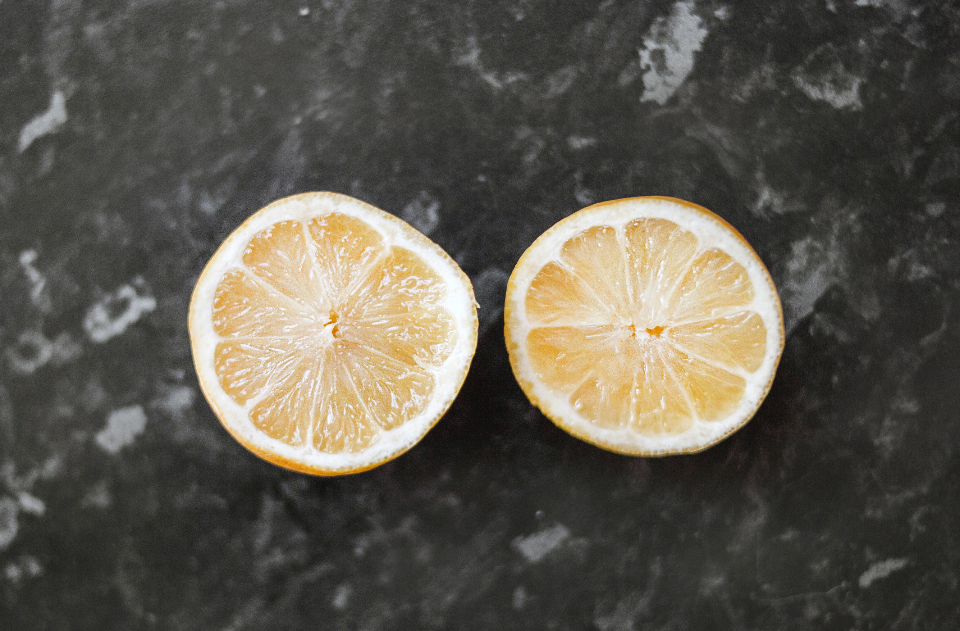
    Featured image: “Sliced Lemon” by Studio 7042, used under CC0 1.0 via StockSnap.

    Sources

  • Why Lack of Sleep Makes You Hungry and Craving Snacks

    Why Lack of Sleep Makes You Hungry and Craving Snacks

    It is 11 PM, the day is finally quiet, and the kitchen keeps calling your name. Reaching for the biscuit tin at that hour feels like a character flaw, and it is not one. Once you understand why lack of sleep makes you hungry, that late-evening pull looks less like weak willpower and more like ordinary biology. The mechanism is well studied, even if researchers still argue over parts of it.

    Key takeaways

    • Short sleep pushes ghrelin, the hormone that says eat, up, and pulls leptin, the hormone that says you have had enough, down.
    • Adults need 7 to 9 hours, and cutting sleep to 5 or 6 hours is enough to shift appetite and cravings.
    • Controlled studies find roughly 385 extra calories eaten per day during sleep restriction, mostly from snacks and fat.
    • Tired brains respond more strongly to high-calorie food and less strongly to the signals that help you stop.
    • The pattern is not a willpower failure, and the useful fix is more sleep plus a planned snack instead of a strict ban.

    Why lack of sleep makes you hungry

    Ghrelin and leptin run your appetite in the background. Ghrelin is released mainly in the gut and tells the brain it is time to eat, while leptin is released by fat cells and signals that you have had enough. When you sleep too little, ghrelin climbs and leptin falls, and the National Heart, Lung, and Blood Institute states the result plainly: you feel hungrier than when you are well rested.

    The most cited experiment on this came from the University of Chicago. Twelve healthy young men spent two days on restricted sleep and two days on extended sleep, with food and activity held constant. Sleep restriction cut leptin by 18 percent, raised ghrelin by 28 percent, and produced 24 percent more hunger and 23 percent more appetite. Their craving for calorie-dense, high-carbohydrate food rose by 33 to 45 percent.

    Timing seems to matter as much as total hours. In a 2023 crossover study, fifteen healthy men lost four hours of sleep either in the first half of the night or the second half. Ghrelin, hunger, and the desire for food rose only after the loss in the second half, which suggests that late-night sleep loss is the harder version to absorb.

    Why the craving is for snacks, not salad

    Some of the extra eating is simple arithmetic: stay awake longer and you have more hours in which to eat. That is only part of why lack of sleep makes you hungry, though. Sleep loss also changes how rewarding food looks. In a brain-imaging study in Nature Communications, sleep-deprived participants showed stronger activity in reward-related regions when shown high-calorie food, alongside weaker activity in regions that normally help you hold back.

    A second mechanism fits the pattern of constant snacking. A 2016 study in the journal Sleep found that four nights of 4.5-hour sleep amplified the daily rhythm of an endocannabinoid called 2-AG, a molecule involved in the rewarding properties of food, and pushed its peak later into the day. Participants reported more hunger and appetite at exactly the point when that signal was highest.

    The behavioural side shows up clearly in a 14-day laboratory study of eleven volunteers. When bedtimes were cut from 8.5 hours to 5.5 hours, meal size stayed the same but calories from snacks rose from an average of 866 to 1,087 a day, with a higher share of carbohydrate and most of the extra eating falling between 7 PM and 7 AM. Energy expenditure did not rise to match it.

    How many extra calories are we talking about

    A 2017 meta-analysis in the European Journal of Clinical Nutrition pooled eleven controlled studies and found that partial sleep deprivation increased energy intake by 385 calories a day on average. No matching rise appeared in total energy expenditure or resting metabolic rate. Participants also ate more fat and less protein. A separate review of 50 randomised controlled trials pointed the same way: sleep restriction tended to raise energy intake, fat intake, appetite, hunger, eating occasions, and portion size.

    Pooled across studies, changes in any single hormone reading look small. A 2020 meta-analysis in Obesity Reviews covering 2,250 participants found higher ghrelin in short sleepers, with an effect size of 0.14, and a rise in leptin as well. Numbers that small are real but modest, which is worth knowing before you treat a single blood test as the whole answer.

    The hormone story is not settled

    Not every study reproduces the hormone pattern. Harvard’s Nutrition Source notes that clinical studies have found sleep restriction raising ghrelin, while other studies found no change at all, leaving the association inconclusive. The 14-day laboratory study above is a good example of the messiness: snack calories went up, yet leptin and ghrelin did not differ significantly between the 5.5-hour and 8.5-hour conditions.

    Two claims do survive that uncertainty. Short sleep reliably shifts eating towards more calories, more snacking, more fat, and a stronger pull towards high-carbohydrate food, and that is the honest answer to why lack of sleep makes you hungry. The exact hormonal pathway is the part still under debate.

    What actually helps

    Start with the wake time rather than the bedtime. A consistent wake time anchors the body clock, and the NHS notes that insomnia usually improves by changing your sleeping habits rather than by adding something. If you routinely sleep 5 or 6 hours and call it normal, the useful change is adding 60 to 90 minutes, not perfecting an evening routine. The NHS puts the average adult need at 7 to 9 hours, while the National Heart, Lung, and Blood Institute cites a recommendation of 7 to 8 hours for adults 18 and older.

    Decide about food earlier in the evening, because willpower at 11 PM is a bad plan. Harvard’s sleep guidance suggests keeping a set meal schedule, planning meals ahead, and having prepped food ready so you are not relying on takeout or the nearest packet. Protein and fibre at dinner do more for how full you feel later than an outright ban on snacks.

    Light and caffeine shape the rhythm that makes the evening easier. Harvard advises avoiding caffeine in the four to six hours before bed, and the NHS lists caffeine and alcohol among the common causes of poor sleep. Eating your larger meals earlier, rather than right before bed, also reduces the reflux that costs people sleep.

    If you are awake and hungry anyway, a planned snack beats a stand-up raid on the fridge. Something with protein or fibre, eaten sitting down, is easier to stop than a bag of crisps. It will not fix why lack of sleep makes you hungry, but it stops one bad night from turning into a bad week.

    If your evenings are the problem rather than your appetite, our guide to sleeping better on Sunday night covers the wind-down side in more detail. The two habits reinforce each other.

    When to see a doctor

    Talk to a doctor if poor sleep lasts for weeks, if you snore heavily or wake gasping, or if your weight is climbing without a change in how you eat. Persistent insomnia, sleep apnea, and emotional eating all have real treatments, and none of them are solved by discipline. Cleveland Clinic also lists warning signs that should be checked when they come with hunger symptoms, including rapid fluctuations in weight, shortness of breath, and nausea.

    Frequently asked questions

    How Ananta can help

    Ananta is our self-care and journal app for Android: a short daily place to log your mood and sleep, read one affirmation, and keep a small routine going through a busy week. If the advice above sounds right but you know a paper journal will not survive past Tuesday, that is the gap Ananta is built for. It is on the landing page and on Google Play, and you can see all of our apps on the Apps & Products page.

    Can one bad night change your appetite?

    Brain-imaging work found that a single night of sleep deprivation was enough to strengthen reward responses to high-calorie food. Hormone shifts tend to need a few short nights to show up consistently. If you have had one rough night and feel ravenous, you are not imagining it.

    Does sleeping less mean you burn more calories?

    Being awake longer does cost some energy, but controlled studies found no significant rise in total energy expenditure or resting metabolic rate during sleep restriction. The extra calories eaten were larger than any extra calories burned. That gap is why short sleep tends to show up on the scales rather than as weight loss.

    Is eating late at night the real problem?

    Late and night-time eating is consistently observed in sleep-restricted people, and Harvard lists it as a pattern rather than the cause. Total intake across the day is the bigger driver in these studies. If the discomfort itself is what wakes you, that is a different problem, closer to the one we wrote about in what your midnight stomach is telling you.

    Can naps make up for short sleep?

    A nap can take the edge off daytime sleepiness. The appetite studies used night-time sleep restriction over days, so a nap is not a clean substitute for a longer main sleep period. If you cannot extend your sleep because of insomnia or a suspected sleep disorder, that is worth a conversation with a doctor.

    This article is educational and does not replace advice from a qualified healthcare professional. If your sleep, appetite, or weight has changed in a way that worries you, get individual guidance from your doctor.

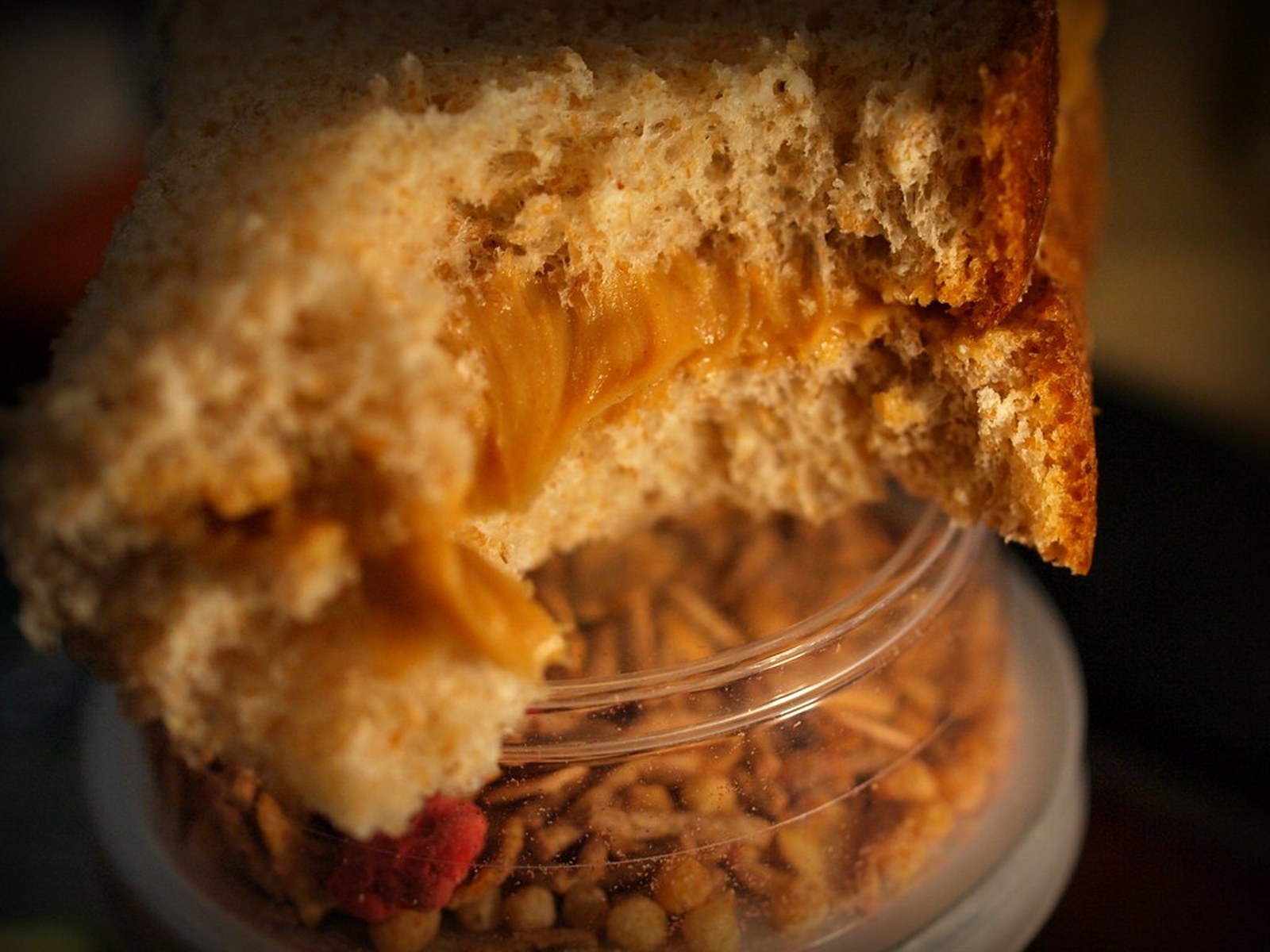
    Featured image: Late Night Snack by MSVG / Flickr (CC BY 2.0).

    Sources

  • Exercises to Avoid During Your Period, and What to Do Instead

    Exercises to Avoid During Your Period, and What to Do Instead

    Day three, and the plan on your phone says heavy squats. Your body has filed a complaint. Training advice tends to swing between “push through it” and “stay in bed,” which leaves the boring middle unanswered. That middle is where the honest answer to which exercises to avoid during your period actually lives.

    Key takeaways

    • Periods are not a medical reason to stop training, and NHS guidance lists gentle movement such as walking, swimming, cycling and yoga among its pain-relief steps.
    • The exercises to avoid during your period are the ones that spike your own symptoms: max-effort lifts, high-impact jumping, and long sessions in the heat.
    • Heavy bleeding plus a hard training block is the combination most likely to drain your iron stores.
    • A period that disappears while you train hard is a signal to get checked, not a badge of discipline.
    • Stop mid-session if you feel faint, dizzy or flood through a pad in an hour, because those belong in a doctor’s office rather than a grit test.

    What the research says about training on your period

    Clinicians do not treat menstruation as a reason to stop moving. Cleveland Clinic notes that people who exercise tend to have less menstrual pain, and NHS period pain guidance names gentle exercise such as walking, swimming, cycling and yoga among its self-care steps. A 2024 Bayesian network meta-analysis of 33 randomised trials in BMJ Evidence-Based Medicine put exercise at roughly a three-point drop in pain intensity on a ten-point scale. The same review hedges, describing non-drug options as things that “may result in a reduction or slight reduction in pain intensity” and calling for larger trials.

    The research is friendly, but it describes averages rather than your Tuesday. What shifts across a period is tolerance, not permission. Cramping happens when prostaglandin makes the uterus contract, and levels are highest around the start of bleeding, which is when the same workout can feel twice as heavy. Cleveland Clinic estimates that about 60% of people who menstruate get mild cramps, while 5% to 15% report pain severe enough to interfere with daily activities.

    Exercises to avoid during your period

    There is no medical list of banned movements, so treat any confident version of one with suspicion. In practice, the exercises to avoid during your period are the ones that make your own symptoms worse, and for most people that means changing the dose instead of cancelling the session. Here is where the adjustments usually land.

    Max-effort lifting is the first thing to scale back. A one-rep-max deadlift or a session built on hard bracing asks for stamina and a steady core rhythm, and both are harder to hold on your heaviest days. High-impact work comes second: box jumps, sprint intervals and long downhill runs land hard when your pelvis already aches. Long sessions in the heat, hot yoga included, get rough fast when you are already lightheaded.

    Yoga inversions deserve their own note. The rule that going upside down sends menstrual blood the wrong way is studio folklore, and NHS guidance does not single out any pose as one to stop. If inversions feel fine they are fine, and if they make you dizzy, that is the whole reason to skip them.

    Anything a doctor has flagged outranks all of this. Endometriosis, a bleeding disorder, a history of anaemia or a heart condition each change the picture, and your clinician’s advice wins. Swimming is the classic case of an exercise people avoid for cultural reasons rather than medical ones, and NHS guidance names it as a way to ease period pain.

    Why heavy bleeding and hard training are a poor pairing

    Iron is where period training most often goes wrong. NHS says iron deficiency anaemia is usually caused by blood loss, and lists tiredness, shortness of breath, palpitations, pale skin and headaches among the signs. A 2018 review in the European Journal of Sport Science found that menstruating athletes, particularly those with heavy menstrual bleeding, carry a higher risk of iron deficiency. That matters twice in training, because iron carries the oxygen your muscles keep asking for.

    Heavy bleeding has a working definition, and it helps to know where you sit. NHS counts changing a pad or tampon every one to two hours, using two products at once, periods longer than seven days, or clots bigger than about 2.5cm. A study of 30 female varsity athletes in Applied Physiology, Nutrition, and Metabolism found 20% were iron deficient, and that a higher menstrual loss score went with lower ferritin. If your flow is heavy and your training block is heavy, ask for a ferritin test instead of guessing.

    Can training too much change your cycle?

    Yes, and this is the part of the question where the risk is real and well documented. NHS lists “doing too much exercise” among the common causes of missed or late periods, alongside sudden weight loss and stress. Sports medicine describes the same pattern through low energy availability: burn more than you take in for long enough and the hormonal signal driving your cycle weakens. A 2019 review in Sports Medicine sets out how that plays out across menstrual function and bone health, and notes there is no single energy threshold where it starts.

    The distinction that matters is sustained under-fuelling against one hard day. A brutal session on day two will not stop your period, but months of eating too little around hard training can. A 2026 narrative review in Frontiers in Sports and Active Living, drawing on 151 studies, describes menstrual dysfunction as a clinical barometer of energy deficiency and links it to weaker bone density over time. Missing periods has plenty of other causes, so treat it as a reason for a check-up rather than a self-diagnosis.

    What to do on the days you feel awful

    Scale intensity and keep the habit. A twenty-minute walk, an easy spin, a swim or a mobility session keeps your routine intact and often eases cramps. NHS self-care for period pain also covers a heat pad wrapped in a tea towel, a warm bath, and painkillers such as paracetamol or ibuprofen. If you need painkillers to get through training most months, book a GP appointment rather than buying another supplement.

    Move the hard sessions when your schedule allows. For a lot of people the first two days are the worst and things ease after that, so the heaviest lifting can wait a week or two. There is no rule that your training week has to look identical seven days out of seven.

    When to see a doctor

    Get urgent help if period pain is severe or worse than usual and painkillers have not touched it, or if you feel faint during or after training. Book a GP appointment if heavy periods are affecting your life, you bleed between periods, your periods run past seven days, or you have missed three in a row. Unusual breathlessness, palpitations and fatigue during exercise are worth mentioning too, since they can point to anaemia. None of that is a failure of effort.

    How Lail can help

    Tracking is the unglamorous half of this problem. Lail is a private period tracker for Android that keeps your data on your phone, with no account and no cloud sync. You can log flow, cramps, mood and weight, then look back at which days your training actually fell apart. That record does more at a GP appointment than a vague memory of a bad month, and you can install Lail from Google Play.

    This article is educational and is not medical advice. Talk to a qualified healthcare professional about your own symptoms and before changing how you train.

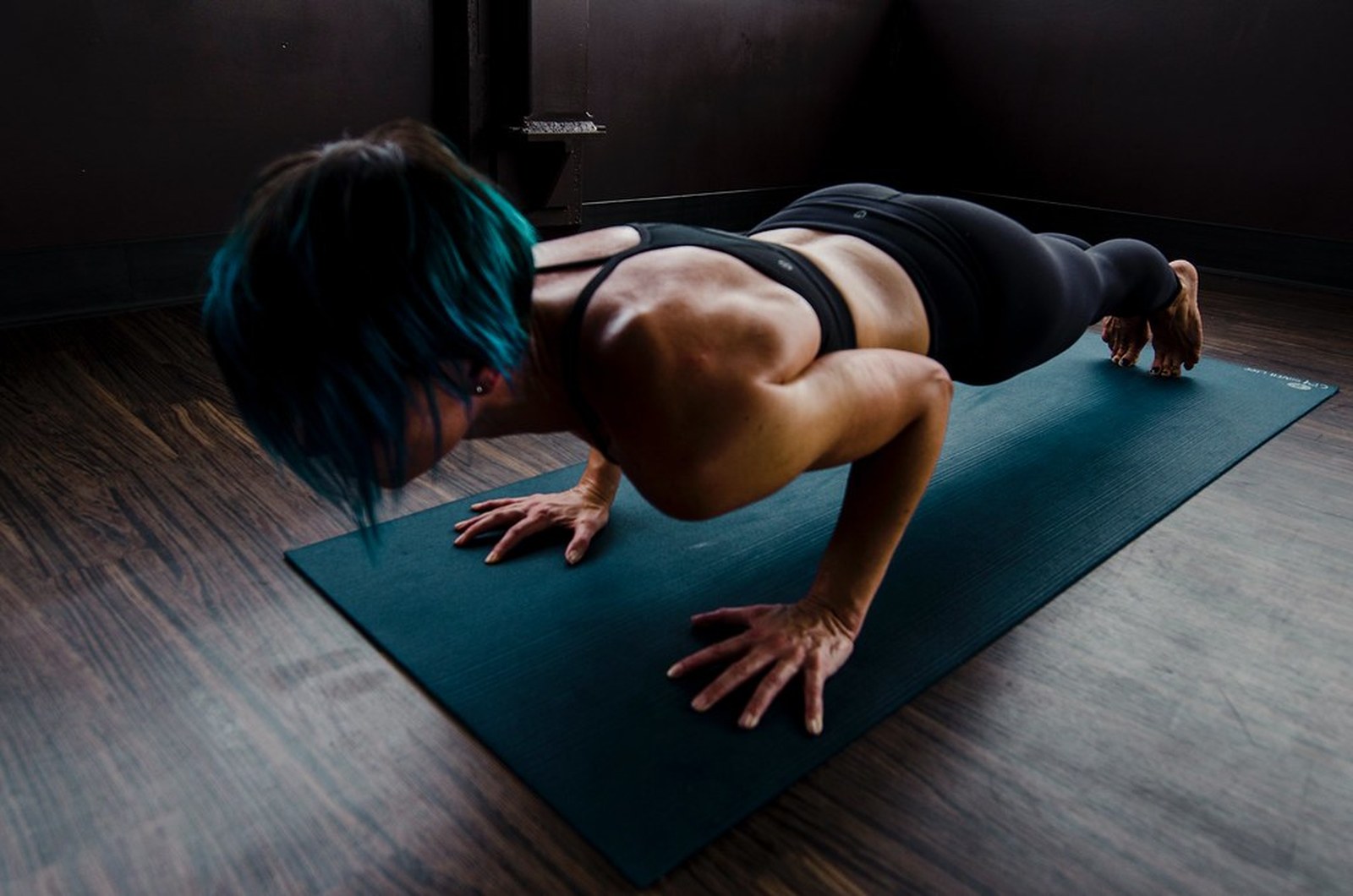
    Featured image: a woman holding a push-up position on a mat. Photo by homegets.com on Flickr, CC BY 2.0: https://www.flickr.com/photos/141436406@N04/49778014313

    FAQ

    Is it safe to lift weights on my period?

    For most people, yes. Strength training does not appear on any medical no-go list for menstruation. What changes is how much you can recover from, so save the one-rep-max attempts for a week when you feel less flat.

    Should I skip the gym on my heaviest day?

    Not automatically. If your flow is heavy and you feel drained, an easy session beats a hard one, but no medical rule says stay home. Adjust the plan instead of dropping the habit.

    Does exercise make period pain worse?

    The evidence points the other way. The 2024 network meta-analysis found exercise reduced pain intensity, and NHS lists gentle exercise among its self-care advice. If your experience differs, track it for two or three cycles before deciding.

    Which exercises to avoid during your period should I genuinely skip?

    Only the ones that make your symptoms worse on the day. The exercises to avoid during your period are the ones that spike pain, not a fixed list you have to memorise. Everything else stays optional.

    Can too much exercise stop your period?

    It can be one cause, and NHS lists it among the common reasons periods go missing. The mechanism is usually sustained low energy availability rather than the workout itself. If you have missed three periods in a row, see a GP.

    Sources

  • Sunday Scaries: 3 Simple Reset Routines for a Calmer Monday

    Sunday Scaries: 3 Simple Reset Routines for a Calmer Monday

    The weekend disappears faster than it should, and by Sunday afternoon the good part is over. Your shoulders tighten before you have even opened a laptop. The Sunday scaries are a low dread about the week ahead, and they are common enough to have a name. What helps is smaller than most people expect.

    Key takeaways

    • The Sunday scaries are anticipatory anxiety, which means worry about something that has not happened yet.
    • For most people the feeling builds in the late afternoon or evening, though some wake up with it.
    • A tight stomach, racing heartbeat, headache and trouble sleeping are the usual physical signs.
    • Three routines help most with the Sunday scaries: park your Monday list on paper, move your body outside, and slow your breathing.
    • Worry that lasts six months or more, most days, is worth a conversation with a doctor.

    What the Sunday scaries actually are

    Psychologists group this under anticipatory anxiety. The worry points forward, at something that has not happened, rather than backward at something that already did. Cleveland Clinic describes the Sunday scaries as exactly that kind of angst, aimed at the emails, meetings and demands waiting on Monday morning.

    It is not a diagnosis, and it is not a personality flaw. It sits closer to a normal reaction to changing roles, from weekend mode back into work mode.

    The term itself is informal and mostly American, but the experience is not. Anyone who works a regular week can meet it, including people who like their jobs. That detail matters, because it rules out the idea that Sunday dread is a message about your career.

    Sometimes it is. Often it is just a body bracing for a switch.

    Two numbers from Cleveland Clinic are worth knowing. The page cites an often-quoted LinkedIn survey in which 80% of professionals said they get the Sunday scaries, and younger workers reported the most worry. It also notes that more heart attacks happen on Sundays and Mondays than on any other days of the week, which is a reason not to dismiss weekly dread as harmless background noise.

    When the dread shows up

    Signs of the Sunday scaries usually begin in the late afternoon or early evening, as the free part of the day runs out. Plenty of people feel it the moment they open their eyes on Sunday morning instead. Cleveland Clinic psychologists describe it as a pit in the stomach that grows as the day goes on, which is why Sunday can start to feel like a countdown. Racing heartbeat, sweating, an upset stomach, a headache and trouble falling asleep are all reported signs.

    Part of this is contrast. Weekends lower your cognitive load, as Cleveland Clinic puts it, and work asks for a lot of mental energy in return. Going from one to the other is a sharp turn, and your body registers the switch before you have thought about it consciously. Control is the other half of it, since people tend to get anxious about work precisely because so much of it sits outside their hands.

    3 reset routines for the Sunday scaries

    Recovery research gives a useful frame. A study that built the Recovery Experience Questionnaire identified four things that help people unwind from work: detachment, relaxation, mastery and control. The routines below lean on the first three, and none of them needs to take longer than half an hour.

    How Ananta can help

    Ananta is our self-care and journal app for Android: a short daily place to log your mood and sleep, read one affirmation, and keep a small routine going through a busy week. If the advice above sounds right but you know a paper journal will not survive past Tuesday, that is the gap Ananta is built for. It is on the landing page and on Google Play, and you can see all of our apps on the Apps & Products page.

    1. Park Monday on paper

    This one takes about ten minutes and needs nothing but a pen and something to write on. Put down everything you are carrying about the week: the email you owe, the meeting you have not prepared for, the thing you keep meaning to chase. Cleveland Clinic suggests making a to-do list for when you get back to work, and adds one detail people skip. Keep the list out of your head once it is written.

    How much this genuinely calms you is worth being honest about. In one small study, students who wrote about their worries before a maths test closed most of the performance gap between anxious and calm test takers. A meta-analysis covering 21 studies and 1,457 participants then found that a single writing session had a negligible effect on test anxiety, with the result staying non-significant. Treat the list as a way to park thoughts somewhere reliable, not as a cure.

    2. Move your body outside

    This is the routine people drop first when they are busy, and it has the broadest evidence behind it. The NHS lists physical activity as one of five steps to mental wellbeing, noting that it causes chemical changes in the brain that can shift your mood. Cleveland Clinic makes the same point about the Sunday scaries, recommending exercise as a way to burn off tension before Monday.

    A walk counts. Nobody needs a gym session on a Sunday evening.

    Daylight is part of why the walk works. Getting outside in the late afternoon gives your body a clear signal about what time it is, which helps when bedtime arrives. Pair it with the wind-down advice in our guide to sleeping better on Sunday night and the evening stops feeling like a countdown.

    3. Slow your breathing before bed

    The last routine fits inside the final hour of the day and costs nothing. The NHS teaches a breathing exercise that takes a few minutes. Sit or lie somewhere comfortable, breathe in gently through your nose while counting steadily to five, then let the breath out through your mouth while counting to five again.

    Repeat that for at least five minutes. The NHS notes that the benefit is largest when the exercise becomes a regular part of your routine rather than a rescue attempt on bad weeks. If your mind keeps returning to work while you breathe, that is normal and not a failure of the technique. The point is to give your body something slow to do.

    Screens are the other half of this hour. If your Sunday nights end with a phone in bed, our piece on a phone-free evening routine covers the practical version of that swap.

    When to see a doctor

    Feeling low on a Sunday is not a medical problem by itself. It becomes worth checking when the worry stops being tied to a particular week and turns into a background hum. The NHS advises seeing a GP if you often worry about a wide range of things and have felt anxious much of the time for at least six months. Talking therapies such as CBT are the first option a GP usually offers, ahead of medicine.

    Get urgent help if the anxiety comes with thoughts of harming yourself. Emergency services and a crisis line are the right call at that point, not another breathing exercise.

    FAQ

    What are the Sunday scaries?

    They are a form of anticipatory anxiety, meaning worry about something that has not happened yet. Cleveland Clinic describes them as the dread that shows up as a work week gets close. They are common, and having them does not mean something is wrong with you.

    Why do the Sunday scaries start in the afternoon?

    For many people the unease begins in the late afternoon or early evening, while others feel it from the moment they wake up. It tends to grow as the day goes on. A quieter, lower-demand weekend makes the switch back to work feel sharper by comparison.

    How do I stop the Sunday scaries?

    There is no single switch, and what works for one person often does not work for the next. The Sunday scaries are not something you have to solve in one evening. Start with the three routines above, and if the dread arrives every week for months, talk to a doctor rather than pushing through.

    Is it normal to get the Sunday scaries every week?

    It is common enough that clinics write about it as a routine experience rather than an unusual one. Frequent is not the same as harmless, though. Pay attention if it starts affecting your sleep, appetite or mood on most days, and read our guide to lowering cortisol at night if the physical symptoms are the ones bothering you most.

    This article is for general information and is not medical advice. If you have concerns about anxiety, consult a qualified healthcare provider.

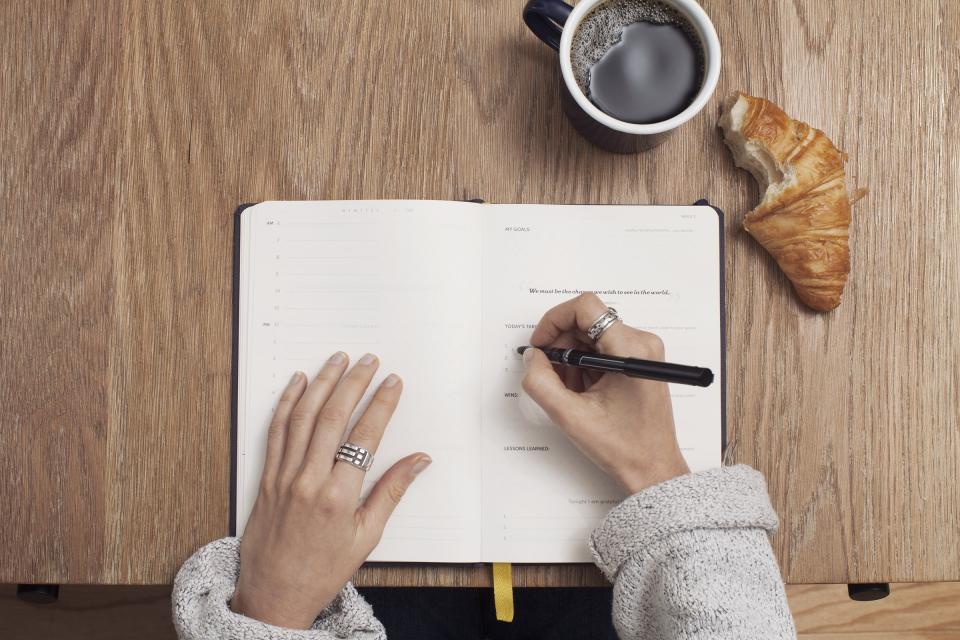
    Featured image: Journal Notepad by Cathryn Lavery, StockSnap (CC0 public domain).

    Sources

  • Smell Sensitivity During Pregnancy: Causes and Relief

    Smell Sensitivity During Pregnancy: Causes and Relief

    One morning the coffee that has started your day for a decade smells like something burning, and the thought of it is enough to drive you out of the kitchen. Food aversions often arrive before anyone else knows you are expecting, and their intensity can feel wildly out of proportion to what is actually happening. So when people describe smell sensitivity during pregnancy as a kind of superpower, it is worth separating what you feel from what researchers have actually measured, because the two do not line up neatly. The experience is real and very common, and there is a lot you can do about it. Taste can shift in early pregnancy too, which is why a metallic taste in your mouth often shows up in the same weeks.

    Key takeaways

    • Up to 80% of people who are pregnant get nausea, and smells are one of the most common triggers.
    • A 2022 meta-analysis of 13 studies found pregnant women did not have lower odor detection thresholds than non-pregnant women.
    • The same analysis found pregnant women were worse, not better, at identifying odors.
    • Hormones, especially hCG and progesterone, are the suspected culprits, and symptoms usually peak between weeks 8 and 10.
    • What holds up in practice: avoid strong odors, eat cold or bland food, snack often, and try ginger or acupressure.

    Why smell sensitivity during pregnancy is real

    Nobody has pinned down the exact mechanism. Cleveland Clinic reports that doctors suspect surging human chorionic gonadotropin (hCG) and progesterone, the same hormones that climb steeply in early pregnancy. The NHS puts it more simply: hormonal changes in the first 12 weeks are probably one of the causes of morning sickness.

    The timing backs that up. Nausea usually builds between weeks 8 and 10 and eases by around week 16, which tracks the hormone curve of early pregnancy. That curve also explains why smell sensitivity during pregnancy is worst in the first trimester, when those hormones are climbing fastest.

    Congestion plays a part too. Pregnancy rhinitis swells the lining of the nose and narrows the airway, and a 2025 controlled study of 50 women in their third trimester against 25 non-pregnant controls found the pregnant group scored lower on detection, discrimination and identification using Sniffin’ Sticks tests. About half of them had measurable olfactory disturbance, and most had not noticed it.

    Does pregnancy really sharpen your nose?

    This is where the popular story and the evidence part ways. A 2022 systematic review and meta-analysis in Chemical Senses pooled 13 studies, and nine were detailed enough to combine, covering 523 pregnant women and 365 controls.

    The result is blunt. The authors found no significant differences between pregnant and non-pregnant women in odor discrimination, detection thresholds, or hedonics, which is how pleasant or unpleasant a smell seems. What they did find, in a meta-analysis of 506 cases and 333 controls, was worse odor identification during pregnancy.

    So the honest position on smell sensitivity during pregnancy is that odor intolerance is real and common, even though the lab measurements do not show a sharper nose. It looks more like the same smells landing differently, with nausea and aversion amplifying the response, rather than a genuinely heightened sense of smell. The authors note that gap themselves, between widespread subjective reports of hypersensitivity and what objective testing shows.

    What helps when smells make you queasy

    Managing smell sensitivity during pregnancy comes down to reducing exposure rather than retraining your nose. The NHS recommends avoiding foods or smells that make you feel sick, and suggests cold foods over hot ones when the smell of a hot meal sets you off. That one change helps more than people expect, because cooking smells travel much further than the food itself.

    Eating little and often is the other big lever. An empty stomach makes nausea worse, so Cleveland Clinic suggests small meals or snacks every few hours, and keeping starchy food such as crackers on hand to soak up gastric acid. Protein-rich snacks like yogurt, nuts and cottage cheese are worth prioritizing, because they give longer-lasting relief than foods high in carbohydrate or fat.

    Four things worth trying first:

    • Eat cold or room-temperature meals when cooking smells are the problem.
    • Keep crackers or nuts nearby and snack every few hours instead of waiting for a full meal.
    • Try ginger, which the NHS says has some evidence for reducing nausea.
    • Ask your midwife or pharmacist before taking any supplement, including ginger capsules.

    A motion sickness band, or light pressure on the P6 point on the inside of your wrist, is another option the NHS lists alongside its lifestyle advice, and it costs nothing to test.

    Hydration needs its own juggling act. Dehydration makes nausea worse, but a very full stomach does not help either, so sipping little and often works better than large glasses. If your prenatal vitamin seems to be part of the problem, Cleveland Clinic suggests taking it in the evening with a small snack.

    Handling smells you cannot escape

    Some triggers are impossible to dodge, especially at work, on public transport or in someone else’s kitchen. Putting a scent you enjoy on a cotton ball gives you something else to smell, and Cleveland Clinic suggests chamomile, ginger, lemon, orange or peppermint, with the sensible caveat that any of them can backfire. Fresh air and an open window do more work than they get credit for.

    Small timing changes help as well. Brushing your teeth straight after eating can set off a gag reflex, so waiting around 30 minutes is kinder. Lying down after a meal lets stomach juices rise, which makes queasiness worse, so staying upright for a while is worth the effort.

    When to call your midwife or GP

    Ordinary smell aversion is unpleasant but not dangerous. Severe nausea and vomiting is a different matter, and roughly 1% to 3% of pregnant women develop hyperemesis gravidarum, which can cause dehydration, electrolyte imbalance and poor nutrition, and sometimes needs a hospital stay.

    Contact your midwife, GP or maternity unit if you cannot keep food or drink down for 24 hours, if you are losing weight, or if you have abdominal pain, a fever, difficulty urinating, or blood in your vomit. Dark urine that smells stronger than usual can point to dehydration. Anti-sickness medicines that are safe in pregnancy exist, so persistent symptoms are worth asking about rather than just enduring.

    A weakening or loss of smell is a different picture from sensitivity, and worth mentioning separately. Both the rhinitis study and a 2025 study of postpartum women found measurable smell loss around pregnancy, so a nose that has gone quiet deserves a conversation rather than a shrug.

    Early pregnancy brings plenty of other oddities too, from frequent urination to back pain, and they are easier to handle once you know what is behind them.

    How Utun can help

    Utun is a pregnancy companion that matches its development information and daily guidance to how far along you are, so you get advice for the stage you are actually in rather than for pregnancy in general. Its health trackers include a weight log, a kick counter and a contraction timer, and there is a mood journal for the days when nausea wears you down. See it at utunapp.nayabisa.com or get Utun on Google Play.

    FAQ

    How early does smell sensitivity start in pregnancy?

    Most people notice it in the first trimester, often before they have told anyone the news. Nausea tends to build between weeks 8 and 10 and eases by around week 16, and food aversions usually follow the same curve. Some people notice changes even earlier than that.

    Is a strong sense of smell a sign you are having a girl?

    There is no reliable evidence that smell changes predict your baby’s sex. The idea circulates widely, but the 2022 meta-analysis found no difference in detection thresholds between pregnant and non-pregnant women, never mind between pregnancies carrying boys and girls. Treat it as a fun theory rather than a test.

    Does smell sensitivity mean a healthy pregnancy?

    Smell sensitivity during pregnancy is not a sign of a healthy or unhealthy pregnancy. It is simply a common symptom of early pregnancy, and plenty of people never get nausea at all. What matters is whether you can keep fluids down and stay nourished.

    What smells should I avoid in pregnancy?

    There is no fixed list, because triggers are personal. Common ones include hot cooking smells, coffee, perfume, petrol and cigarette smoke. The NHS advice is to avoid whatever makes you feel sick, and to eat cold rather than hot food when cooking smells are the problem.

    Can I use essential oils for nausea?

    Cleveland Clinic suggests sniffing a few drops of chamomile, ginger, lemon, orange or peppermint oil on a cotton ball. Keep it to smelling rather than swallowing, and stop if a scent makes you feel worse. Ask your midwife before putting any essential oil on your skin.

    This article is educational and is not medical advice. Talk to your midwife, doctor or pharmacist about your own symptoms, and check with them before taking any supplement or medicine during pregnancy.

    Featured image: “Pregnant woman holding a plate of fresh fruits in a modern kitchen” by Shixart1985, CC BY 2.0, via Wikimedia Commons.

    Sources

  • Is Wearing a Panty Liner Every Day Bad? Myths vs Facts

    Is Wearing a Panty Liner Every Day Bad? Myths vs Facts

    Walk down the pharmacy aisle and you will find a wall of thin, whisper-light products sold on a single idea: that ordinary vaginal discharge is something to be managed, hidden and perfumed away. They are cheap and discreet, which is why so many people end up wearing one from Monday through Sunday without ever questioning it. So when readers ask whether wearing a panty liner every day is a problem, the answer turns out to be mostly reassuring. What does deserve attention is the type you choose, how long you leave it on, and whether it is quietly covering up a symptom worth checking.

    Key takeaways

    • Panty liners are built for very light days and spotting, not as a permanent fixture.
    • A systematic review of five studies found no negative effect on the vulvovaginal area from liner use between periods in healthy women.
    • A randomised trial of breathable liners worn 10 to 12 hours a day for 75 days found no rise in thrush, bacterial vaginosis or vulvar irritation.
    • Moisture and fragrance are the two things that actually cause trouble, so change liners often and skip scented ones.
    • Irritation that lasts more than a day or two, or discharge that changes smell, colour or texture, needs a doctor.

    What a panty liner is for

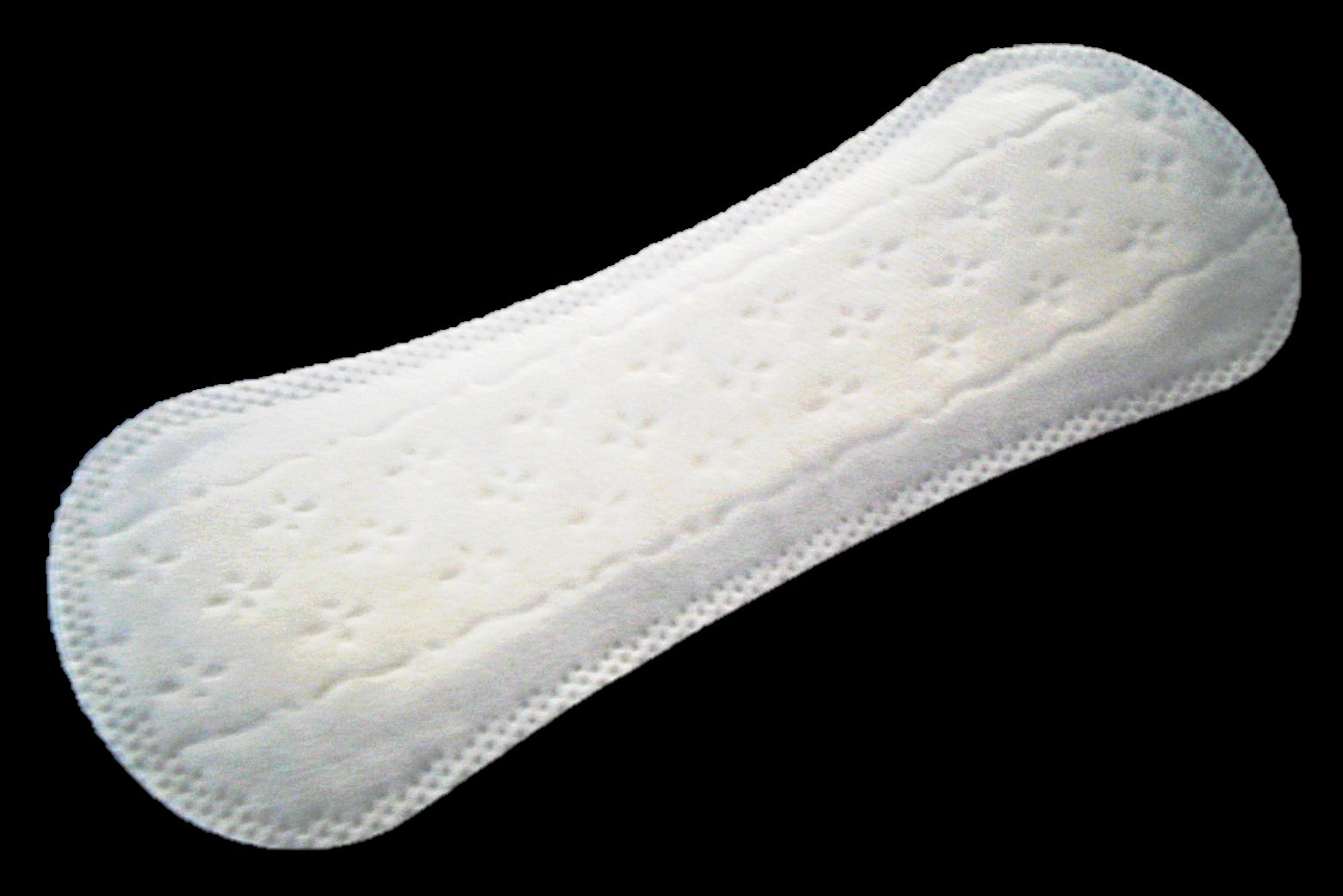
    Pads and liners sit on a spectrum of absorbency. A liner is the thinnest version, made to catch a few drops of spotting or discharge rather than a flow, and Cleveland Clinic describes liners as a low-maintenance option for the start or end of a period. A regular pad holds far more, and the difference matters, because a liner pressed into service on a heavy day just sits wet against your skin. If you are soaking through a regular pad in an hour or less, that is not a liner problem, and Cleveland Clinic advises seeing a healthcare provider.

    Does wearing a panty liner every day upset your vaginal flora?

    This is the question that has actually been studied, and for most healthy people the answer is no. A 2015 systematic review in the International Journal of Gynaecology and Obstetrics pooled five studies comparing women who used liners between periods with women who did not. Four of the five looked at healthy women and found no significant clinical effect on the genital tract, and the authors concluded that use of panty liners between periods does not seem to harm the vulvovaginal area.

    The fifth study is the one worth knowing about. It looked at women who already had recurrent candidiasis, a yeast infection that keeps returning, and found that liner use was associated with new episodes. That is an association in a group already prone to infection rather than proof that liners cause thrush, but it is a sensible reason to be careful if yours keep coming back.

    A randomised controlled trial published in 2012 tested the opposite worry, that liners might trap moisture and shift your flora. It followed 53 women who wore a breathable panty liner for 10 to 12 hours each day for 75 consecutive days, and compared them with 54 women who wore only their usual underwear. After 75 days there was no significant difference in positive fungal cultures, bacterial vaginosis, irritation or inflammation. Read that as a good result rather than a licence to leave one liner on all day, because the product tested was breathable.

    Where the infection worry comes from

    The idea that liners cause infections probably started somewhere reasonable. Wearing anything that holds fluid against warm skin for hours creates the conditions yeast and bacteria like, and a liner sits exactly there. The studies above tested that worry in real people and did not find the harm, but they also tested specific products under specific conditions.

    The habits around liner use matter more than the liner itself. If you wear one so you can skip changing your underwear, or you leave the same one on from breakfast until bed, moisture builds up no matter what the product is made of. So the question is not whether a panty liner every day is safe in principle, but whether you are changing it often enough for your skin.

    A much larger study makes the ranking of hygiene habits clear. Researchers followed 3,620 women across 13,517 visits in the Longitudinal Study of Vaginal Flora, and found that using pads or panty liners when not menstruating was not associated with bacterial vaginosis. Douching was, with a prevalence ratio of 1.17. If you are looking for one hygiene habit to drop, douching is the one with evidence stacked against it.

    Moisture, breathability and how often to change

    Change your liner when it feels damp against your skin. Cleveland Clinic suggests changing a pad at least every four to six hours during the day, and calls that a good habit because it lines up with how often most people visit the bathroom. The same rhythm works for a liner, even though it holds much less.

    Material matters too. Pads and liners come in synthetic blends, organic cotton and bamboo, and if your skin is sensitive, Cleveland Clinic suggests breathable materials or reusable cloth pads. Airflow is the point, because breathable fabric lets moisture evaporate instead of sitting against the vulva, which is exactly what the 2012 trial tested.

    Four habits cover most of it:

    • Change your liner whenever it feels damp, and at least every four to six hours.
    • Choose unscented, breathable liners over plastic-backed or perfumed ones.
    • Wash the outside with warm water and a mild, unperfumed soap, as the NHS advises.
    • Give your skin liner-free days, or sleep without one, so it can breathe.

    Scented liners and the freshness trap

    Fragrance is the ingredient most likely to cause a reaction. Cleveland Clinic recommends unscented menstrual products to lower the risk of rashes and allergic reactions, because scent irritates the sensitive skin around the vulva. Herbal-infused products are the same idea with a friendlier label, and essential oils near the vagina cause the same problems as synthetic fragrance. If wearing a panty liner every day is part of your routine, make it an unscented, breathable one.

    Scent also hides information you might need. A strong or unusual smell can be a sign of vaginitis, and covering it with perfume delays a diagnosis. If a liner is your answer to worrying about odour, that is worth mentioning to a doctor rather than solving with a product. For more on why fragrance is a poor fix, see our piece on scented pads and on everyday feminine wash.

    When daily liner use is worth a doctor’s visit

    Most irritation from liners settles within a day or two of stopping the product. Cleveland Clinic’s advice is to stop using scented products if you notice itchiness or irritation, and to book an appointment if symptoms do not clear.

    Discharge itself is normal. The NHS describes it as fluid that keeps the vagina clean and moist and protects it from infection, and says it is usually nothing to worry about when it is clear or white, has no strong or unpleasant smell, and comes without itching or soreness. It is often clearer, wetter and more noticeable around ovulation.

    See a GP or a sexual health clinic if your discharge changes in colour, smell or texture, if you produce more than usual, or if you also have itching, soreness or pain. Bacterial vaginosis usually brings a thin greyish-white discharge with a fishy smell and no itching, while thrush causes itching and irritation around the vulva. Both are common and both are treatable, so they are worth treating properly instead of masking.

    How Lail can help

    Lail is a private period tracker for Android that keeps your cycle, symptoms, mood and weight on your own device, with no account and no cloud backups. Discharge and comfort change across your cycle, so logging what you notice on which day turns a vague worry into a pattern you can describe to a doctor. The app’s insights also suggest foods for the phase you are in. Lail is free with ads, a premium tier of around Rp10,000 a month adds PDF export, and you can get it on Google Play.

    FAQ

    Is it bad to wear a panty liner every day?

    If your skin stays comfortable, a panty liner every day is not something the research gives you a reason to fear. The studies found no rise in infections or irritation among healthy women, including one trial that ran for 75 days. The practical rules are to change it when it feels damp, avoid fragrance, and stop if you notice itching or redness.

    Can panty liners cause a yeast infection?

    Liners are not a known cause of yeast infections. Four of the five studies in the 2015 review found no effect in healthy women, and the breathable-liner trial found no rise in fungal cultures after 75 days. The one study that did find a link involved women who already had recurrent yeast infections, so treat it as a caution for that group rather than a general warning.

    How often should I change a panty liner?

    Change it whenever it feels damp, and aim for every four to six hours during the day. That is the interval Cleveland Clinic recommends for pads, and it keeps moisture and odour from building up. If a liner is soaked through within an hour, step up to a higher absorbency product and mention the bleeding to a doctor.

    Do I have to wear a liner for discharge?

    No. Normal discharge is a sign that your vagina is cleaning itself, and the NHS makes clear that you cannot prevent it and usually do not need to. A liner is a comfort choice for days when discharge feels heavy or inconvenient, not a hygiene requirement.

    This article is educational and is not medical advice. Talk to a doctor or pharmacist about your own symptoms, and check with them before changing how you manage your cycle.

    Featured image: “Pantiliner” by Saibo, CC BY-SA 3.0, via Wikimedia Commons.

    Sources

  • Heat for Period Cramps: What Works and How to Use It

    Heat for Period Cramps: What Works and How to Use It

    The first day of bleeding is usually the hardest, when contractions in the uterus are strongest and no position on the sofa feels quite right. The ache can last up to three days, and it often spreads into your back and thighs. If you have ever wondered why heat for period cramps works so well, the answer comes down to two things: what warmth does to a muscle that will not loosen, and what the clinical trials actually measured. Both point the same way, though the research is quieter than the labels on heat patches suggest.

    Key takeaways

    • Heat for period cramps has been tested head to head against painkillers in three separate trials, and it held its own.
    • A 2024 network meta-analysis of 33 trials put topical heat among the non-drug options that reduce menstrual pain.
    • The trials used continuous low-level heat patches at around 40°C for 8 to 12 hours a day, longer than most people use a hot water bottle.
    • Cramps come from prostaglandins, the chemicals that make the uterus contract, and warmth relaxes muscle and increases blood flow.
    • Heat eases pain but does not treat endometriosis, fibroids or an infection, so pain that keeps getting worse needs a doctor.

    Why warmth helps a cramping uterus

    Menstrual cramps start with a chemical called prostaglandin. Levels rise just before bleeding begins, which makes the uterus contract harder to shed its lining. Those contractions are the ache you feel, and they explain why day one and day two usually hurt most.

    Warmth does not switch prostaglandins off. What it does is act on the muscle and the tissue around it. Superficial heat relaxes tight muscle, widens blood vessels and increases blood flow to the area, which is the closest thing to a direct answer to why heat for period cramps keeps showing up in self-care advice.

    A randomised trial of 371 people with acute low back pain is the cleanest demonstration of that muscle effect. An 8-hour heat wrap held at 40°C reduced muscle stiffness more than acetaminophen did, and improved how far participants could bend sideways. Period cramps are not back pain, but the response of a tense muscle to steady warmth is the same.

    What the trials on heat for period cramps found

    The strongest summary comes from a 2024 Bayesian network meta-analysis in BMJ Evidence-Based Medicine. It pooled 33 randomised trials and eight non-drug interventions, from exercise to acupuncture. Topical heat cut pain on a 10-point visual analogue scale by 2.97 points (95% CI -4.66 to -1.29), which placed it in the same range as exercise at -3.20 and acupuncture at -2.90.

    The authors stayed careful. Their conclusion was that non-drug options “may result in a reduction or slight reduction in pain intensity”, and they called for larger, better-designed trials. Treat that as good news with an asterisk, not a cure.

    The head-to-head comparisons are more interesting. A 2001 study in Obstetrics & Gynecology gave 84 women either a heated patch or an unheated one, plus either ibuprofen 400 mg three times a day or a placebo. Over two days, the heated patch with placebo scored 3.27 for pain relief, ibuprofen scored 3.07, and the unheated patch with placebo scored 1.95. Heat on its own matched ibuprofen, and when the two were combined, noticeable relief arrived in a median 1.5 hours instead of 2.79.

    Three years later the same research group compared a heat wrap with acetaminophen 1000 mg in 344 women. The heat wrap came out ahead for pain relief over eight hours, at 2.48 against 2.17, and for abdominal tightness. It also reported less fatigue and fewer mood swings.

    A 2012 trial in BMC Women’s Health took a different route. It gave 147 students either an iron-chip heat patch or ibuprofen, and the patch performed about as well as the drug at most time points, with differences that did not reach statistical significance. The caveat across all of this is size. A 2016 Cochrane review of 27 trials covering 3,101 women rated the wider evidence for period-pain remedies as low or very low quality, which shows how thin the base underneath these numbers still is.

    Which kind of heat to reach for

    • A heat pad or hot water bottle on the tummy, wrapped in a tea towel, is what the NHS recommends and the cheapest option.
    • Adhesive heat patches sit under clothing and give steady low-level warmth for hours, which is why the trials used them.
    • A warm bath or shower covers the whole lower half of the body and fits easily into the end of a day.
    • Microwaveable wheat bags do the same job as a hot water bottle, with the same burn risk if they come out too hot.

    How to use heat without burning yourself

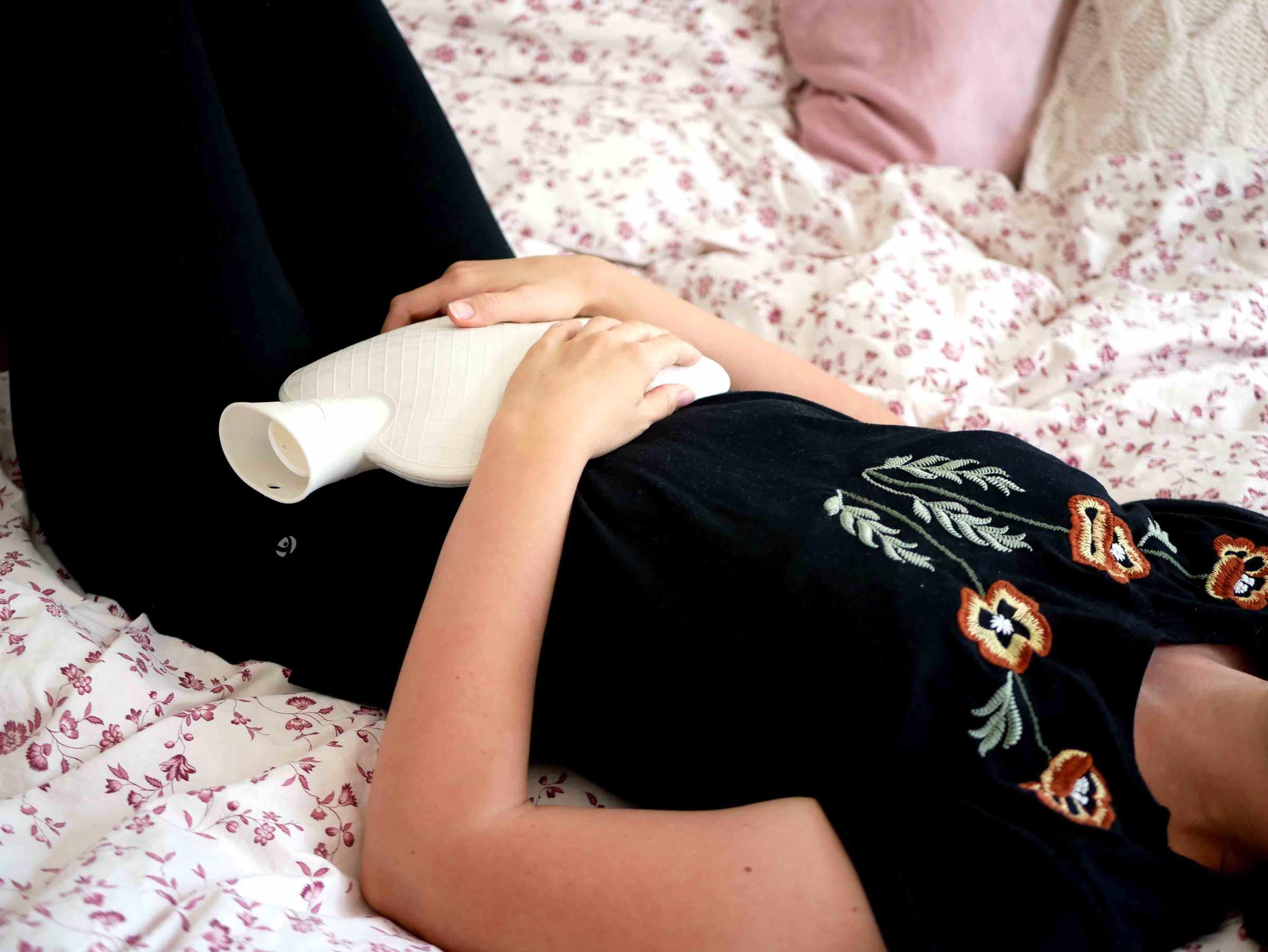
    Heat is low risk, but contact burns from pads and bottles are common enough that the NHS says to wrap a hot water bottle in a tea towel rather than resting it against bare skin. Check your skin every 20 minutes or so, and move the heat source if the area is turning deep red. Do not fall asleep with an electric pad switched on, because contact burns build up while you are unaware of them, and the same applies to heat patches left on overnight. If your skin is numb, or you have diabetes or nerve damage that dulls sensation, ask a clinician before using a heating pad, since you may not feel a burn starting.

    If you might be pregnant, ask a midwife or doctor before applying heat to your abdomen. Heat also runs alongside painkillers rather than replacing them, and ibuprofen is the one that lowers prostaglandin production. Just do not stack a heat patch and a hot water bottle on the same spot at the same time.

    When to see a doctor

    Period pain is normal. Pain that stops you living normally is not. Ask for an urgent appointment if your pain is severe, or worse than usual, and painkillers have not touched it.

    Book a routine appointment if your periods are getting more painful, heavier or irregular, if the pain stops you working or studying, or if you bleed between periods. Pain during sex, or when you pee or poo, also needs a doctor rather than another heat pack. Endometriosis, adenomyosis, fibroids and pelvic inflammatory disease all cause painful periods, and all of them need treatment.

    An IUD can cause cramps for the first three to six months after fitting, which is worth knowing before you blame your cycle. If heat and ibuprofen are not enough month after month, ask about prescription options such as naproxen, mefenamic acid, hormonal contraception, a TENS machine or a referral to a gynaecologist.

    How Lail can help

    Lail is a private period tracker for Android that keeps your cycle, symptoms, mood and weight on your own device, with no account and no cloud backups. Seeing which days you usually cramp means you can have the heat pad ready before the pain peaks, and its insights suggest foods for the phase you are in. Lail is free with ads, and a premium tier of around Rp10,000 a month adds PDF export. You can also get it on Google Play.

    FAQ

    How long can you leave a heating pad on your stomach?

    There is no research-backed time limit, because the trials used steady low-level patches for 8 to 12 hours a day rather than a hot water bottle. A workable routine is to keep heat on while it is helping and to check your skin every 20 minutes. Take a break once the pain eases instead of leaving it on all evening.

    Does heat work as well as ibuprofen for period cramps?

    In one trial on heat for period cramps, a heated patch relieved pain about as well as ibuprofen 400 mg taken three times a day, and the two together brought relief faster than ibuprofen alone. A second trial found a heat wrap beat acetaminophen over eight hours. These were single studies of a few hundred women, so read the comparison as encouraging rather than settled.

    Heat or ice for period pain?

    Warmth is what the trials and NHS self-care advice support, and every study behind these numbers used heat on the abdomen. Cold belongs to swelling and injury rather than cramps. If cold makes your belly feel worse, that is worth listening to.

    Is it safe to sleep with a heating pad or heat patch on?

    Not with an electric pad left running, and not with a patch pressed against skin for a whole night. Contact burns develop while you sleep, which is exactly why the NHS says to wrap a hot water bottle in a towel. Use heat while you are awake, then put it aside before you drift off.

    This article is educational and is not medical advice. Talk to a doctor or pharmacist about your own symptoms, and check with them before combining heat with any medication.

    Featured image: “Experiencing menstrual pain with hot water bottle” by Vulvani, CC BY-SA 4.0, via Wikimedia Commons.

    Sources

  • Ginger and Chamomile Tea for Period Cramps: What the Research Shows

    Ginger and Chamomile Tea for Period Cramps: What the Research Shows

    Movements you would normally shrug off can feel like a lot on day one. Every instinct says stay still until it passes. Ginger and chamomile are the two herbs most often suggested as tea for period cramps, and both have clinical trials behind them. The harder question is how much of the relief comes from the herbs, and how much from a warm mug and five quiet minutes.

    Key takeaways

    • Ginger beat placebo for period pain in two separate meta-analyses, and matched NSAIDs for pain intensity in one of them.
    • Chamomile has a thinner evidence base: a 2021 review of seven trials found it eased pain and bleeding, but the trials were small.
    • Cochrane rates the whole field as low or very low quality, mainly because the studies enrolled few women.
    • Neither tea replaces heat, ibuprofen, or a diagnosis when pain interferes with your day.
    • Chamomile can trigger allergic reactions in people sensitive to ragweed and daisies, and may interact with warfarin and birth control pills.

    Why cramps happen at all

    Cramps come from prostaglandins, chemicals your uterus releases to help it shed its lining. Higher levels mean stronger contractions. Those levels peak just before bleeding starts, then fall over the following days.

    That timing explains why day one and day two usually hurt more than the rest of your period. Anything that lowers prostaglandin activity, including ibuprofen, tends to lower the pain.

    What the research says about ginger

    Ginger tea for period cramps is the version most people reach for, and ginger has the stronger evidence of the two herbs. A 2024 meta-analysis in the Journal of Integrative and Complementary Medicine pooled 12 studies. It found ginger reduced pain intensity compared with placebo, with a standardized mean difference of -1.13.

    The same review found no meaningful difference between ginger and NSAIDs for pain intensity. Its authors also noted that safety data were rarely reported, which is a gap rather than a green light.

    An earlier meta-analysis in Cureus looked at five placebo-controlled trials and two head-to-head trials against NSAIDs. It reported that ginger eased menstrual pain more than placebo, with a mean difference of 2.67 points on the pain scale.

    Ginger and NSAIDs came out roughly equal for pain severity. That review found no clear effect on how long the pain lasted, and it flagged high statistical heterogeneity across the pooled studies.

    What the research says about chamomile

    Chamomile tea for period cramps rests on smaller studies. A 2021 systematic review in the International Journal of Community Based Nursing and Midwifery examined seven clinical trials. Together they covered 1,033 participants.

    The authors concluded that chamomile can be considered effective for period pain and for reducing menstrual bleeding. The proposed mechanism is the one that made it a traditional antispasmodic: chamomile extract appears to cut prostaglandin and leukotriene production.

    A 2025 randomized trial tested a chamomile and L-theanine drink taken daily for five days around the start of a period. Participants reported reductions of roughly 57 percent on a visual analogue pain scale. That drink was not plain chamomile tea, and it had only 15 people per group. Read the result as promising for a chamomile-based drink, not as proof for the teabag in your cupboard.

    How to make tea for period cramps at home

    No trial tested one standard cup, so there is no research-backed recipe to copy exactly. What the studies used was a range: capsules, ginger powder, and brewed drinks, taken across the first few days of bleeding. For the tea version, steep a teaspoon or two of dried ginger, or a chamomile teabag, in hot water for five to ten minutes. Ginger is sharp, so start mild and see how your stomach answers.

    Tea works best as part of the routine the NHS already recommends, not as a swap for it. That routine is a warm bath or shower, a heat pad wrapped in a towel against your tummy, a gentle massage, and some light exercise. If walking is your version of light exercise, the pacing matters more than the distance.

    Who should be careful with these teas

    Chamomile is likely safe at the amounts found in tea and food, according to the National Center for Complementary and Integrative Health. The same page flags a real risk of allergic reactions, including severe ones, in people allergic to ragweed, chrysanthemums, marigolds or daisies. It also reports interactions between chamomile and warfarin and some drugs processed by the liver.

    Preliminary findings suggest chamomile may reduce the effectiveness of birth control pills. It may also worsen conditions that are sensitive to estrogen, such as breast or uterine cancer.

    Ginger’s common side effects are digestive: abdominal discomfort, heartburn, diarrhoea, and irritation of the mouth and throat. That matters more if you already get reflux or have a sensitive stomach. Both NCCIH pages carry the same instruction, which is to talk to a healthcare provider before using either herb if you take any medication.

    What tea cannot do

    Cochrane’s 2016 review of dietary supplements for period pain is the honest counterweight here. It included 27 randomized trials covering 3,101 women, and judged all of the evidence to be low or very low quality. Most studies were small, ran in a single country, and recruited students in their late teens or early twenties.

    The reviewers pointed to tiny sample sizes, missing methods, and inconsistent results. Ginger and chamomile tea for period cramps are reasonable extras alongside proven basics. They are not a treatment plan.

    When to see a doctor

    Period pain is common, and pain that stops you living normally is not something to push through with another cup of tea. Ask for an urgent GP appointment or call NHS 111 if your pain is severe or worse than usual and painkillers have not helped. Book a routine appointment if your periods become more painful, heavier or irregular, or if you bleed between periods.

    Pain during sex or when going to the toilet also needs a doctor rather than a herbal remedy. Endometriosis, adenomyosis, fibroids and pelvic inflammatory disease all cause painful periods, and an IUD can cause cramps for the first three to six months after it is fitted.

    How Lail can help

    Tea is easier to time when you know your period is coming. Lail is a private period tracker for Android that keeps your cycle, symptoms, mood and weight on your own device, with no account and no cloud backups. Its insights also suggest foods for the phase you are in, which helps when you are working out what to drink and eat across the week.

    Seeing which days you usually cramp lets you plan heat and a hot drink before the pain peaks. Lail is free with ads, and a premium tier of around Rp10,000 a month adds PDF export. You can also get it on Google Play.

    FAQ

    Does ginger tea work as well as ibuprofen?

    In one meta-analysis, ginger and NSAIDs came out roughly equal for pain severity across the pooled trials. Those trials were small and inconsistent, so treat that as encouraging rather than settled.

    How much ginger tea should I drink for cramps?

    No trial has settled on a single amount, and the reviews note that safety data were rarely reported. Start with a normal cup and see how you feel instead of chasing a therapeutic dose on your own.

    Can I drink ginger and chamomile together?

    No trial has tested a blend of the two, so nobody can say whether combining them adds anything. Drinking them on separate days is the simpler way to notice which one helps you.

    When is tea the wrong first move?

    If the pain is severe, getting worse each cycle, or stopping you from working or studying, tea is not the answer you need. That pattern deserves a doctor, because conditions such as endometriosis and fibroids need treatment.

    This article is educational and is not medical advice. Talk to a doctor or pharmacist about your own symptoms, and check with them before using herbal remedies alongside any medication.

    Sources

  • Walking on Your Period: Ease Cramps Without Feeling Drained

    Walking on Your Period: Ease Cramps Without Feeling Drained

    Day one is usually the loudest day. The ache arrives before you have decided whether to get up, and every instinct says stay still until it passes. If you grew up being told that movement makes cramps worse, walking on your period probably sounds like the worst idea available. It might also be the one thing that helps.

    The advice is not new. The NHS lists walking among the gentle exercises it recommends for period pain, right next to heat pads and massage. A 2019 meta-analysis of randomized trials found that physical activity reduced how intense menstrual pain felt and how long it lasted. What most write-ups skip is the part you need on day one: how to walk so you finish feeling better instead of flattened.

    Key takeaways

    • Walking on your period is one of the gentle exercises the NHS recommends for period pain, alongside heat, massage and painkillers.
    • A meta-analysis of 15 randomized trials found physical activity lowered menstrual pain intensity and cut pain duration by roughly four hours.
    • A 2025 trial that included a walking program three days a week reported fewer menstrual symptoms and better sleep.
    • Cramps come from prostaglandins, which peak just before your period and fall in the days after, which is why day one tends to hurt most.
    • Walking is not a replacement for painkillers or for a diagnosis, and severe pain deserves a doctor rather than more laps.

    Why day one tends to hurt the most

    Menstrual cramps happen when a chemical called prostaglandin makes the uterus contract. Levels rise just before your period starts and drop once bleeding begins, which is why the cramping usually eases over the following days. The NHS puts typical period pain at up to three days. Day one is often the heaviest and the sorest, which makes it both the hardest day to move on and the day movement can do you the most good.

    What walking on your period actually does

    Researchers are still working out the exact mechanism. Movement was recommended for period pain long before anyone tested it properly, and one trial protocol notes that the belief rested on anecdotal reports and non-experimental studies for decades. What has changed is how much evidence sits behind the idea that walking on your period helps.

    A 2019 systematic review in the American Journal of Obstetrics and Gynecology pooled 15 randomized controlled trials covering 1,681 participants. Physical activity reduced pain intensity by about 1.9 cm on a 10 cm visual analogue scale, and shortened pain duration by roughly 3.9 hours compared with control groups. The authors were candid about quality. Heterogeneity was high, the primary studies were low to moderate quality, and they did not hand down a strong recommendation.

    A newer trial published in BMC Women’s Health in 2025 followed 54 women across three menstrual cycles. One group did a mix of strengthening, flexibility and balance work plus moderate aerobic exercise and walking at least three days a week; the other group did nothing extra. The exercise group reported fewer menstrual symptoms and better sleep, and their fatigue scores fell too, though the difference from the control group was not statistically significant.

    A separate review of physiotherapy for primary dysmenorrhea found a smaller average pain reduction of about 1.1 cm and rated the evidence low quality. The overall picture is consistent. Moving helps, the effect is real but modest, and it works best as one part of a routine rather than a cure.

    How to pace a first-day walk so you do not end up wiped out

    The goal on day one is not a workout. Ten to fifteen minutes of slow, flat walking is enough, and turning around early costs you nothing. If you grew up believing that exercise during your period is off limits, it is worth settling that first.

    • Start smaller than feels impressive, because ten flat minutes beat a 40-minute loop you have to limp home from.
    • Walk slower than your usual pace, and shorten your stride instead of pushing through discomfort.
    • Bring water and actually drink it, since dehydration alone causes tiredness and light-headedness that is easy to blame on your period.
    • Wear something warm around your middle, and turn back the moment the ache climbs rather than waiting for a halfway point.

    If going outside feels like too much, pacing your living room counts. What matters is gentle, continuous movement rather than distance or speed. When you have more to give, it helps to know why workouts feel easier in the follicular phase. On a heavy day the opposite list matters just as much: the exercises to avoid during your period.

    Painkillers, heat and walking: how they fit together

    Walking is an addition, not a replacement. NSAIDs such as ibuprofen work by lowering prostaglandin levels, the same chemical driving the cramps in the first place, and they work best taken as soon as cramping starts. The NHS suggests paracetamol or ibuprofen alongside a warm bath, a heat pad and massage. If you reach for painkillers every single cycle, or they no longer touch the pain, that is worth a conversation with a doctor rather than another lap around the block.

    When to see a doctor

    Most period pain is normal and manageable. Some of it points to something else.

    • Pain that is severe or worse than usual, where painkillers have not helped, needs urgent advice from a GP or NHS 111.
    • Period pain that stops you doing your usual daily activities.
    • Periods that have become more painful, heavier or irregular, or any bleeding between periods.
    • Pain during sex or when peeing or pooing, or a tummy that looks swollen.

    Conditions such as endometriosis, adenomyosis, fibroids and pelvic inflammatory disease all cause painful periods, and an IUD can cause cramps in the first three to six months after it is fitted. Finding the cause matters, because treating it is what eases the pain.

    How Lail can help

    Walking on your period is easier to plan when you know which day is coming. Lail is a private period tracker for Android that logs your cycle, symptoms, mood and weight on your own device, with no account and no cloud backups. Its insights also suggest foods for the phase you are in, which helps when you are deciding what to eat before a walk. Cramp patterns get easier to spot after a few cycles of data.

    Lail is free with ads, and a premium tier of around Rp10,000 a month adds PDF export. You can also get it on Google Play.

    FAQ

    Does walking make period cramps worse?

    No. Gentle movement is not a known trigger for worse cramps, and the pooled trial evidence runs the other way. If walking reliably makes your pain sharper, treat that as a signal to get checked rather than something to push through.

    How long should I walk on day one?

    Ten to fifteen minutes is a sensible starting point, and two short walks often work better than one long one. Use your own baseline. If a normal walk for you is 30 minutes, halve it on day one and see how you feel an hour later.

    Is it normal to feel weak and dizzy on the first day?

    Sometimes, and the cause is often simple. Dehydration on its own brings on tiredness, headaches and light-headedness, which is easy to confuse with period fatigue. If you feel dizzy when you stand up and it does not go away, or you feel unusually tired, the NHS says to seek medical advice.

    Can I walk if my cramps are severe?

    If the pain is severe or worse than usual and painkillers have not helped, the NHS advises urgent medical advice rather than exercising through it. Walking suits discomfort you can manage, not pain that stops you functioning. Get the severe pain looked at first.

    This article is educational and not medical advice. Talk to a qualified healthcare provider about your own symptoms.

    Written by the NayaBisa Editorial team. Last updated 13 September 2026.

    Sources