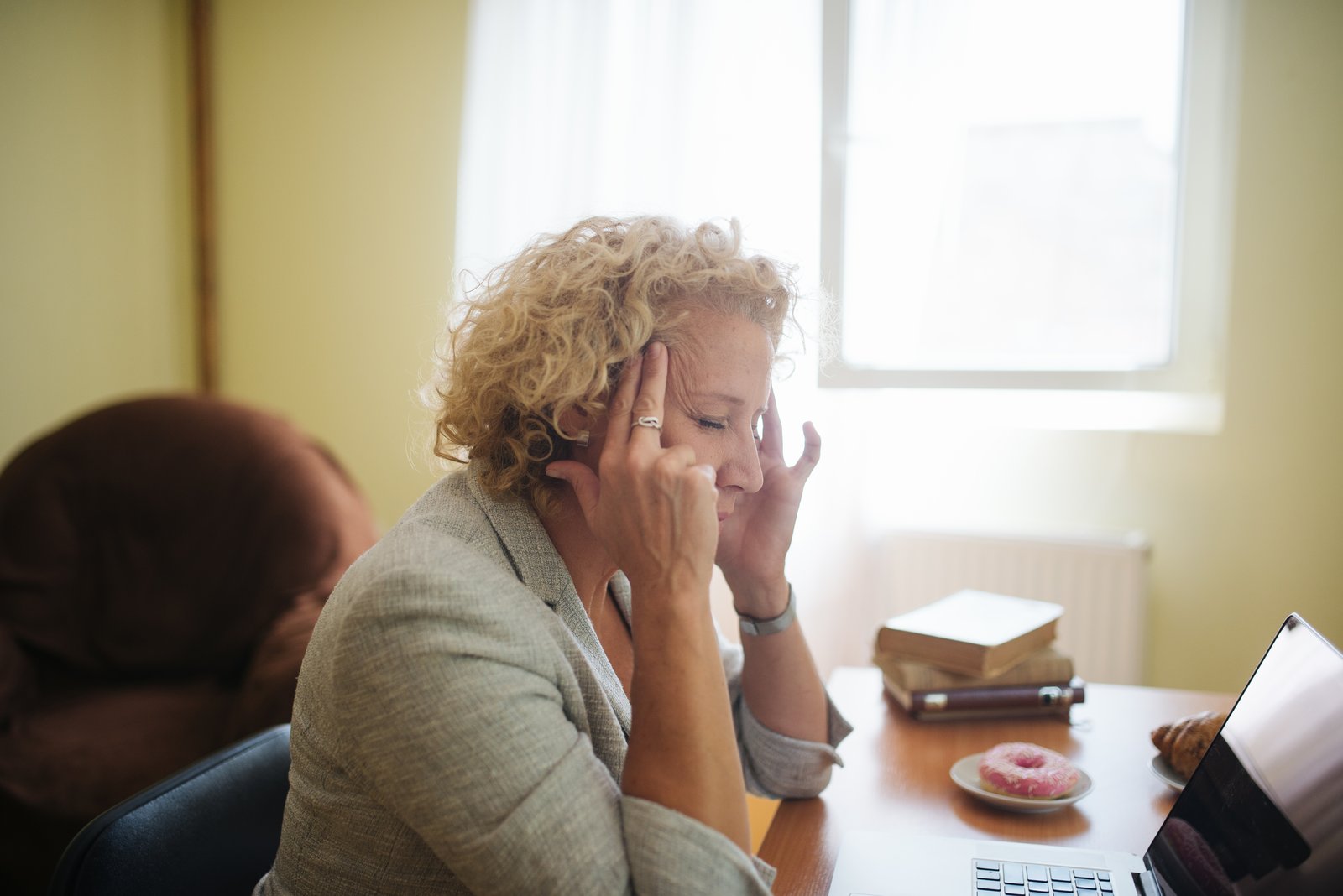
You check the calendar once in the morning, once after lunch, and once more before bed. The date passes, nothing arrives, and a small alarm starts ringing in your head. Stress can delay your period by days or even weeks, and it is one of the most common reasons a cycle goes quiet. Understanding why that happens shrinks the panic down to a size you can handle.
Key takeaways
- A normal cycle runs 24 to 38 days, so a few days of variation is not automatically a problem (US Office on Women’s Health).
- Heavy, lasting stress can delay your period because it interferes with the hormones that run ovulation (Cleveland Clinic).
- Minor everyday stress usually does not change your cycle; it takes heavy, sustained pressure to do that.
- See a GP if you have missed three periods in a row, or if a late period comes with weight changes, tiredness or other new symptoms (NHS).
How stress can delay your period
The route runs through your brain. A stressful event triggers the hypothalamus, which sets off a chain that ends with cortisol pouring from your adrenal glands, and that is what keeps your body on high alert (Harvard Health). When that same stress keeps you wired at night, the fix is often in how you wind down before bed.
That alarm is useful in short bursts. The trouble starts when stress does not end, because a stress system that stays switched on interferes with the delicate hormone balance that runs your cycle, and a period can end up late as a result (Cleveland Clinic).
Think of ovulation as the hinge. Your period arrives after ovulation and the hormone shifts that follow it, so when ovulation is delayed, the bleed that follows is delayed with it (US Office on Women’s Health). The gap between ovulation and the next period can range from about a week to more than two weeks across different people, which is another reason cycle lengths look so different from person to person. Working out when you ovulate in the first place is its own skill, and tracking ovulation without an app starts with three signals you can read yourself.
What actually counts as a late period
Before assuming the worst, check the numbers. Cycles are counted from the first day of one period to the first day of the next, and although 28 days is the average, anything from 24 to 38 days is still considered regular (US Office on Women’s Health). Variation from month to month is normal too.
Cleveland Clinic suggests calling a period late when more than 35 days have passed, or when someone who is normally very regular goes more than three days beyond schedule. A one-off 26-day month followed by a 29-day month is usually just noise. A pattern of lateness tells you more than a single late bleed. That is where a private record of your cycles earns its keep, because a few months of dates give you something solid to compare.
The kind of stress that actually delays a period
Not every stressful day reaches your cycle. Minor everyday pressure usually does not, Cleveland Clinic notes, which is reassuring if you are chronically busy but otherwise fine. It is the heavy, consuming stressors that tend to do the damage. The usual examples include:
- Death of someone close, or caring for a seriously ill family member.
- Exams or a make-or-break project that drags on for weeks.
- Job loss, a toxic workplace, or money pressure that will not let up.
- Major life changes such as moving, marriage, separation or divorce.
What these share is weight and duration. These are not one bad afternoon. They are strains that occupy your mind for weeks, and that is exactly the kind of load that can reach your hormones.
Other reasons a period runs late
Pregnancy is the first thing most people want to rule out, and rightly so, because a missed period is often its earliest sign (Cleveland Clinic). Beyond that, the usual list includes polycystic ovary syndrome, thyroid conditions, sudden weight loss or gain, very heavy exercise, some hormonal contraception, and the transition to menopause (NHS). Each of these follows its own path, so guessing at home only adds stress.
If your late period follows an obvious stressful stretch and you otherwise feel well, giving your body a few weeks to settle is reasonable. Keep sleeping, eating and moving normally while you wait. If the pattern repeats, that is information worth taking to a clinician rather than another round of self-diagnosis.
When to see a doctor
A single late period after a rough month is rarely an emergency, but NHS guidance is clear about when to get checked:
- You have missed three periods in a row.
- Your periods have not started by age 15.
- Lateness comes with tiredness, weight change, facial hair growth, or dry or oily skin.
- You are struggling to get pregnant or bleeding between periods.
Bring what you know to the appointment. Dates of your last few periods, how heavy they were, and anything stressful that happened around that time all help your GP or gynecologist see the full picture.
How Lail can help
Tracking is the unglamorous habit that makes every other step easier. Lail is a private period companion that keeps your cycle data on your phone, with no account and no cloud upload, and its Wawasan (Insights) section offers food and activity suggestions matched to your cycle phase. Log your period, symptoms, mood and weight, and you start to see whether late periods track with stressful months. Browse our cycle and fertility guides, download Lail from Google Play, or visit lailapp.nayabisa.com.
FAQ
Can stress delay your period for a week or more?
Yes. Heavy stress can delay your period by pushing ovulation later, and because the bleed follows ovulation, the whole cycle stretches. If more than 35 days pass, or you miss three periods in a row, it is time to see a clinician (NHS, Cleveland Clinic).
How do I know if my late period is stress or pregnancy?
A home pregnancy test is the fastest way to narrow it down, since a missed period is often the first sign of pregnancy (Cleveland Clinic). If the test is negative and the lateness followed a clearly stressful stretch, stress is a strong candidate. If tests stay negative and the period still does not arrive, tell your doctor.
What is the difference between a late period and a missed period?
A late period is one that has not arrived when you expected it but is still within a normal range, or arrives a little late. A missed period is one that does not show up at all in a given cycle, and missing three in a row is a clear reason to see a GP (NHS).
Will my cycle go back to normal after stress passes?
If the source of stress lifts, your cycle has room to return to its usual rhythm. That is why the practical advice is to manage the stress, keep a record of your cycles, and give your body time. See a doctor if the pattern keeps repeating or other symptoms show up alongside it.
Disclaimer
This article is for educational purposes only and is not medical advice. Menstrual cycles and stress responses vary from person to person. If you are concerned about a missed or persistently irregular period, or about any other change in your cycle, please consult a qualified healthcare provider.
Sources
- NHS – Missed or late periods: https://www.nhs.uk/symptoms/missed-or-late-periods/
- Cleveland Clinic – 8 reasons why your period is late: https://health.clevelandclinic.org/why-is-my-period-late/
- Harvard Health – Understanding the stress response: https://www.health.harvard.edu/staying-healthy/understanding-the-stress-response
- US Office on Women’s Health – Your menstrual cycle: https://www.womenshealth.gov/menstrual-cycle/your-menstrual-cycle
Leave a Reply