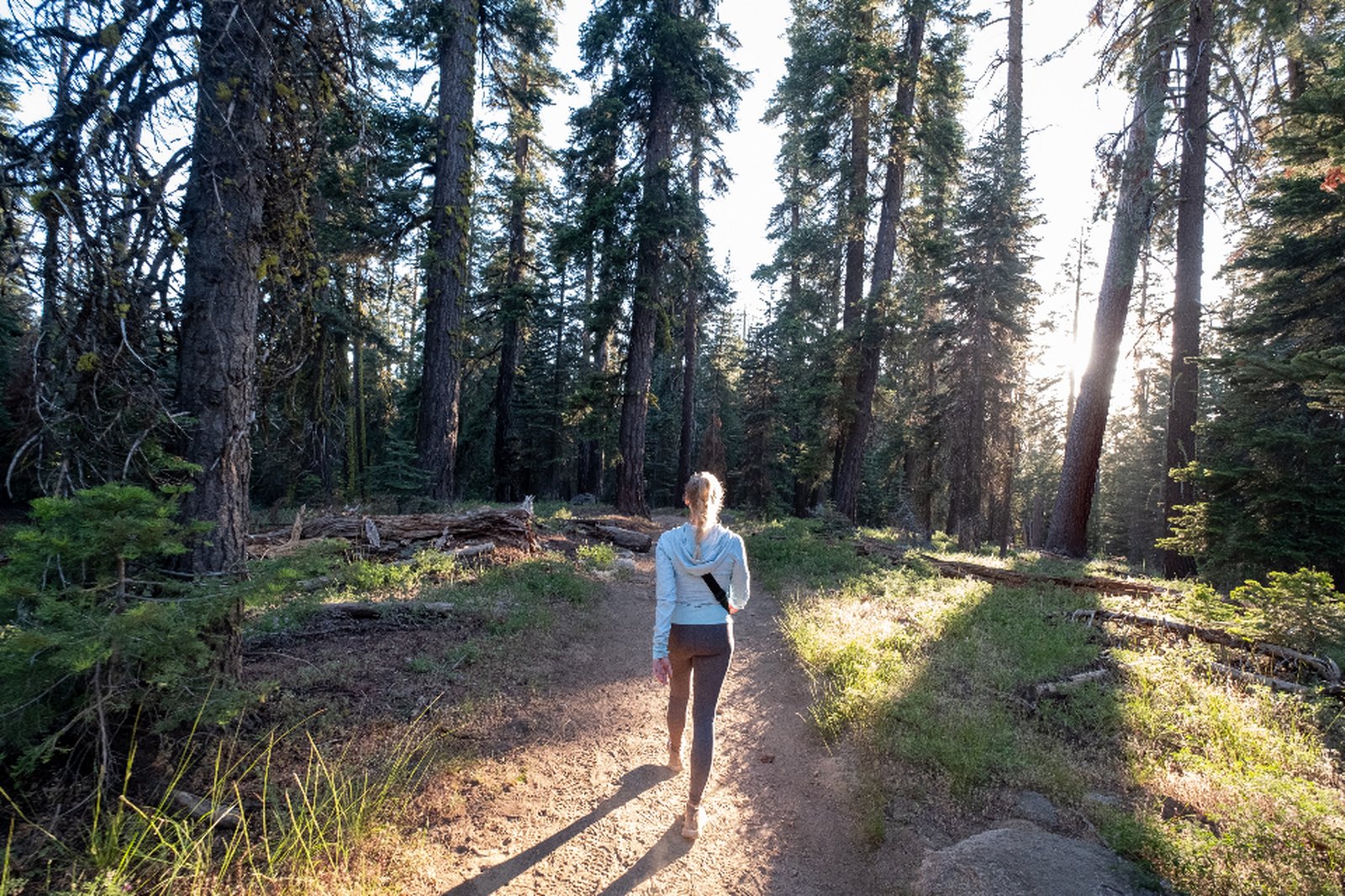
Day one is usually the loudest day. The ache arrives before you have decided whether to get up, and every instinct says stay still until it passes. If you grew up being told that movement makes cramps worse, walking on your period probably sounds like the worst idea available. It might also be the one thing that helps.
The advice is not new. The NHS lists walking among the gentle exercises it recommends for period pain, right next to heat pads and massage. A 2019 meta-analysis of randomized trials found that physical activity reduced how intense menstrual pain felt and how long it lasted. What most write-ups skip is the part you need on day one: how to walk so you finish feeling better instead of flattened.
Key takeaways
- Walking on your period is one of the gentle exercises the NHS recommends for period pain, alongside heat, massage and painkillers.
- A meta-analysis of 15 randomized trials found physical activity lowered menstrual pain intensity and cut pain duration by roughly four hours.
- A 2025 trial that included a walking program three days a week reported fewer menstrual symptoms and better sleep.
- Cramps come from prostaglandins, which peak just before your period and fall in the days after, which is why day one tends to hurt most.
- Walking is not a replacement for painkillers or for a diagnosis, and severe pain deserves a doctor rather than more laps.
Why day one tends to hurt the most
Menstrual cramps happen when a chemical called prostaglandin makes the uterus contract. Levels rise just before your period starts and drop once bleeding begins, which is why the cramping usually eases over the following days. The NHS puts typical period pain at up to three days. Day one is often the heaviest and the sorest, which makes it both the hardest day to move on and the day movement can do you the most good.
What walking on your period actually does
Researchers are still working out the exact mechanism. Movement was recommended for period pain long before anyone tested it properly, and one trial protocol notes that the belief rested on anecdotal reports and non-experimental studies for decades. What has changed is how much evidence sits behind the idea that walking on your period helps.
A 2019 systematic review in the American Journal of Obstetrics and Gynecology pooled 15 randomized controlled trials covering 1,681 participants. Physical activity reduced pain intensity by about 1.9 cm on a 10 cm visual analogue scale, and shortened pain duration by roughly 3.9 hours compared with control groups. The authors were candid about quality. Heterogeneity was high, the primary studies were low to moderate quality, and they did not hand down a strong recommendation.
A newer trial published in BMC Women’s Health in 2025 followed 54 women across three menstrual cycles. One group did a mix of strengthening, flexibility and balance work plus moderate aerobic exercise and walking at least three days a week; the other group did nothing extra. The exercise group reported fewer menstrual symptoms and better sleep, and their fatigue scores fell too, though the difference from the control group was not statistically significant.
A separate review of physiotherapy for primary dysmenorrhea found a smaller average pain reduction of about 1.1 cm and rated the evidence low quality. The overall picture is consistent. Moving helps, the effect is real but modest, and it works best as one part of a routine rather than a cure.
How to pace a first-day walk so you do not end up wiped out
The goal on day one is not a workout. Ten to fifteen minutes of slow, flat walking is enough, and turning around early costs you nothing. If you grew up believing that exercise during your period is off limits, it is worth settling that first.
- Start smaller than feels impressive, because ten flat minutes beat a 40-minute loop you have to limp home from.
- Walk slower than your usual pace, and shorten your stride instead of pushing through discomfort.
- Bring water and actually drink it, since dehydration alone causes tiredness and light-headedness that is easy to blame on your period.
- Wear something warm around your middle, and turn back the moment the ache climbs rather than waiting for a halfway point.
If going outside feels like too much, pacing your living room counts. What matters is gentle, continuous movement rather than distance or speed. When you have more to give, it helps to know why workouts feel easier in the follicular phase. On a heavy day the opposite list matters just as much: the exercises to avoid during your period.
Painkillers, heat and walking: how they fit together
Walking is an addition, not a replacement. NSAIDs such as ibuprofen work by lowering prostaglandin levels, the same chemical driving the cramps in the first place, and they work best taken as soon as cramping starts. The NHS suggests paracetamol or ibuprofen alongside a warm bath, a heat pad and massage. If you reach for painkillers every single cycle, or they no longer touch the pain, that is worth a conversation with a doctor rather than another lap around the block.
When to see a doctor
Most period pain is normal and manageable. Some of it points to something else.
- Pain that is severe or worse than usual, where painkillers have not helped, needs urgent advice from a GP or NHS 111.
- Period pain that stops you doing your usual daily activities.
- Periods that have become more painful, heavier or irregular, or any bleeding between periods.
- Pain during sex or when peeing or pooing, or a tummy that looks swollen.
Conditions such as endometriosis, adenomyosis, fibroids and pelvic inflammatory disease all cause painful periods, and an IUD can cause cramps in the first three to six months after it is fitted. Finding the cause matters, because treating it is what eases the pain.
How Lail can help
Walking on your period is easier to plan when you know which day is coming. Lail is a private period tracker for Android that logs your cycle, symptoms, mood and weight on your own device, with no account and no cloud backups. Its insights also suggest foods for the phase you are in, which helps when you are deciding what to eat before a walk. Cramp patterns get easier to spot after a few cycles of data.
Lail is free with ads, and a premium tier of around Rp10,000 a month adds PDF export. You can also get it on Google Play.
FAQ
Does walking make period cramps worse?
No. Gentle movement is not a known trigger for worse cramps, and the pooled trial evidence runs the other way. If walking reliably makes your pain sharper, treat that as a signal to get checked rather than something to push through.
How long should I walk on day one?
Ten to fifteen minutes is a sensible starting point, and two short walks often work better than one long one. Use your own baseline. If a normal walk for you is 30 minutes, halve it on day one and see how you feel an hour later.
Is it normal to feel weak and dizzy on the first day?
Sometimes, and the cause is often simple. Dehydration on its own brings on tiredness, headaches and light-headedness, which is easy to confuse with period fatigue. If you feel dizzy when you stand up and it does not go away, or you feel unusually tired, the NHS says to seek medical advice.
Can I walk if my cramps are severe?
If the pain is severe or worse than usual and painkillers have not helped, the NHS advises urgent medical advice rather than exercising through it. Walking suits discomfort you can manage, not pain that stops you functioning. Get the severe pain looked at first.
This article is educational and not medical advice. Talk to a qualified healthcare provider about your own symptoms.
Written by the NayaBisa Editorial team. Last updated 13 September 2026.
Sources
- NHS. Period pain. https://www.nhs.uk/symptoms/period-pain/
- Cleveland Clinic. Dysmenorrhea: Menstrual Cramps, Causes and Treatments. https://my.clevelandclinic.org/health/diseases/4148-dysmenorrhea
- Armour M et al. Physical activity for primary dysmenorrhea: a systematic review and meta-analysis of randomized controlled trials. Am J Obstet Gynecol. 2019. https://pubmed.ncbi.nlm.nih.gov/29630882/
- The effect of exercise on menstrual symptoms: a randomized controlled trial. BMC Women’s Health. 2025. https://pubmed.ncbi.nlm.nih.gov/40849627/
- Menstrual pain and quality of life in women with primary dysmenorrhea: rationale, design and interventions of a randomized controlled trial of a treadmill-based exercise intervention. Contemp Clin Trials. 2016. https://pubmed.ncbi.nlm.nih.gov/25839713/
- Efficacy of physiotherapy treatment in primary dysmenorrhea: a systematic review and meta-analysis. Int J Environ Res Public Health. 2021. https://pubmed.ncbi.nlm.nih.gov/34360122/
- NHS. Dehydration. https://www.nhs.uk/conditions/dehydration/
Leave a Reply