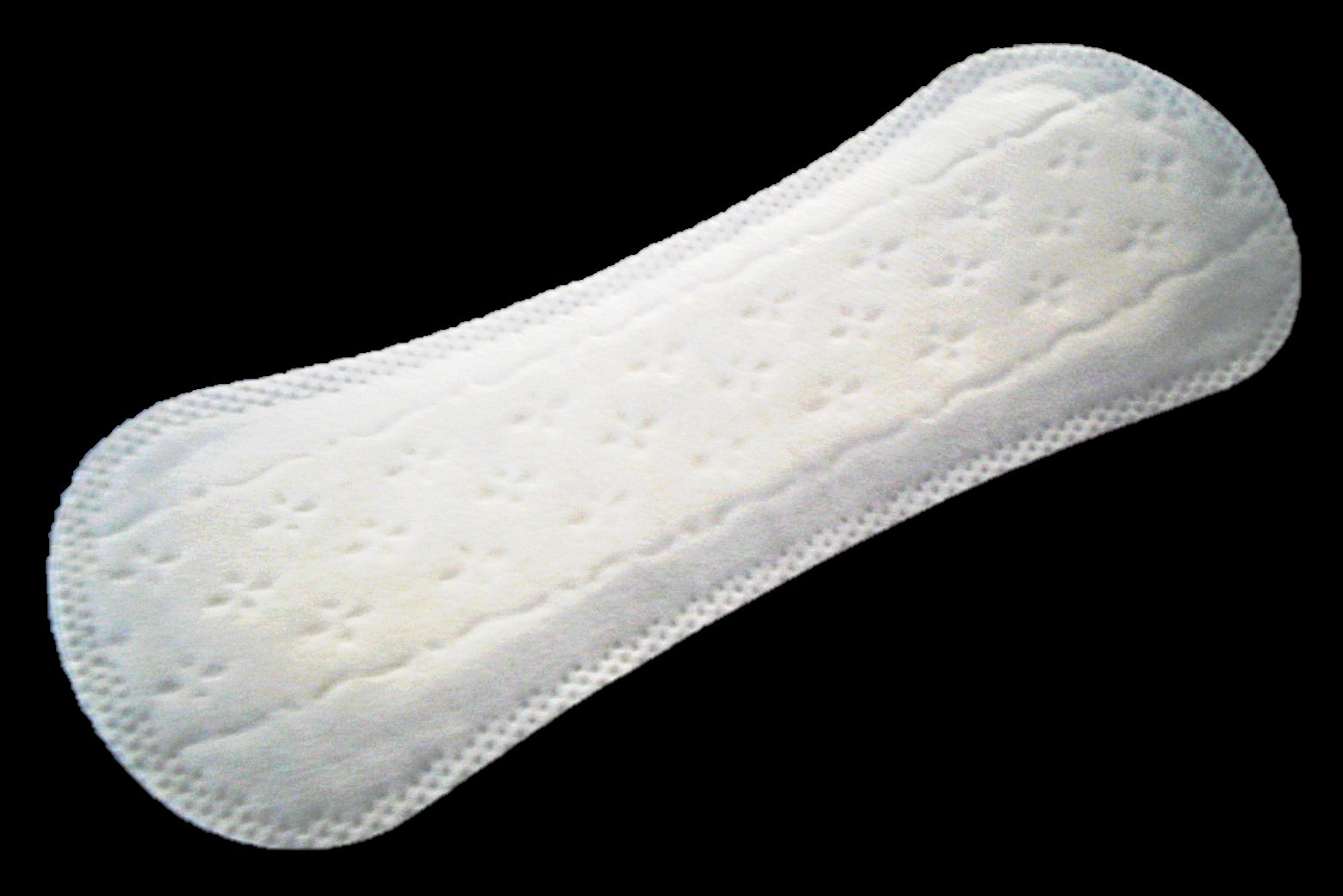
Walk down the pharmacy aisle and you will find a wall of thin, whisper-light products sold on a single idea: that ordinary vaginal discharge is something to be managed, hidden and perfumed away. They are cheap and discreet, which is why so many people end up wearing one from Monday through Sunday without ever questioning it. So when readers ask whether wearing a panty liner every day is a problem, the answer turns out to be mostly reassuring. What does deserve attention is the type you choose, how long you leave it on, and whether it is quietly covering up a symptom worth checking.
Key takeaways
- Panty liners are built for very light days and spotting, not as a permanent fixture.
- A systematic review of five studies found no negative effect on the vulvovaginal area from liner use between periods in healthy women.
- A randomised trial of breathable liners worn 10 to 12 hours a day for 75 days found no rise in thrush, bacterial vaginosis or vulvar irritation.
- Moisture and fragrance are the two things that actually cause trouble, so change liners often and skip scented ones.
- Irritation that lasts more than a day or two, or discharge that changes smell, colour or texture, needs a doctor.
What a panty liner is for
Pads and liners sit on a spectrum of absorbency. A liner is the thinnest version, made to catch a few drops of spotting or discharge rather than a flow, and Cleveland Clinic describes liners as a low-maintenance option for the start or end of a period. A regular pad holds far more, and the difference matters, because a liner pressed into service on a heavy day just sits wet against your skin. If you are soaking through a regular pad in an hour or less, that is not a liner problem, and Cleveland Clinic advises seeing a healthcare provider.
Does wearing a panty liner every day upset your vaginal flora?
This is the question that has actually been studied, and for most healthy people the answer is no. A 2015 systematic review in the International Journal of Gynaecology and Obstetrics pooled five studies comparing women who used liners between periods with women who did not. Four of the five looked at healthy women and found no significant clinical effect on the genital tract, and the authors concluded that use of panty liners between periods does not seem to harm the vulvovaginal area.
The fifth study is the one worth knowing about. It looked at women who already had recurrent candidiasis, a yeast infection that keeps returning, and found that liner use was associated with new episodes. That is an association in a group already prone to infection rather than proof that liners cause thrush, but it is a sensible reason to be careful if yours keep coming back.
A randomised controlled trial published in 2012 tested the opposite worry, that liners might trap moisture and shift your flora. It followed 53 women who wore a breathable panty liner for 10 to 12 hours each day for 75 consecutive days, and compared them with 54 women who wore only their usual underwear. After 75 days there was no significant difference in positive fungal cultures, bacterial vaginosis, irritation or inflammation. Read that as a good result rather than a licence to leave one liner on all day, because the product tested was breathable.
Where the infection worry comes from
The idea that liners cause infections probably started somewhere reasonable. Wearing anything that holds fluid against warm skin for hours creates the conditions yeast and bacteria like, and a liner sits exactly there. The studies above tested that worry in real people and did not find the harm, but they also tested specific products under specific conditions.
The habits around liner use matter more than the liner itself. If you wear one so you can skip changing your underwear, or you leave the same one on from breakfast until bed, moisture builds up no matter what the product is made of. So the question is not whether a panty liner every day is safe in principle, but whether you are changing it often enough for your skin.
A much larger study makes the ranking of hygiene habits clear. Researchers followed 3,620 women across 13,517 visits in the Longitudinal Study of Vaginal Flora, and found that using pads or panty liners when not menstruating was not associated with bacterial vaginosis. Douching was, with a prevalence ratio of 1.17. If you are looking for one hygiene habit to drop, douching is the one with evidence stacked against it.
Moisture, breathability and how often to change
Change your liner when it feels damp against your skin. Cleveland Clinic suggests changing a pad at least every four to six hours during the day, and calls that a good habit because it lines up with how often most people visit the bathroom. The same rhythm works for a liner, even though it holds much less.
Material matters too. Pads and liners come in synthetic blends, organic cotton and bamboo, and if your skin is sensitive, Cleveland Clinic suggests breathable materials or reusable cloth pads. Airflow is the point, because breathable fabric lets moisture evaporate instead of sitting against the vulva, which is exactly what the 2012 trial tested.
Four habits cover most of it:
- Change your liner whenever it feels damp, and at least every four to six hours.
- Choose unscented, breathable liners over plastic-backed or perfumed ones.
- Wash the outside with warm water and a mild, unperfumed soap, as the NHS advises.
- Give your skin liner-free days, or sleep without one, so it can breathe.
Scented liners and the freshness trap
Fragrance is the ingredient most likely to cause a reaction. Cleveland Clinic recommends unscented menstrual products to lower the risk of rashes and allergic reactions, because scent irritates the sensitive skin around the vulva. Herbal-infused products are the same idea with a friendlier label, and essential oils near the vagina cause the same problems as synthetic fragrance. If wearing a panty liner every day is part of your routine, make it an unscented, breathable one.
Scent also hides information you might need. A strong or unusual smell can be a sign of vaginitis, and covering it with perfume delays a diagnosis. If a liner is your answer to worrying about odour, that is worth mentioning to a doctor rather than solving with a product. For more on why fragrance is a poor fix, see our piece on scented pads and on everyday feminine wash.
When daily liner use is worth a doctor’s visit
Most irritation from liners settles within a day or two of stopping the product. Cleveland Clinic’s advice is to stop using scented products if you notice itchiness or irritation, and to book an appointment if symptoms do not clear.
Discharge itself is normal. The NHS describes it as fluid that keeps the vagina clean and moist and protects it from infection, and says it is usually nothing to worry about when it is clear or white, has no strong or unpleasant smell, and comes without itching or soreness. It is often clearer, wetter and more noticeable around ovulation.
See a GP or a sexual health clinic if your discharge changes in colour, smell or texture, if you produce more than usual, or if you also have itching, soreness or pain. Bacterial vaginosis usually brings a thin greyish-white discharge with a fishy smell and no itching, while thrush causes itching and irritation around the vulva. Both are common and both are treatable, so they are worth treating properly instead of masking.
How Lail can help
Lail is a private period tracker for Android that keeps your cycle, symptoms, mood and weight on your own device, with no account and no cloud backups. Discharge and comfort change across your cycle, so logging what you notice on which day turns a vague worry into a pattern you can describe to a doctor. The app’s insights also suggest foods for the phase you are in. Lail is free with ads, a premium tier of around Rp10,000 a month adds PDF export, and you can get it on Google Play.
FAQ
Is it bad to wear a panty liner every day?
If your skin stays comfortable, a panty liner every day is not something the research gives you a reason to fear. The studies found no rise in infections or irritation among healthy women, including one trial that ran for 75 days. The practical rules are to change it when it feels damp, avoid fragrance, and stop if you notice itching or redness.
Can panty liners cause a yeast infection?
Liners are not a known cause of yeast infections. Four of the five studies in the 2015 review found no effect in healthy women, and the breathable-liner trial found no rise in fungal cultures after 75 days. The one study that did find a link involved women who already had recurrent yeast infections, so treat it as a caution for that group rather than a general warning.
How often should I change a panty liner?
Change it whenever it feels damp, and aim for every four to six hours during the day. That is the interval Cleveland Clinic recommends for pads, and it keeps moisture and odour from building up. If a liner is soaked through within an hour, step up to a higher absorbency product and mention the bleeding to a doctor.
Do I have to wear a liner for discharge?
No. Normal discharge is a sign that your vagina is cleaning itself, and the NHS makes clear that you cannot prevent it and usually do not need to. A liner is a comfort choice for days when discharge feels heavy or inconvenient, not a hygiene requirement.
This article is educational and is not medical advice. Talk to a doctor or pharmacist about your own symptoms, and check with them before changing how you manage your cycle.
Featured image: “Pantiliner” by Saibo, CC BY-SA 3.0, via Wikimedia Commons.
Sources
- NHS. Vaginal discharge. https://www.nhs.uk/symptoms/vaginal-discharge/
- NHS. Bacterial vaginosis. https://www.nhs.uk/conditions/bacterial-vaginosis/
- NHS. Thrush in men and women. https://www.nhs.uk/conditions/thrush/
- Cleveland Clinic. Menstrual Pads 101: How To Choose and Use Them. https://health.clevelandclinic.org/sanitary-pads
- Cleveland Clinic. Are Scented Tampons and Pads Bad for You? https://health.clevelandclinic.org/are-scented-tampons-and-pads-bad-for-you
- Pontes AC, Amaral RLG, Giraldo PC, et al. A systematic review of the effect of daily panty liner use on the vulvovaginal environment. International Journal of Gynaecology and Obstetrics. 2015. https://pubmed.ncbi.nlm.nih.gov/25128928/
- Giraldo PC, Amaral RLG, Juliato C, et al. The effect of “breathable” panty liners on the female lower genital tract. International Journal of Gynaecology and Obstetrics. 2012. https://pubmed.ncbi.nlm.nih.gov/21798535/
- Klebanoff MA, Nansel TR, Brotman RM, et al. Personal hygienic behaviors and bacterial vaginosis. Sexually Transmitted Diseases. 2010. https://pubmed.ncbi.nlm.nih.gov/19823112/
Leave a Reply